Bring Life to Your Living Space
Bring Life to Your Living Space

Shelves get treated like an afterthought in a lot of living rooms. They hold a few books, maybe a plant that’s seen better days, and then everyone moves on to worrying about the sofa or the rug. That’s a missed opportunity, because shelves are one of the few spots in a room where storage and personality get to share the same space.
When shelves are styled well, they pull the whole room together. They add height, color, and texture to walls that would otherwise sit flat and empty. A bookcase that’s been arranged with intention can become the first thing guests notice when they walk in, right alongside your sofa or your TV wall decor ideas.
The problem is that most shelf styling goes wrong in predictable ways. People either cram every shelf full of trinkets until it looks like a yard sale, or they leave shelves so sparse and matchy that the room feels cold. Neither extreme works.
This guide walks through 25 practical shelf decorating ideas, breaks down styling approaches by shelf type and design style, and gives you an actual formula for layering objects so shelves look curated instead of cluttered. Whether you’re working with floating shelves, a built-in bookcase, or an awkward corner that’s been empty for years, there’s something here you can use today, regardless of your budget.
Leaning small framed prints against the back of a shelf instead of hanging them on the wall adds instant depth. Overlap two or three frames of different sizes so they create a soft, layered backdrop.
This works especially well in modern and traditional living rooms where wall space is already busy. It’s a similar layering trick used in good gallery wall ideas, just brought down onto a shelf. The common mistake is using frames that are too large for the shelf depth, which makes them tip forward or dominate the whole display.
Books shouldn’t be the only thing on a shelf, but they shouldn’t disappear either. Stack a few horizontally, stand others upright, and tuck a small object like a candle or vase into the gaps.
This idea suits almost any style because books bring in color and texture without trying too hard. Avoid lining up every book the same way, since that flat, uniform look reads as boring rather than tidy.
A trailing pothos or a small snake plant softens the hard lines of a shelf instantly. Plants bring life to a display that might otherwise feel static and overly styled.
Boho and Scandinavian rooms benefit the most from greenery on shelves. The mistake to avoid is overwatering or placing plants where they won’t get any light, since a dying plant undoes all the styling effort around it.
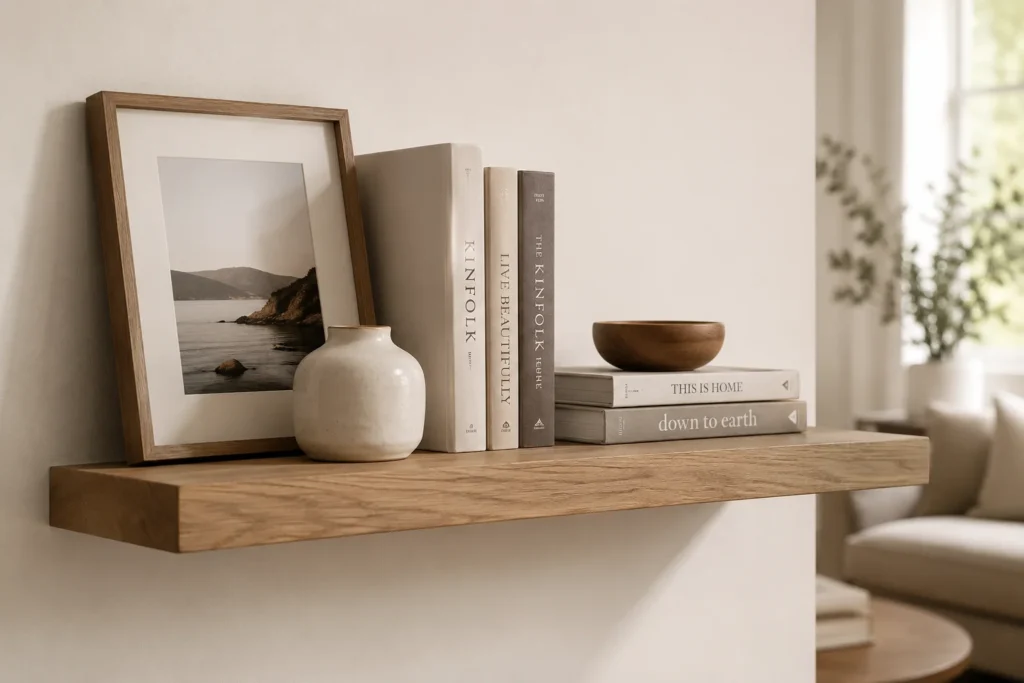
Floating shelves look best with fewer, larger items rather than many small ones, since they don’t have the visual weight of a full bookcase frame around them. Group three to five pieces per shelf with varied heights.
This is ideal for minimalist and modern living rooms. People often overload floating shelves until they look heavy and unbalanced, which defeats the lightweight look the shelf was meant to create.
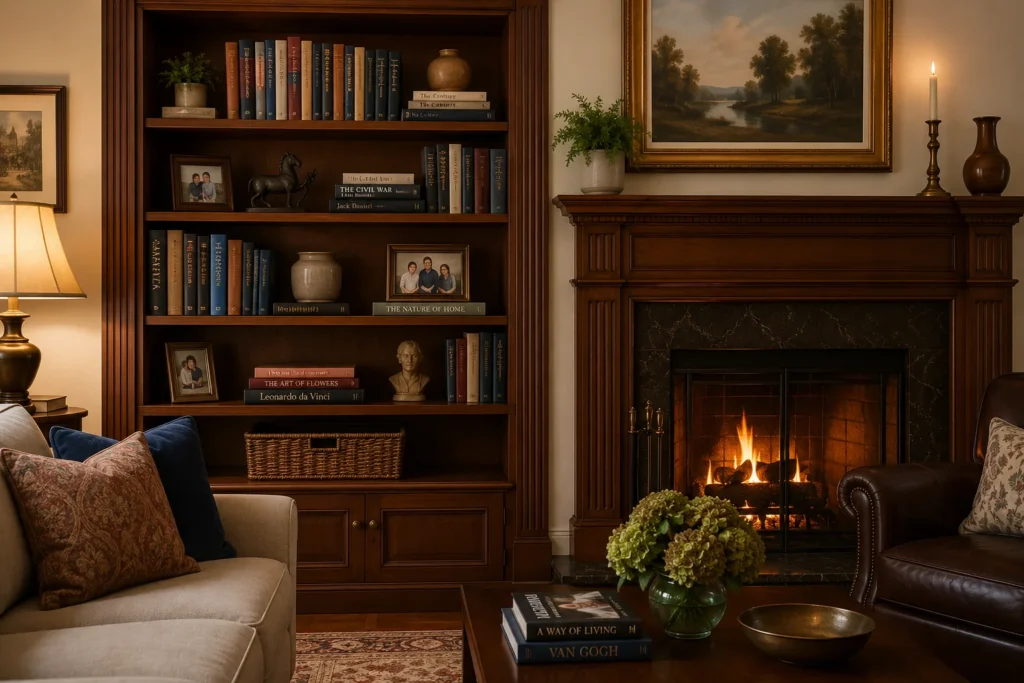
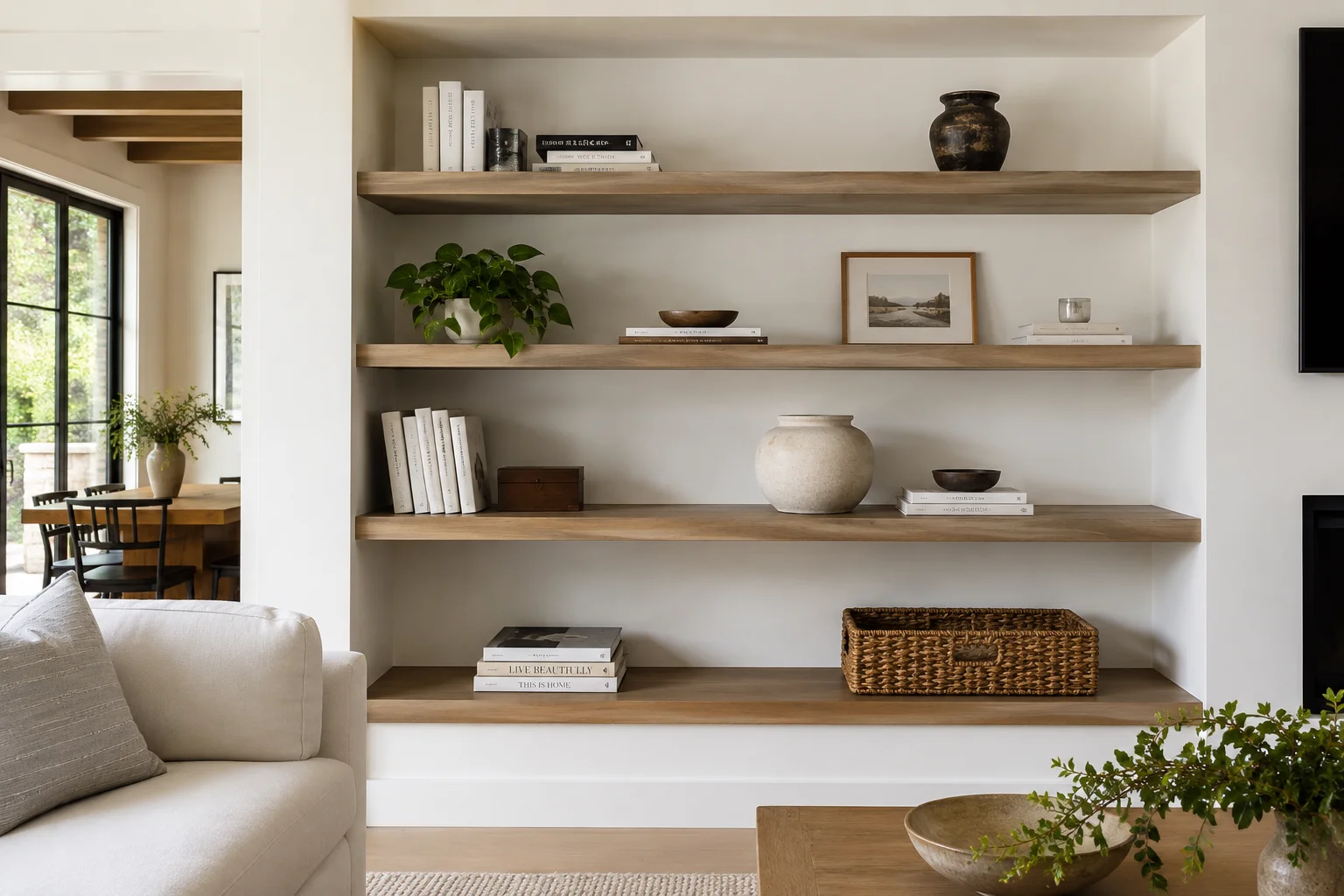
Built-ins have the advantage of depth and structure, so they can handle a mix of books, art, and personal objects across multiple shelves. Treat each shelf as its own mini composition while keeping a consistent color thread running through all of them.
This approach works in traditional and farmhouse spaces especially well, and it’s worth coordinating with any nearby living room wall decor ideas so the built-in doesn’t feel disconnected from the rest of the wall. The biggest mistake is decorating each shelf independently with no visual connection, which makes the whole unit feel disjointed.
Woven baskets hide remote controls, cables, or kids’ toys while adding warmth and texture to a shelf. They’re functional decor, which is exactly what busy living rooms need.
Farmhouse and boho rooms lean into baskets naturally. Avoid baskets that are too large for the shelf, since they’ll overhang awkwardly and throw off the proportions of everything around them.
A cluster of ceramic vases in varying heights and matte finishes creates an elegant, low-effort focal point. Even empty, they read as intentional decor rather than filler.
This idea fits modern and minimalist styles particularly well. Skip the mistake of choosing vases that are all the same height, since that flat lineup looks more like inventory than styling.
A single sculptural object, whether it’s an abstract wood carving or a small marble form, gives a shelf a sense of intention. It acts as an anchor that the rest of the display can build around.
This works in modern and traditional rooms where a bit of drama is welcome. The mistake here is adding too many sculptural pieces on one shelf, which competes for attention instead of creating a clear focal point.
Varying the height of objects on a shelf, tall vase next to a short stack of books next to a medium frame, creates visual rhythm instead of a flat line. This is one of the simplest tricks for making a shelf look professionally styled.
It applies to every style and every shelf type. The common error is grouping all short items or all tall items together, which flattens the display and removes the sense of movement.
Pillar candles or simple taper candles in unfussy holders add warmth and a soft glow in the evening. They also fill awkward small gaps between larger objects without adding clutter.
Traditional and Scandinavian interiors use candles especially well. Avoid scented candles with busy, colorful packaging left in view, since the container often clashes with a curated shelf.
A few framed family photos mixed among other decor make a shelf feel personal rather than showroom-perfect. Choose two or three meaningful images rather than spreading a dozen frames across every shelf.
This works in any living room, particularly farmhouse and traditional styles. The mistake is letting photos dominate the display, which can make a shelf look more like a memory wall than a styled feature.
Swapping in small seasonal touches, a bowl of pinecones in winter, a vase of fresh greenery in spring, keeps shelves feeling current without a full redecorate. It’s a low-cost way to refresh a room throughout the year.
This idea suits farmhouse and traditional rooms especially. Avoid going overboard with seasonal themes, since a shelf packed with holiday-specific items can look cluttered and feel dated once the season passes.
Sticking to whites, creams, wood tones, and soft greys across a shelf makes a cohesive, calming display, even when the objects themselves vary in shape and purpose. Color discipline is often what separates a styled shelf from a random collection of stuff.
This is the backbone of minimalist and Scandinavian styling. The mistake is introducing one bright, mismatched color that pulls the eye away from the rest of the composition.
Oversized art or design books aren’t just for the coffee table. Stacked horizontally on a shelf, they add height variation and a sense of curated taste.
This works well in modern and traditional rooms, and it’s an easy way to echo the same look you’ve built into your coffee table decor ideas. Avoid stacking more than three or four books in one pile, since taller stacks can look unstable and top-heavy.
A small wooden bowl, a carved object, or a simple wood frame brings warmth to a shelf that might otherwise feel cold, especially next to metal or glass decor. Wood tones also bridge gaps between mismatched colors.
Scandinavian and farmhouse rooms rely heavily on this. The mistake is mixing too many different wood tones, since clashing shades of wood can look more chaotic than warm.
A small mirror leaned on a shelf adds light and the illusion of depth, particularly useful in darker corners of a living room. It also breaks up a row of solid objects with something reflective.
This idea pairs naturally with mirror wall decor ideas elsewhere in the room for a cohesive look. Avoid placing a mirror where it reflects clutter or an unflattering angle of the room, since that draws attention to the wrong thing.
Mounting a slim wall sconce beside or above a shelving unit adds ambient light that highlights the display, especially after dark. It also frees up shelf space that would otherwise go to a table lamp.
This works particularly well with built-ins and bookcases in traditional and modern rooms. The mistake is choosing a sconce that’s too bright or too cool in tone, which can wash out the warmth of the objects below it.
Rattan trays, jute baskets, or a woven wall hanging tucked behind shelf objects bring tactile variety that books and ceramics alone can’t offer. Texture is often the missing ingredient in a shelf that looks fine but not interesting.
Boho and farmhouse rooms thrive on this kind of texture mixing. Avoid relying only on smooth, glossy materials throughout a shelf, since the lack of texture variety can make a display feel flat.
Fewer objects, more negative space, and a tight color palette define minimalist shelf styling. Each item earns its spot rather than filling a gap just because it’s there.
This is the defining approach for minimalist living rooms, and it pairs naturally with minimalist wall decor ideas above or around the shelving. The common mistake is sneaking in just one too many objects, which undoes the entire minimalist effect.
Mirroring objects on either side of a central piece, two matching lamps flanking a stack of books, for instance, creates a formal, balanced look. Symmetry reads as deliberate and calm.
Traditional rooms use this approach often. Avoid forcing symmetry on a shelf with uneven or mismatched furniture nearby, since true symmetry needs a balanced setting to actually land.
Pairing an inherited vintage object, an old clock, a brass candlestick, with sleek modern pieces gives a shelf depth and story. It avoids the showroom look that comes from everything being brand new.
This idea is a favorite in eclectic, boho, and traditional spaces. The mistake is leaning too heavily on either extreme, since an all-vintage or all-modern shelf can feel one-note compared to a thoughtful mix.
Slim LED strip lighting tucked under or along the edge of a shelf creates a soft glow that makes objects pop, especially glass or ceramic pieces. It’s a small upgrade with a noticeably bigger visual payoff.
This works particularly well on floating shelves and built-ins in modern rooms. Avoid lighting that’s too cool or harsh in tone, since it can make a warm, curated display feel clinical instead.
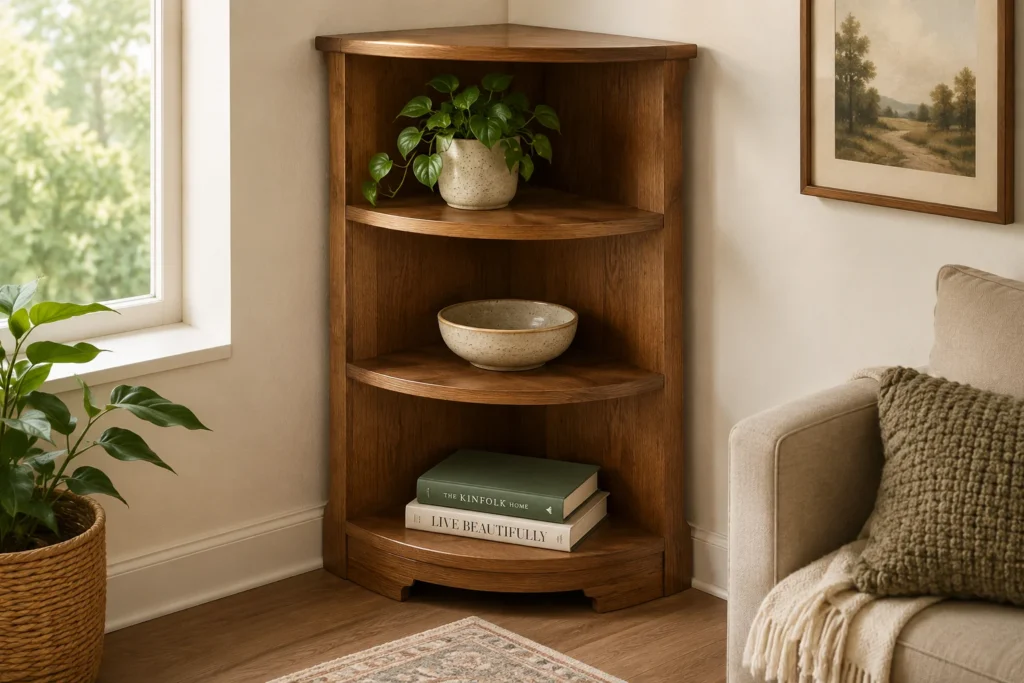
Corner shelves need objects that don’t have a strict front or back, since they’re viewed from an angle. Round vases, small plants, and asymmetrical sculptures work better here than flat-backed frames.
This pairs well with broader corner decor ideas for living room spaces that often go underused. The common mistake is treating a corner shelf like a straight wall shelf, which leaves half the display facing the wrong direction.
A small pottery piece from a trip, a framed ticket stub, or a carved object collected abroad adds personality, but only when it’s edited down to a few meaningful pieces. A shelf covered in souvenirs starts to look more like a display case than a living room.
This works in eclectic and traditional rooms especially. Avoid showing every souvenir from every trip at once, since quality of selection matters more than quantity here.
One styling lesson that consistently creates a more polished look is leaving a little empty space on each shelf. Shelves filled edge to edge often feel cluttered instead of thoughtfully decorated, no matter how nice the individual objects are.
This principle applies to every style and shelf type without exception. The mistake almost everyone makes is treating empty space as wasted space, when it’s actually what gives the eye room to rest.
Floating shelves carry visual weight on their own since there’s no frame supporting them, so fewer, more deliberate objects work best. Group three to five pieces with varied heights and leave breathing room on either end.
Built-ins have the structure to handle more density across multiple shelves, but each one should connect visually to the next through repeated colors or materials. Treat the whole unit as one composition rather than separate displays.
Because corner shelves are seen from an angle rather than head-on, choose objects without an awkward “back” that faces the wrong way. Plants, round vases, and small sculptures handle this better than flat frames or books.
Bookcases benefit from alternating vertical and horizontal book stacks broken up by small decor objects every shelf or two. Keeping a consistent color palette across all the shelves prevents a bookcase from looking like a messy library aisle.
Wall-mounted shelves, especially smaller single or double-tier ones, work best as a focal accent rather than full storage. Pair them with wall decor ideas around them so the shelf and the wall art feel like one cohesive moment.
Open shelving units, common in living-dining combo spaces, need consistent styling on every level since the whole unit is visible at once. Repeating a color or material across each shelf keeps an open unit from feeling like a stack of unrelated mini displays.
Modern shelf styling favors clean lines, a tight neutral or monochrome palette, and fewer objects with more negative space. Sculptural pieces and ceramics in matte finishes do most of the visual work here, and pairing the shelf with some of the modern wall art ideas you already have on the wall keeps the whole setup feeling unified.
Minimalist shelves take the modern approach even further, often limiting each shelf to one or two carefully chosen objects. Every piece needs a clear reason to be there, and empty space is treated as part of the design, not a gap to fill.
Farmhouse styling leans on warm wood tones, woven baskets, and a mix of vintage and rustic objects like enamel pitchers or galvanized metal. Books and personal photos fit naturally into this softer, lived-in look.
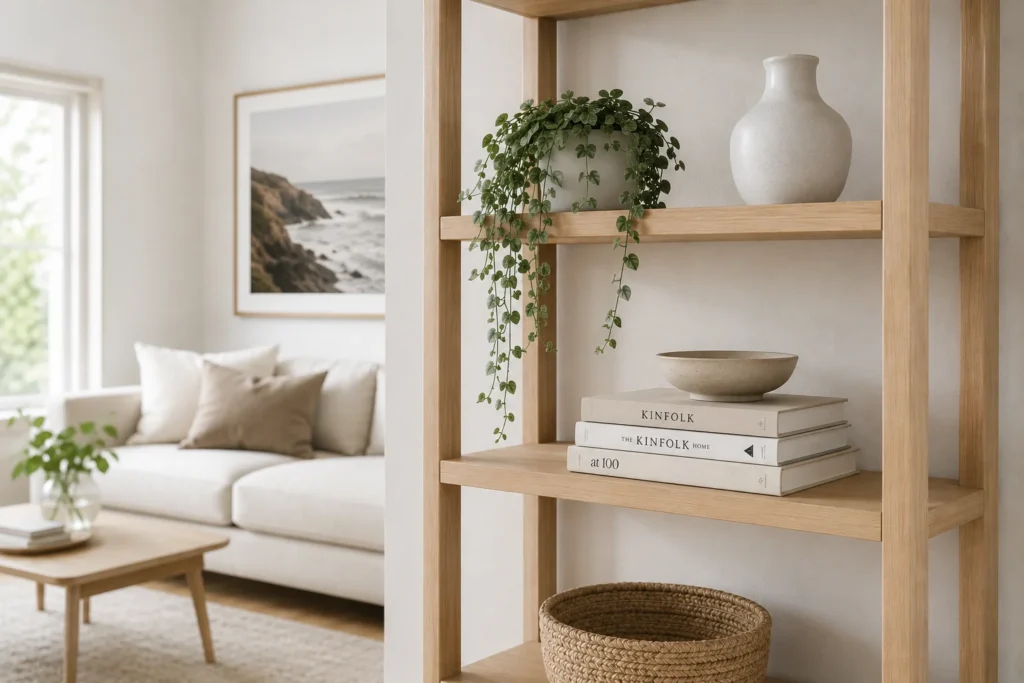
Scandinavian shelves combine light wood, soft neutral colors, and a few well-placed plants for a calm, airy feel. The styling stays simple, with function and form balanced evenly across each piece.
Boho shelf styling embraces texture and pattern, think woven trays, trailing plants, and a mix of global, handmade pieces. Symmetry isn’t the goal here; a relaxed, layered look with varied shapes and materials is.
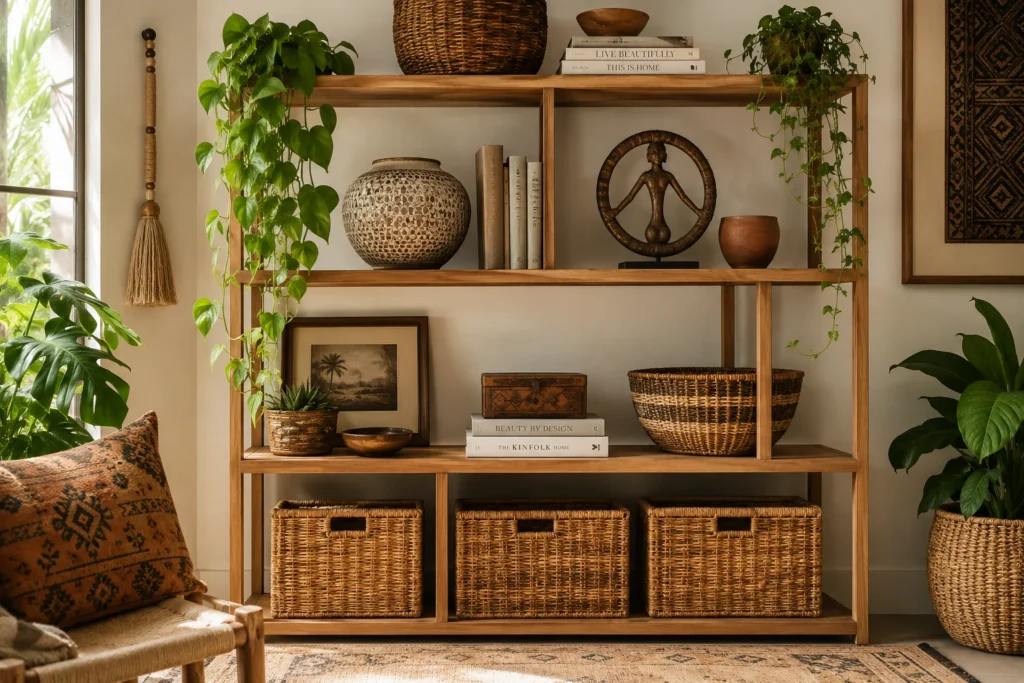
Traditional shelves often use symmetry, classic materials like brass and dark wood, and a formal mix of books, frames, and small sculptural objects. The overall feel leans polished and timeless rather than trendy.
Good shelf styling isn’t random, it follows a repeatable set of principles that designers use over and over.
Layering: Place taller items toward the back and shorter ones in front, with a leaned frame or two creating depth in between. This is what gives a flat shelf a sense of dimension.
Balance: Distribute visual weight evenly across a shelf or across a full unit, so one side doesn’t feel heavier than the other. Balance doesn’t always mean symmetry, just an even distribution of color, size, and shape.
Symmetry: When you want a formal, calm look, mirror objects on either side of a center point. Symmetry works especially well on built-ins flanking a fireplace or TV.
Color coordination: Pick two or three core colors and repeat them across the shelf, rather than letting every object bring its own unrelated color. This single habit does more to make a shelf look cohesive than almost anything else.
Texture: Combine smooth ceramics, rough wood, woven baskets, and soft books so no single material dominates. Texture variety is what keeps a neutral palette from feeling flat.
Height variation: Alternate tall, medium, and short objects rather than lining everything up at the same level. This creates the visual rhythm that makes a shelf feel intentional.
Negative space: Leave gaps between groupings so the eye has somewhere to land. A shelf with no breathing room reads as cluttered no matter how nice the individual pieces are.
A practical example: on a single floating shelf, lean a framed print at the back left, stack two books in front of it, set a medium vase to the right of the books, and finish with a small plant at the far right with visible gap on either end. That’s layering, height variation, and negative space working together in one small composition.
Overcrowding shelves: Packing every inch with objects removes any sense of hierarchy. Solution: edit down to your favorite pieces and group the rest in storage baskets instead.
Displaying only books: A shelf of nothing but books, however nice, lacks visual variety. Solution: break up every second or third book grouping with a small object or frame.
Ignoring scale: A tiny object on a large shelf looks lost, while an oversized piece on a small shelf looks cramped. Solution: match object size to shelf depth and width before buying decor.
Using too many colors: A shelf with five different colors competing for attention feels chaotic. Solution: limit the palette to two or three colors that repeat across the display.
Poor lighting: A beautifully styled shelf in a dim corner loses most of its impact after dark. Solution: add a small lamp, sconce, or LED strip near the shelf, especially if it sits against one of your accent wall ideas for living room where good lighting matters even more.
Lack of variety: All-glass, all-ceramic, or all-matching frames feels one-note. Solution: mix at least three different materials across any grouping.
No focal point: Without one standout piece, the eye doesn’t know where to look first. Solution: choose one larger or more striking object per shelf to anchor everything else around it.
Styling shelves well doesn’t require an expensive shopping trip.
For more practical decorating inspiration and home styling ideas, visit Economy Home Decor.
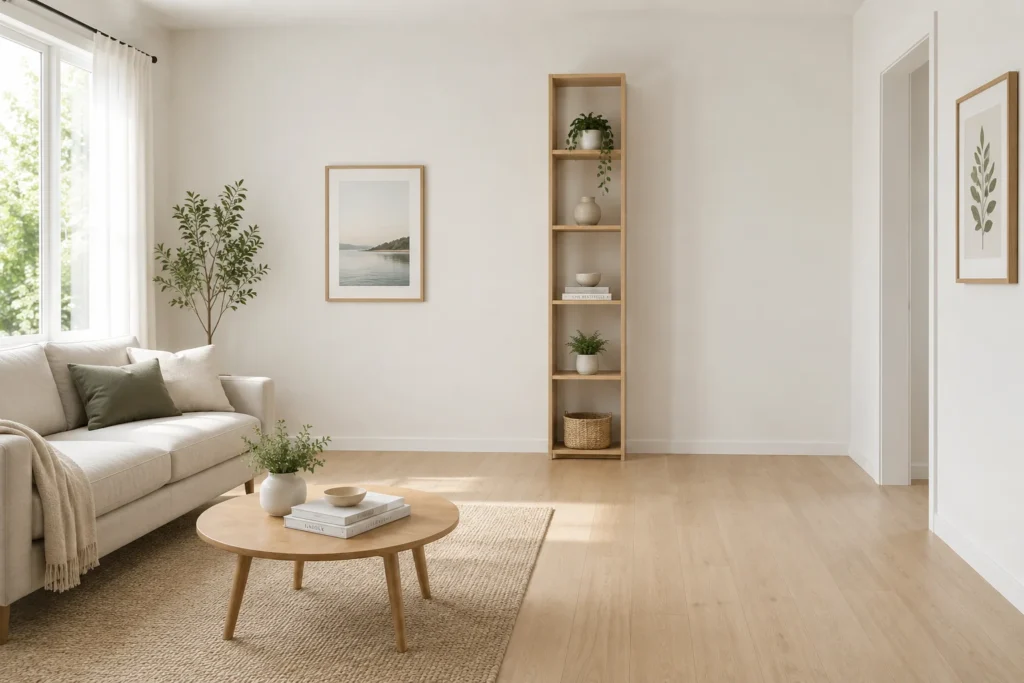
Vertical storage: Tall, narrow shelving units make use of wall height instead of eating up floor space, which matters a lot in a small room.
Floating shelves: Without a bulky frame or legs, floating shelves take up far less visual and physical space than a standalone bookcase.
Light color palettes: White, cream, and light wood tones on shelves help a small room feel more open instead of boxed in.
Multi-functional shelves: A shelf that holds a small desk lamp or doubles as a side table extension gets more use out of limited square footage.
Open styling: Avoid enclosed cabinets where possible, since open shelving keeps a small room from feeling closed off.
Minimal clutter: In a small space, even a slightly overstyled shelf reads as crowded fast. Keep groupings tighter and leave more negative space than you would in a larger room.
Start with a clear color palette, group objects by height and texture, and leave some empty space on every shelf. Add one focal piece per shelf and build the rest of the display around it.
Stick to three to five items per shelf, mixing books, a plant, and one decorative object like a vase or small sculpture. Avoid overloading floating shelves since they read best with fewer, larger pieces.
Limit your color palette, group objects instead of scattering them evenly, and leave visible gaps between groupings. If a shelf feels busy, remove one item rather than adding another.
Neutral tones like white, cream, beige, and wood work well as a base, with one or two accent colors repeated across the shelf. This keeps the display cohesive without looking flat.
Symmetry works well for formal, traditional rooms, especially flanking a fireplace or TV. Asymmetrical balance suits more relaxed styles like boho or Scandinavian, where even distribution matters more than mirrored placement.
Designers typically layer objects by height, repeat a small color palette, mix materials and textures, and always leave some negative space. The goal is a curated, lived-in look rather than a shelf that feels staged or empty.
Well-styled shelves come down to a handful of repeatable habits: a tight color palette, varied heights, mixed textures, and enough negative space for the eye to rest. None of it requires an unlimited budget or a background in design, just a willingness to edit and rearrange until the balance feels right.
The best shelves tell you something about the people who live there, whether that’s through travel souvenirs, a stack of well-loved books, or a single sculptural piece picked up on a whim. Decorate with purpose and personality rather than filling every inch, and your shelves will end up doing far more for your living room than you’d expect from a few planks on a wall.