Bring Life to Your Living Space
Bring Life to Your Living Space

There’s something about a blank wall that just feels… unfinished. Like the room is almost there, but not quite. You’ve got your sofa, your rug, your coffee table, and then you look up and there’s just nothing. Plain. Empty. A little sad.
The good news? You don’t need a designer’s budget or a renovation to fix it. The right wall decor can completely change the feel of a living room, making it warmer, bigger, more “you.” Whether your style is modern and minimal or cozy and eclectic, there’s a way to make your walls work for you.
Here are 17 practical, stylish living room wall decor ideas with real placement tips, budget-friendly options, and the mistakes you’ll want to skip.
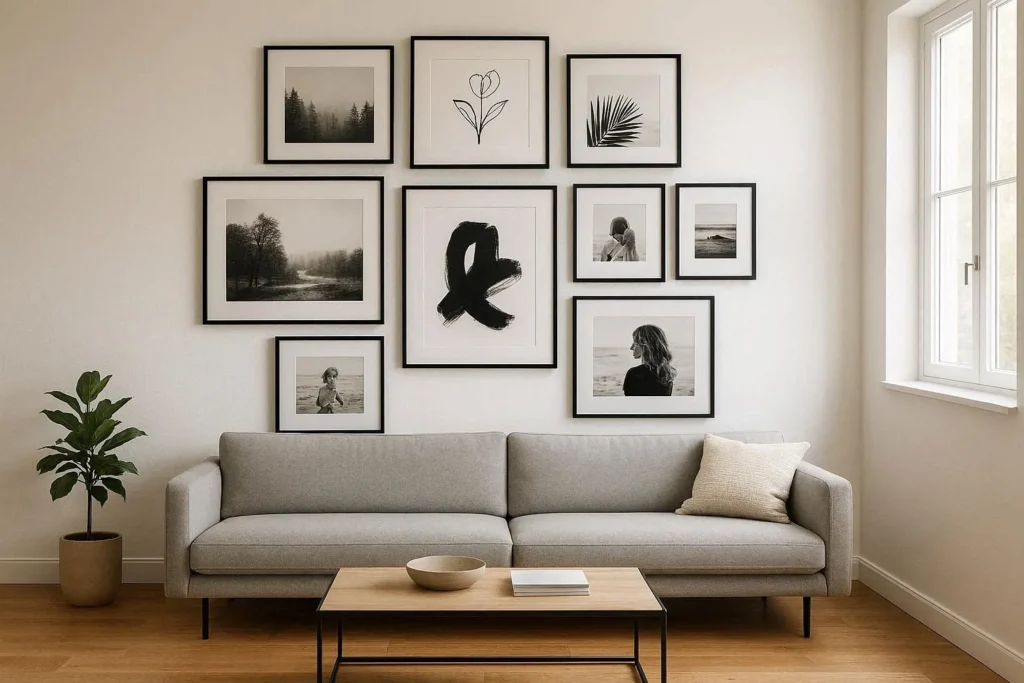
Gallery walls are one of the most popular wall decor ideas for good reason. They’re flexible, personal, and can fill a large space without feeling cluttered. The trick is planning the layout before you pick up a hammer.
Lay all your frames on the floor first and arrange them until it feels balanced. Keep the spacing consistent, about 2 to 3 inches between frames is the sweet spot. Start from the center and work outward.
Budget tip: Mix thrifted frames in a single color (black or white works great) for a cohesive look without the cost.
Sometimes less really is more. A single oversized canvas or print can anchor your whole living room without you needing to fill every inch of wall space. This works especially well on the wall behind your sofa.
For a standard sofa, aim for a piece that’s about two-thirds the width of the couch. It should feel proportional, not floating in a sea of empty wall.
Budget tip: Large canvas prints from print-on-demand sites can cost a fraction of what gallery art goes for. Search for digital art prints you can size up.
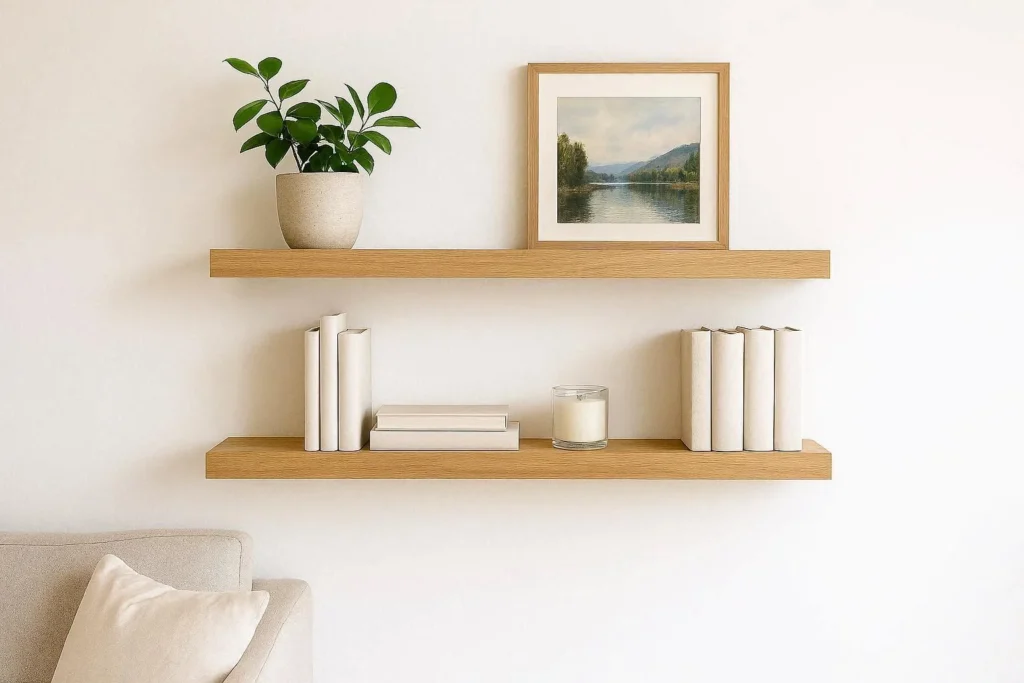
Floating shelves give you the best of both worlds: practical storage and a styled display wall. The key is not overloading them. Use the rule of three, group items in odd numbers, vary the heights, and mix textures (a book, a plant, a small frame).
Position shelves at eye level or just above, roughly 60 inches from the floor to the center of the shelf. Leave breathing room between items. A crowded shelf loses all its charm.
Budget tip: IKEA’s LACK shelves are budget-friendly and easy to install. Paint them to match your wall for a built-in look.
For more ideas on styling shelves and surfaces around your home, check out these wall art ideas that work across different rooms.
A well-placed mirror is one of the smartest small living room wall ideas out there. It bounces light, makes the room feel bigger, and adds a decorative element all at once.
Place your mirror opposite a window so it can reflect natural light. Avoid placing it directly facing the main seating area. Catching yourself every time you sit down gets old fast.
Budget tip: Thrift stores and estate sales are goldmines for decorative mirrors. A coat of spray paint on an old frame makes it look brand new.
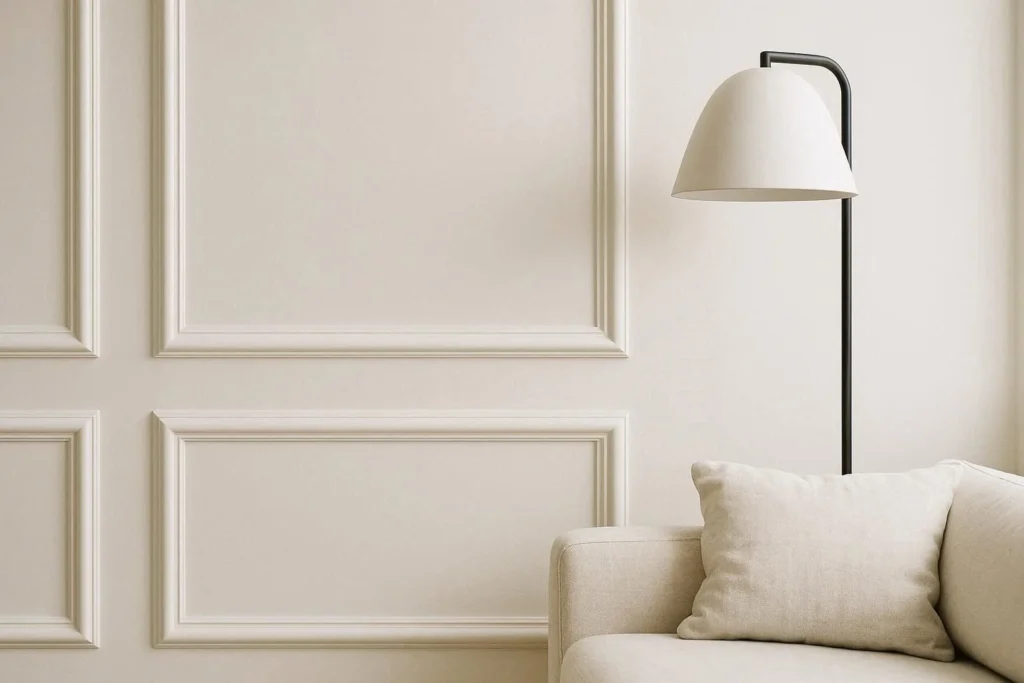
If you want to add architectural character without major renovation, wall molding is a game-changer. Simple picture frame molding painted the same color as your wall adds texture and depth that instantly elevates a room.
You don’t need a contractor for this. Peel-and-stick molding strips exist and they actually look great. Map out your panel pattern with painter’s tape first so you can see how it’ll look before committing.
Budget tip: MDF trim from a hardware store is inexpensive and paints beautifully.
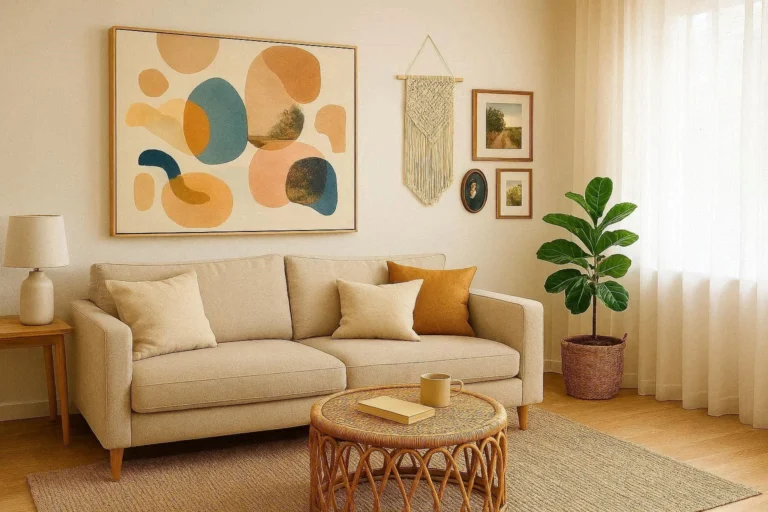
Woven wall hangings, macramé, and textured fiber art add warmth and dimension that flat prints can’t replicate. They’re especially good in neutral rooms that need some organic life.
Hang a single large textile as a focal point above the sofa, or cluster three smaller pieces at varying heights for a more relaxed, bohemian feel.
Budget tip: Etsy has tons of handmade options at various price points. Or go the DIY route. There are beginner macramé tutorials that take just a few hours.
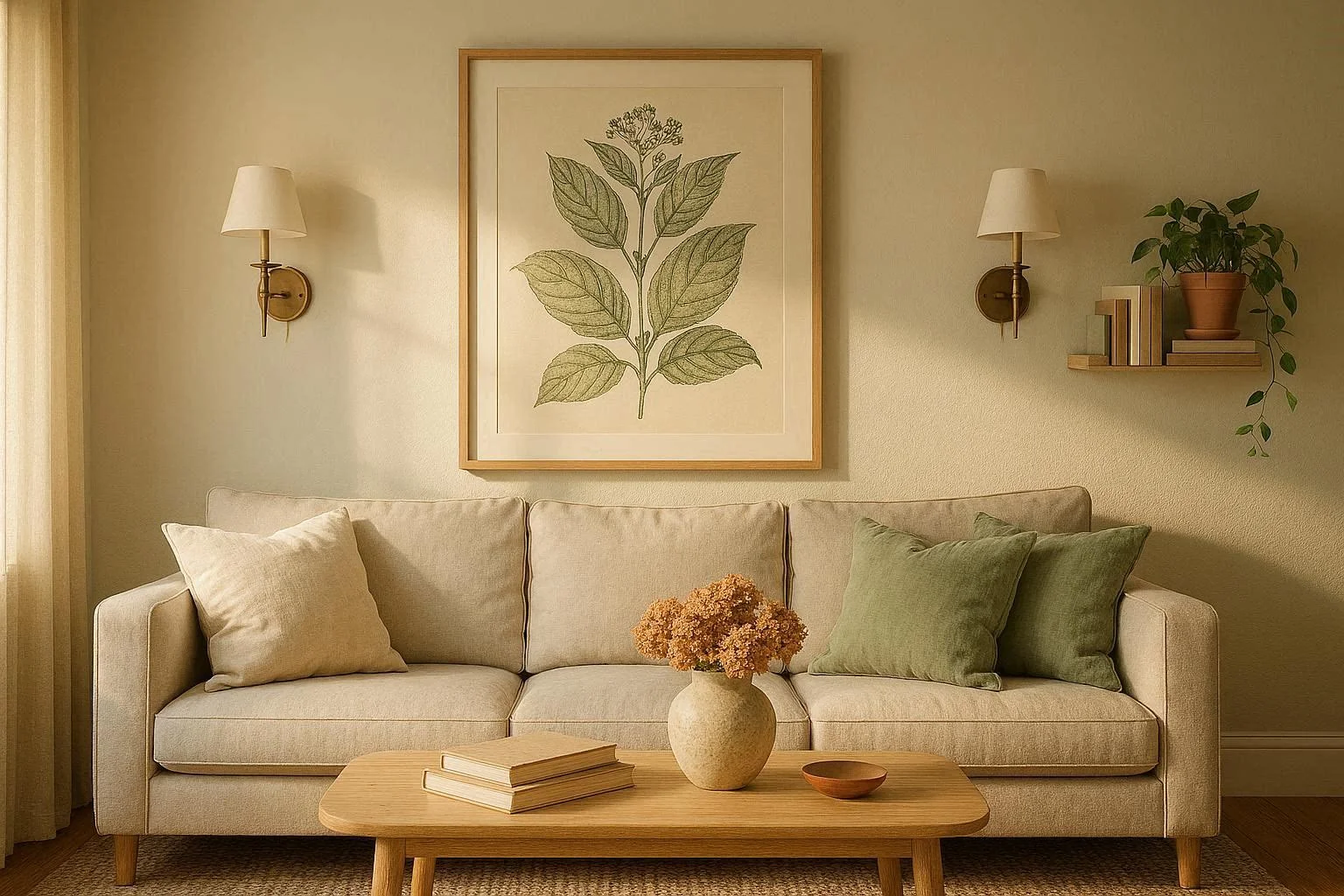
Lighting is wall decor, full stop. A pair of sconces flanking your sofa or fireplace adds atmosphere and draws the eye in a way that art can’t. They layer your lighting and make a room feel intentional.
Plug-in sconces are a renter’s best friend, no electrician needed. Mount them at about 60 to 66 inches from the floor, spaced evenly on either side of your focal piece.
For a full guide on styles and placement, these wall sconce decorating ideas are worth exploring before you shop.
A vertical plant arrangement, whether it’s a few mounted planters, a pegboard with pots, or a modular planter system, brings life and color to a plain wall. This works especially well near a window where the plants will actually thrive.
Start small with three to five low-maintenance plants like pothos, trailing string of pearls, or air plants. They’re forgiving if you forget to water once in a while.
Budget tip: Inexpensive terracotta pots with simple wall-mounted brackets look stunning and cost almost nothing.
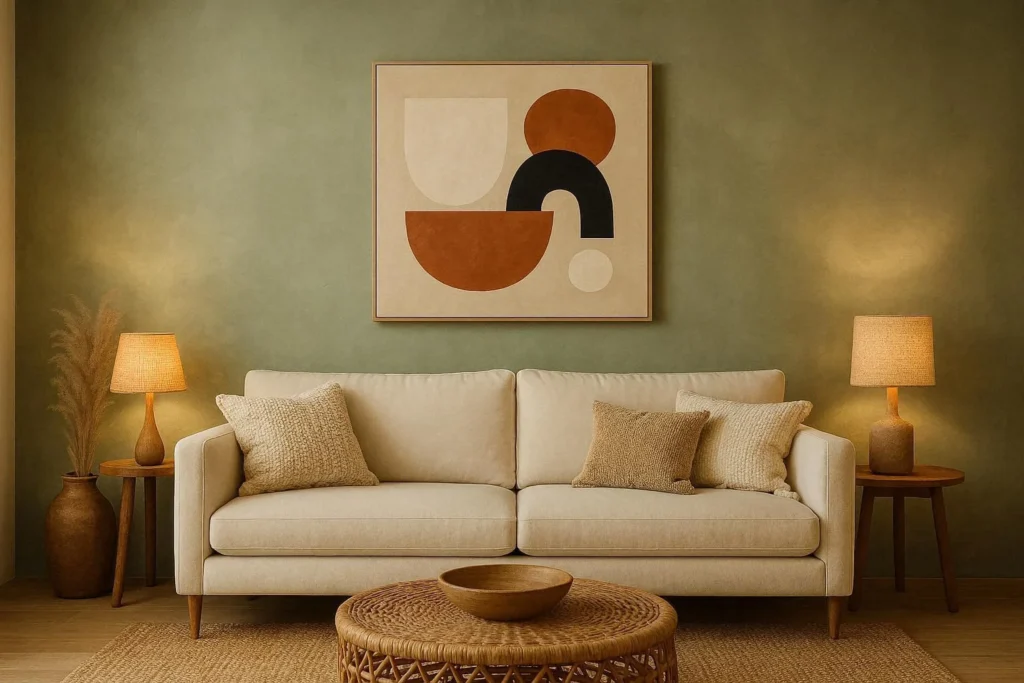
Sometimes the decor IS the wall. A bold paint color, wallpaper, or even a limewash finish on one wall creates a backdrop that makes everything else pop: furniture, art, plants.
Choose the wall you naturally look at when you walk in the room. Keep the other three walls neutral so the accent wall can do its job without competing.
Budget tip: Peel-and-stick wallpaper has come a long way. It’s removable, renter-friendly, and looks genuinely good when applied carefully.
This one is wildly underrated. Washi tape comes in hundreds of patterns, is completely removable, and can be used to create everything from geometric designs to faux tile patterns on a wall.
Create a large abstract grid above a console table, or outline a simple mural design in your living room. It peels off cleanly when you’re ready for something new.
Cost: A few dollars per roll. Total wall art budget? Under $20.
Most living rooms have a TV. The question is how to make it look intentional rather than like an afterthought. Frame the TV with floating shelves on either side for symmetry, add a few decorative objects, and run the cables through a cord cover kit.
Consider mounting the TV at eye level when seated, not as high as it can go. A common mistake is mounting too high, which causes neck strain and looks awkward from across the room.
Buy a yard of bold, patterned fabric and stretch it over an artist’s canvas frame. Instant custom wall art that’s completely unique to you. This works especially well with vintage textile patterns, graphic prints, or linen textures.
Three matching frames in a row create a clean, modern living room wall decor look. Or go maximalist with mismatched fabrics in coordinating colors.
A focused wall of black and white photography, whether personal travel shots, printed vintage photos, or fine art prints, feels timeless and sophisticated. The monochrome palette keeps everything cohesive no matter how many pieces you use.
Print your favorite travel photos in 5×7 or 8×10, use matching thin black frames, and arrange them in a clean grid pattern. Simple, personal, and genuinely impressive.
A large wall clock isn’t just functional, it’s a statement piece. Oversized clock faces, especially in minimal or industrial styles, fill vertical wall space naturally and read as art.
Scale matters: for a standard living room wall, look for something in the 24 to 36-inch range. Anything smaller gets lost.
Budget tip: Many oversized clocks can be found at HomeGoods, TJ Maxx, or similar stores for well under $50.
Floor-to-ceiling bookshelves or even a single long floating shelf stacked with books creates a warm, lived-in aesthetic. Books are color and texture in themselves. Arrange them by spine color for a visually satisfying effect.
Mix in a few decorative objects between book stacks to break the monotony and add depth.
Hammered metal wall sculptures, abstract cut-metal pieces, or geometric metal arrangements add dimension and catch light beautifully. They work especially well in modern and industrial spaces.
Look for pieces with some patina or texture. Flat polished metal can look cheap, while hammered, brushed, or darkened finishes have real character.
Large-scale prints of plants, leaves, botanicals, or landscapes feel calm and fresh in a living room. They work in almost any style: modern, bohemian, traditional, or transitional.
Print on matte paper for a more upscale feel. Glossy prints tend to look more commercial than artistic.
Before you buy anything, consider these three things:
Wall size: A large blank wall needs scale. One small print on an 8-foot wall will look lost. Either go big (a single large piece) or fill the space (gallery wall). For a dedicated guide on handling large walls, take a look at these decoration ideas for a large wall.
Furniture placement: Your wall decor should relate to the furniture below it. Art above a sofa should be centered and proportional. Shelves above a console should match its width roughly. Floating decor that ignores the furniture underneath looks disconnected.
Lighting conditions: Dark walls need brighter or lighter art. A north-facing room benefits from warm-toned pieces and lighting. Natural light can fade delicate prints, so place sentimental pieces away from direct sun.
Not sure how many walls to actually decorate? This guide on how many walls in a room should be decorated breaks it down clearly.
Hanging art too high. This is the number one mistake. Eye level means eye level, that’s about 57 to 60 inches from the floor to the center of the piece, not to the top. When art is hung too high, it feels disconnected from the room.
Overcrowding the wall. More is not always more. Leave breathing room. A thoughtfully spaced arrangement of three pieces is more impactful than twelve pieces fighting for attention.
Ignoring scale. A tiny picture on a huge wall looks like a sticky note. A huge piece in a tiny hallway feels oppressive. Match the scale of your decor to the size of your wall and the room.
Poor color coordination. Your wall decor doesn’t have to match your furniture exactly, but it should exist in the same general color world. Pick one or two colors from your room and echo them in your art.
Forgetting to patch test. Before hanging anything heavy, know your wall type (drywall vs. plaster vs. brick). Use the right anchors for the weight of the piece.
For more room-specific tips, these living hall decoration ideas are helpful if your living room flows into an open entryway.
Small living rooms have their own rules. Here’s what actually works:
Use vertical space. Tall, narrow art or a floor-to-ceiling shelving arrangement draws the eye up and makes the ceiling feel higher.
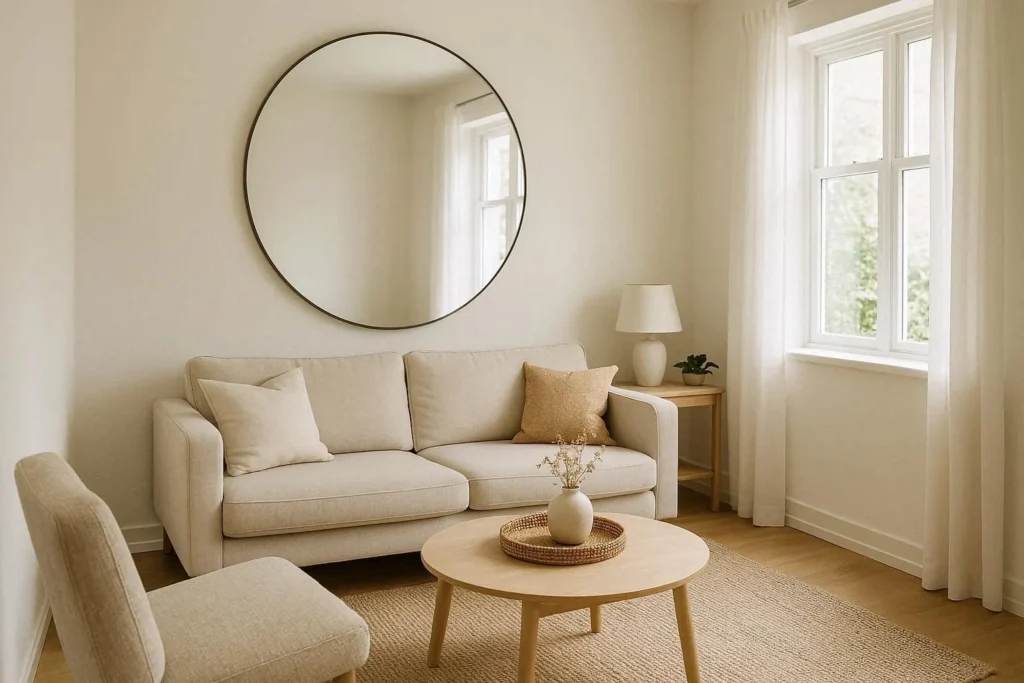
Mirrors are your best friend. A large mirror on the main wall can visually double the size of a small room. Position it to reflect a window or light source for maximum effect.
Keep it simple. One or two well-chosen pieces beat a crowded gallery in a small space. Clutter on the walls adds visual noise to an already tight room.
Light colors and frames. Thin, light-colored frames feel less heavy than thick dark ones. In a small room, every visual weight counts.
Use the whole wall. Don’t leave large sections bare and then crowd one corner. Distribute decor evenly.
If you’re working with a particularly tight or narrow layout, these narrow living room decorating ideas will give you specific strategies that work.
For more inspiration across your entire home, Economy Home Decor covers a wide range of decorating topics to help you create a home you love on any budget.
The best approach for a large wall is to either go bold with one oversized piece of art (at least 40 inches wide for most walls), or fill it intentionally with a gallery wall, a combination of shelving and art, or a statement accent wall treatment. The key is matching the scale of your decor to the size of the wall. A small piece on a large wall will always look wrong.
Mirrors, vertical art, and floating shelves work best in small spaces. Mirrors create the illusion of more space by reflecting light. Vertical art draws the eye upward, making the ceiling feel higher. Keep the number of pieces limited. Two or three well-placed items are better than a crowded arrangement.
It doesn’t need to match exactly, but it should complement your furniture. Pull colors from existing pieces in the room: your rug, cushions, or upholstery, and echo them in your art. This creates cohesion without requiring everything to be the same color or style.
The standard rule is to hang art so its center sits at eye level, roughly 57 to 60 inches from the floor. When hanging art above furniture like a sofa or console, leave 6 to 8 inches of space between the top of the furniture and the bottom of the frame. Resist the urge to hang higher. It almost always looks awkward.
Absolutely. The most interesting rooms rarely stick to a single style. The trick is finding a common thread: a consistent color palette, similar frame materials, or a shared mood. Mixing a modern print with a vintage mirror and a woven textile works beautifully when they all share warm tones, for example.
Your walls are one of the biggest and most underused design opportunities in your home. Whether you go big with a statement mural, keep it simple with a single oversized print, or build out a layered gallery wall over time, the important thing is to start somewhere.
You don’t have to do it all at once. Pick one wall. Pick one idea from this list. Put something up there and see how it feels. Decorating is a process, not a one-day project, and the homes that feel the most personal are the ones that were built slowly, thoughtfully, and with genuine intention.
Your walls are waiting. Make them say something.