Bring Life to Your Living Space
Bring Life to Your Living Space

Walk into most living rooms and something feels off. The furniture is fine. The rug is nice. But the walls? They’re just… there. Flat, blank, and forgettable.
That’s exactly the problem an accent wall solves. One bold, intentional wall can anchor your entire room, give your eye a place to land, and make the space feel designed rather than decorated.
The good news is you don’t need a big budget or a design degree to pull it off. Whether you love color, texture, or a more modern look, there are accent wall ideas for living rooms that work in any style home. Let’s get into the best ones.
Before you pick a color or material, you need to pick the right wall. This decision matters more than most people realize.
The wall behind your sofa is almost always the safest bet. It’s the first thing guests see when they walk in, and it frames the seating area naturally.
The TV wall is another popular choice, especially in rooms where the television is already a focal point. Adding an accent wall here ties everything together and makes it feel purposeful.
The wall you see first when you enter the room is also a strong option. It sets the tone immediately and makes a great first impression.
Avoid accent walls on short side walls that aren’t visible from the main seating area. They rarely make the impact you’re hoping for.
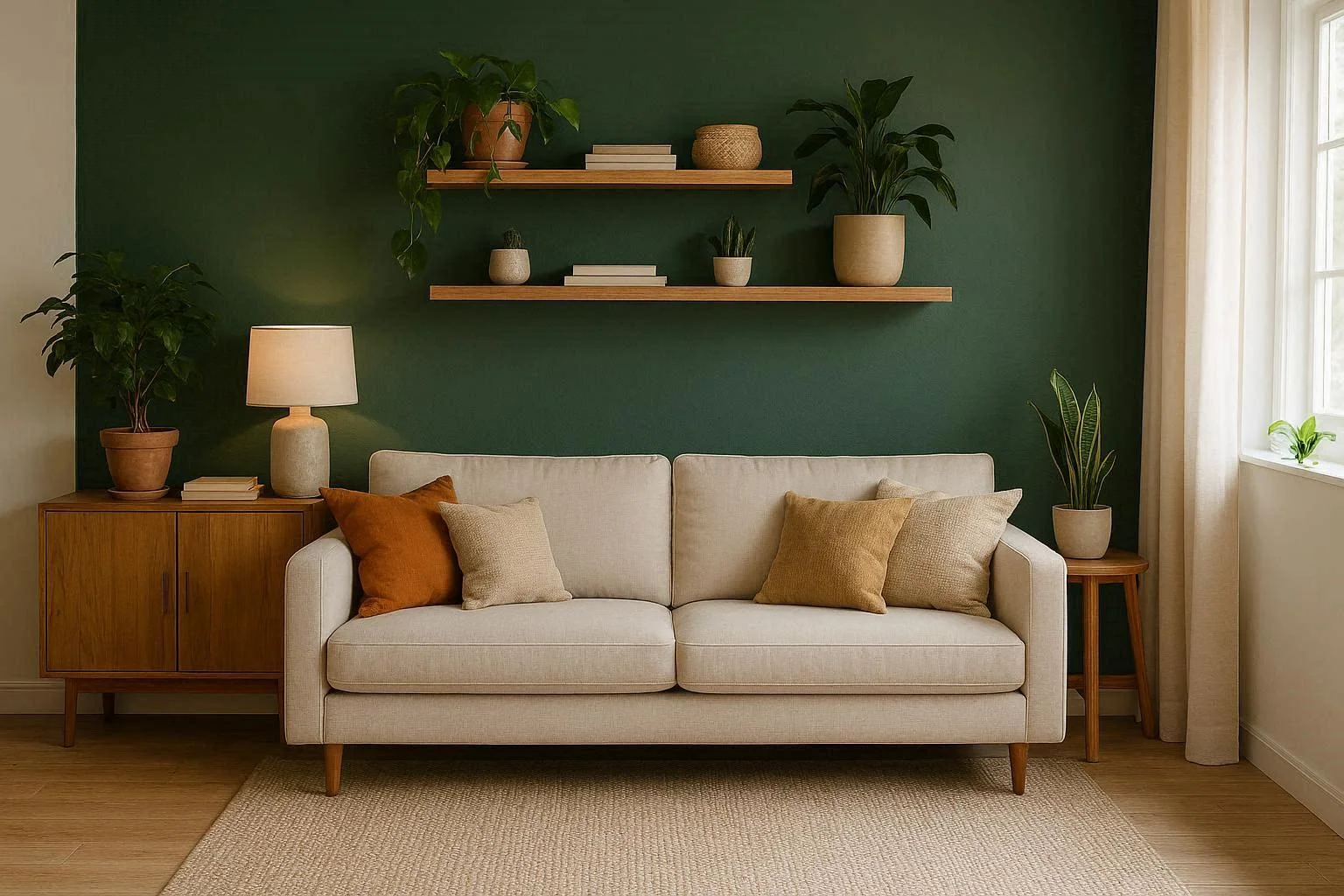
Nothing transforms a room faster than a deep, saturated color on one wall. Think forest green, navy blue, terracotta, or charcoal. These colors add drama without overwhelming the whole space.
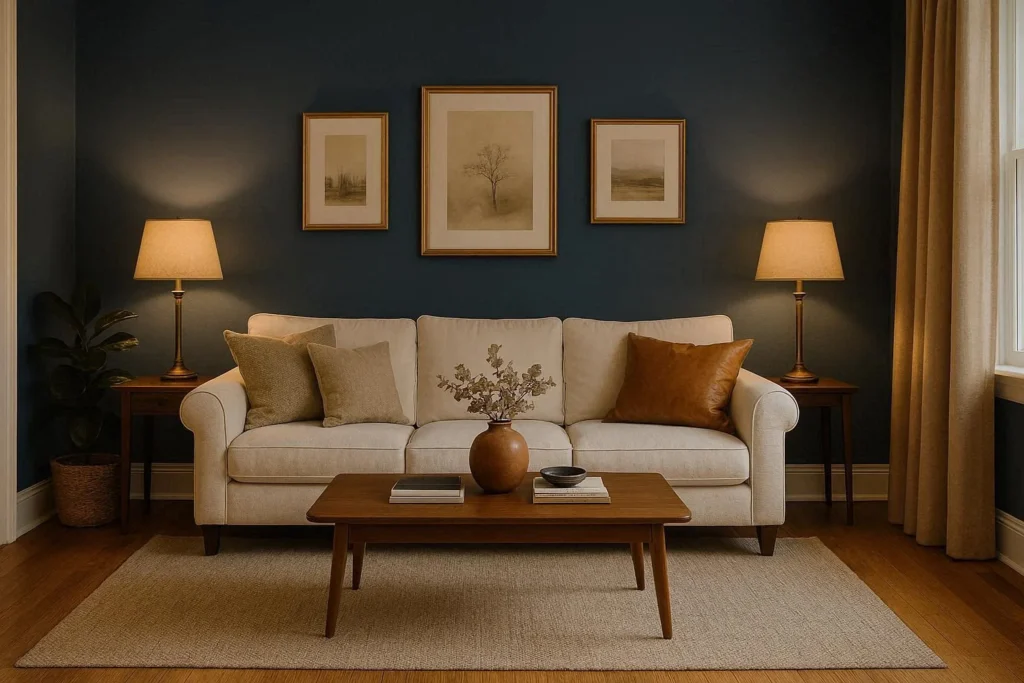
The key is keeping the other three walls neutral so the bold wall can breathe and stand out.
Practical tip: Test your color in a large patch (at least 12×12 inches) before committing. Paint looks very different in daylight versus evening light.
Budget-friendly option: A single gallon of paint usually covers a standard accent wall and costs $30 to $50.
Who says accent walls need to be bold? A warm beige, soft greige, or earthy clay can still create contrast in a white or light-walled room.
This approach works beautifully in Scandinavian, japandi, or minimalist interiors where you want warmth without a heavy visual punch.
Practical tip: Choose a neutral that’s 2 to 3 shades deeper than your main wall color for enough contrast.
Split your wall horizontally with two different paint colors separated by a thin strip of trim or a painted line. The lower half is typically darker, and the upper half is lighter.
This gives the room a tailored, elevated look and works especially well in rooms with high ceilings.
Practical tip: Use painter’s tape and a level for a crisp, clean line between the two tones.
Warm, natural, and endlessly versatile, a wood panel accent wall works in everything from farmhouse to modern homes. You can use shiplap, tongue-and-groove boards, or reclaimed wood planks depending on the look you’re going for.
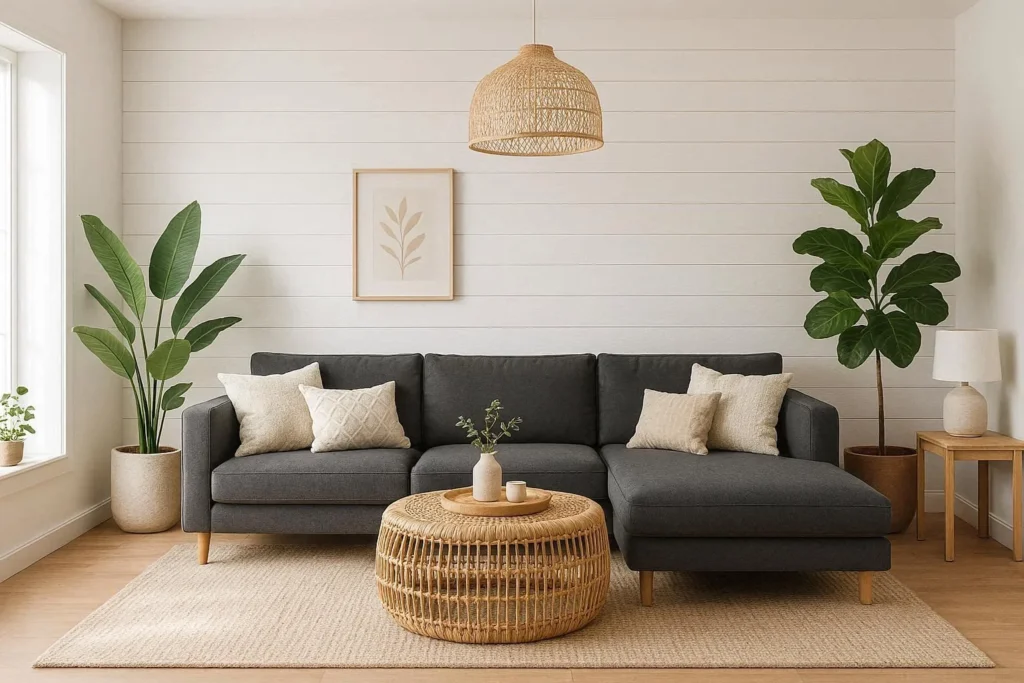
If you’re already exploring living room wall decor ideas, a wood accent wall is one of the most impactful changes you can make. It adds depth, texture, and that lived-in warmth that paint alone can’t give you.
Practical tip: Paint your wood panels a single color (white, black, or sage green) for a more modern result rather than leaving them as raw wood.
Budget-friendly option: Peel-and-stick wood panels are available for under $2 per square foot.
An exposed brick or faux stone wall brings an industrial or rustic edge to a living room. You can achieve this with real brick slips, lightweight stone cladding, or even realistic-looking wallpaper.
It adds incredible texture and visual interest without competing with your furniture.
Practical tip: Seal real brick with a matte sealer to reduce dust and make it easier to clean.
Budget-friendly option: Faux brick panels at home improvement stores run about $10 to $20 per panel and are surprisingly convincing.
Wainscoting, picture frame molding, and board-and-batten panels are classic techniques that elevate a plain wall into something architectural. You paint it all one color so it reads as a cohesive design feature.
This look is especially popular in traditional, transitional, and French country interiors.
Practical tip: You don’t need fancy carpentry skills for this. Pre-made molding strips from the hardware store work beautifully when cut to size with a miter saw.
A gallery wall turns a collection of art, photos, and frames into a single unified feature. Done right, it’s personal, eye-catching, and completely unique to your home.
Mix frame sizes and a few different styles for an organic look, or use matching frames for something more curated and modern.
Practical tip: Lay your arrangement out on the floor before putting a single nail in the wall. This saves a lot of patching later.
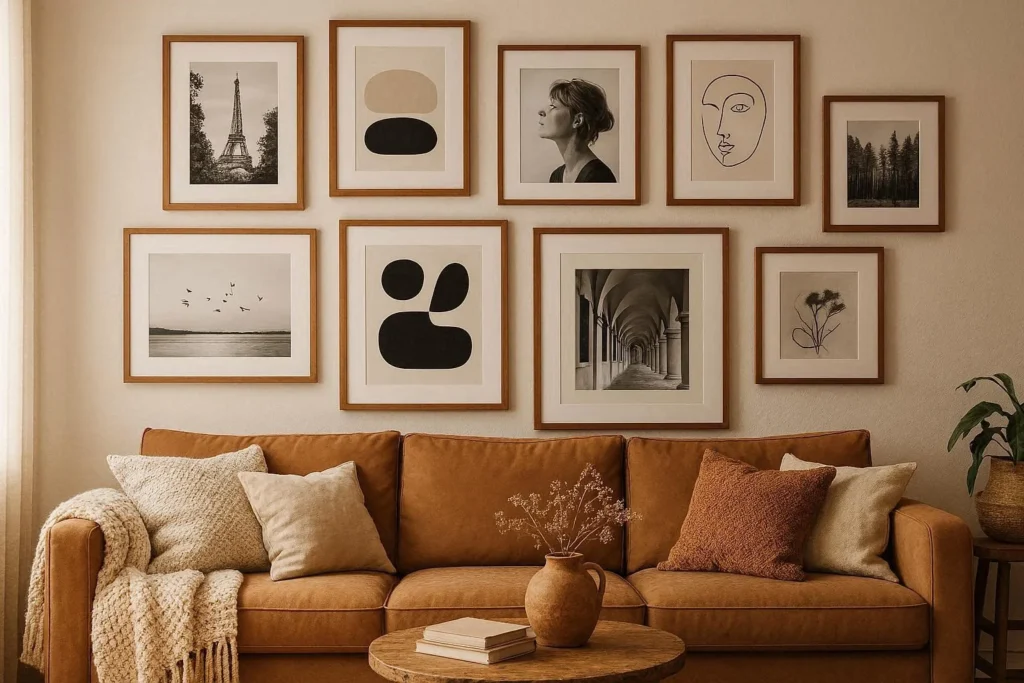
For more inspiration, browse these wall art ideas to see how different arrangements and styles work in real living spaces.
One very large piece of art can function as an accent wall all on its own. A canvas print, a large framed poster, or even a hand-painted mural can stop people in their tracks.
This is a great option if you love a clean, uncluttered look but still want visual impact.
Practical tip: The art should be roughly two-thirds the width of your sofa for proper proportion.
Budget-friendly option: Large canvas prints from print-on-demand sites can cost as little as $40 to $80.
Combining mirrors, shelves, plants, hanging baskets, and art into one layered wall arrangement creates a curated, eclectic look. This style works well in bohemian, maximalist, and transitional living rooms.
For ideas on going bold and unexpected, take a look at these creative home decor ideas that bring personality and playfulness to any space.
Practical tip: Start with a large anchor piece (like a mirror or painting) and build around it.
Wallpaper has made a massive comeback, and for good reason. A bold pattern or textured wallpaper on one wall can do more work than almost any other design choice.
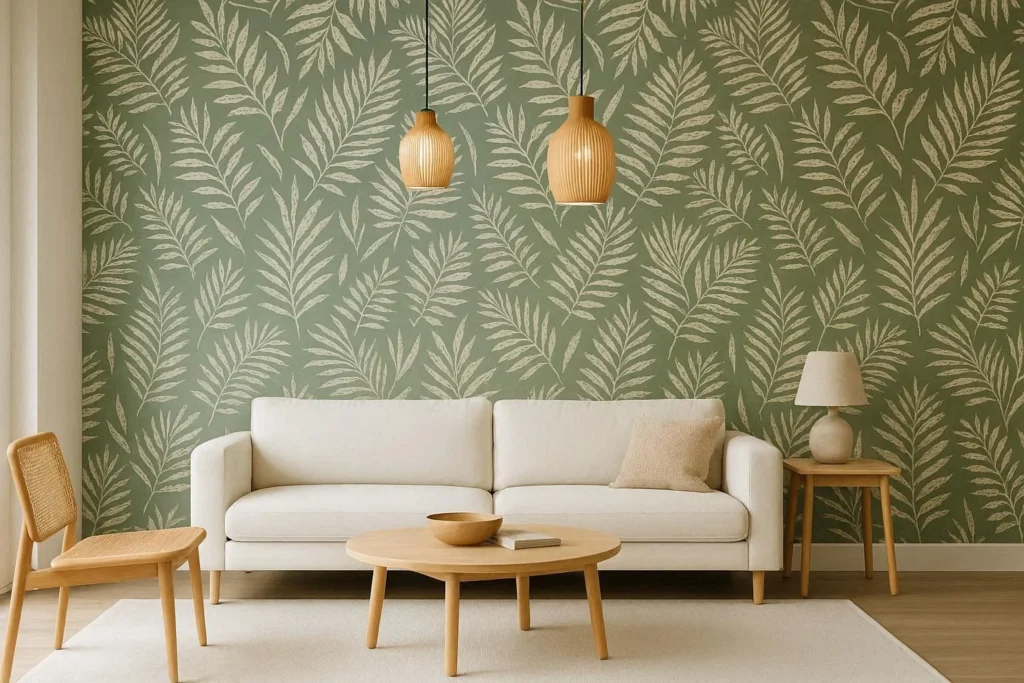
Botanical prints, geometric patterns, abstract art-inspired papers, and metallic textures are all popular right now.
Practical tip: Peel-and-stick wallpaper is a great option for renters or anyone who’s not ready to fully commit. It comes off cleanly without damaging the wall.
Budget-friendly option: Peel-and-stick rolls start at about $20 to $40 per roll online.
Geometric designs on an accent wall can be painted with tape, applied with removable decals, or created with 3D wall panels. Triangles, diamonds, hexagons, and chevrons all make bold statements.
This is one of the most popular modern accent wall ideas and it works especially well in contemporary and mid-century modern living rooms.
Practical tip: Use a projector to map out your geometric design on the wall before taping. It makes the process much faster and more accurate.
Sometimes less really is more. A single color, a subtle texture, or a simple horizontal stripe on one wall can create a focal point without any fuss.
This approach suits people who love clean lines, simple palettes, and spaces that feel calm and uncluttered.
Practical tip: In a minimalist accent wall, the finish matters just as much as the color. A matte or limewash finish adds quiet texture without visual noise.
Limewash is a traditional painting technique that creates a soft, mottled, aged effect on walls. It looks expensive and artisanal but is actually quite affordable and doable as a DIY project.
It works beautifully in Mediterranean, rustic, and organic modern interiors.
Practical tip: You don’t need special plaster walls for limewash paint. Many modern limewash paints are formulated to work on standard drywall.
While horizontal shiplap is the more common choice, running your boards vertically draws the eye upward and makes ceilings feel taller. It’s a small change with a surprisingly big effect.
This is especially useful in rooms with lower ceilings that feel cramped.
Practical tip: Vertical boards need a horizontal backing strip (called a nailer) for proper installation. Add one midway up the wall before attaching your boards.
Color blocking uses two or more contrasting colors in clear sections to create a graphic, modern look. It doesn’t require any art or materials beyond paint, and the results are striking.
Try a large rectangle of deep color centered on the wall behind your sofa for a sophisticated take on this trend.
Practical tip: Keep the shapes simple and geometric. Organic or freehand shapes look beautiful in photos but are much harder to execute cleanly.
Choosing the wrong wall. The accent wall needs to be a natural focal point. If you’re putting one on a side wall nobody looks at, it won’t read as intentional.
Going too bold without balance. A very dark or heavily patterned wall needs to be balanced with lighter furniture, rugs, and curtains. If everything competes, nothing stands out.
Ignoring the rest of the room. Your accent wall should relate to the colors and textures already in your space. A random dark wall in an otherwise bright white room can feel jarring rather than designed.
Overcomplicating it. More layers don’t always mean more impact. Sometimes a clean, simple painted wall in the right color does more than a complicated gallery arrangement.
Skipping prep. Paint or wallpaper over damaged, dirty, or unprimed walls will never look as good as it should. Always sand, clean, and prime before applying anything.
Small rooms need a little more care when it comes to accent walls. The goal is to create impact without making the space feel boxed in.
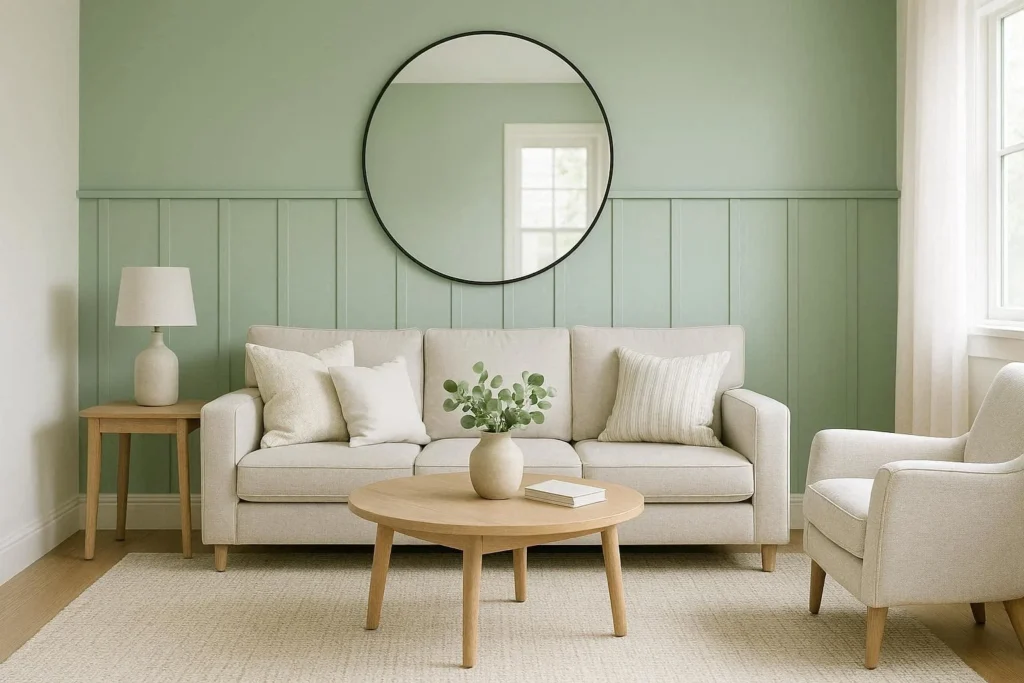
Use lighter colors. Dusty rose, sage green, pale blue, and warm cream can all add visual interest without closing in the walls.
Stick to subtle textures. Limewash, soft wallpaper, or minimal molding will add depth without overwhelming a smaller footprint.
Go vertical. Vertical elements like tall board-and-batten or vertical shiplap pull the eye up and make the room feel taller.
Use mirrors. A mirrored wall panel or a collection of mirrors on your accent wall will reflect light and make the space feel twice as large.
For more targeted strategies, these small living room decorating ideas cover exactly how to make compact spaces feel stylish and open.
Keep furniture light. Pair your accent wall with lighter, airier furniture so the room doesn’t feel heavy.
If you’re working with a very large living room wall, the challenge is different. You need something with enough scale to fill the space without looking sparse.
Consider a full gallery arrangement, a large mural, or a combination of paneling and paint. A fireplace wall often benefits from floor-to-ceiling stone or wood treatment to match its scale. For comprehensive guidance, these decoration ideas for a large wall show how to handle oversized spaces with style and confidence.
An accent wall is one wall in a room that’s treated differently from the others, usually with a different color, texture, material, or decor arrangement. It creates a focal point and gives the room a sense of intention and design.
In most living rooms, the wall behind the sofa or the wall the TV sits on works best. These are natural focal points that your eye already goes to. Avoid choosing a wall that’s hidden behind furniture or not visible from the main seating area.
It depends on your style. Deep jewel tones like navy, emerald, and burgundy make a bold statement. Earthy tones like terracotta, ochre, and sage are warmer and more organic. Soft neutrals like warm white, greige, or blush work well in minimal or Scandinavian spaces.
Yes. Paint is the most affordable option and can have just as much impact as expensive materials. Peel-and-stick wallpaper and removable wall panels are also budget-friendly choices that don’t require permanent commitment.
They do, but you need to be more strategic. In an open-plan space, your accent wall should clearly define the living area and relate to the colors used in nearby zones like the kitchen or dining area to keep things cohesive.
An accent wall is one of the simplest, most effective ways to transform a living room. You don’t need to renovate. You don’t need to spend a fortune. You just need to pick one wall, make a thoughtful choice, and commit.
Start with the wall that already draws your eye when you walk into the room. That instinct is usually right.
Whether you go bold with color, warm with wood, or creative with wallpaper, the best accent wall is one that feels like a natural part of your home rather than a design trick. Take your time, trust your taste, and enjoy the process. The result is almost always worth it.