Bring Life to Your Living Space
Bring Life to Your Living Space

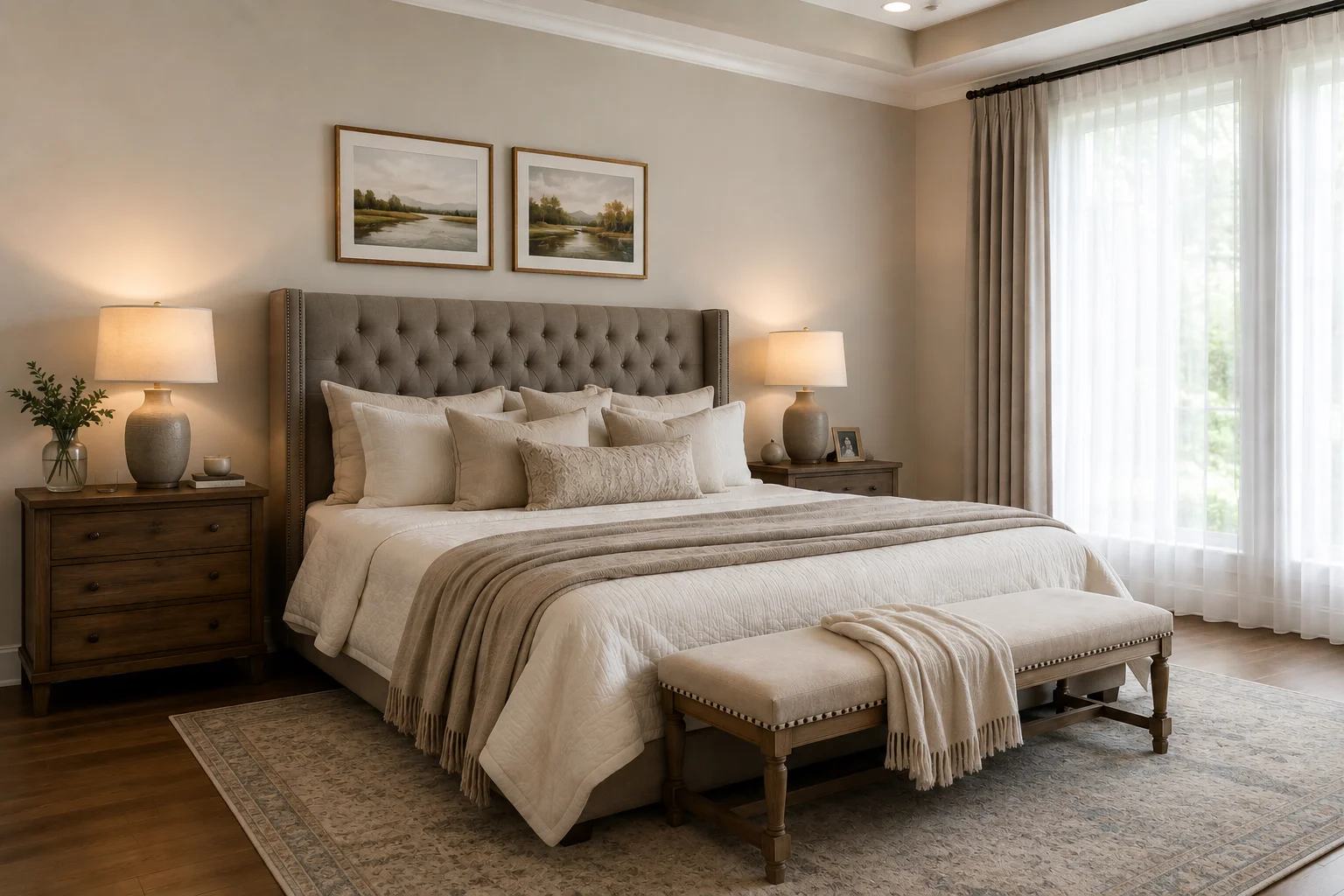
Your master bedroom should feel like the calmest room in your home, but for a lot of homeowners it ends up being the most neglected. Living rooms get the statement sofas. Kitchens get the open shelving and pendant lights. The bedroom often gets whatever furniture was left over after everything else was decorated.
That’s a shame, because this is the one room where you actually spend a third of your life. A well-planned bedroom doesn’t just look better in photos. It helps you wind down faster at night and wake up in a space that feels organized instead of cluttered.
The most common mistakes are easy to spot once you know what to look for: mismatched furniture pieces, bare walls, lighting that’s either too harsh or too dim, and a color palette that was never really chosen on purpose. None of these problems require a full renovation to fix.
This guide walks through 25 practical bedroom decorating ideas, style-specific advice, small-space solutions, color guidance, common mistakes, and budget-friendly tips you can start using today, no matter your room size or spending limit.
Neutral bedding in soft whites, creams, or warm grays instantly makes a bed look more expensive and inviting. It works because neutral tones don’t compete with other elements in the room, so the whole space feels calmer.
Best for: Any bedroom size or style.
Styling tip: Mix at least two textures, like a waffle-weave blanket over a smooth cotton duvet, to avoid a flat look.
Mistake to avoid: Using bedding that’s too thin or cheap-feeling. Texture matters more than thread count claims.
A bold headboard becomes the visual anchor of the entire room. Upholstered, channel-tufted, or wood-paneled headboards all add instant character without requiring you to redecorate anything else.
Best for: Bedrooms with a plain or unfinished-looking bed frame.
Styling tip: Choose a headboard that’s wider than your mattress for a more substantial look.
Mistake to avoid: Picking a headboard so tall it overwhelms a low-ceilinged room.
One wall in a deeper color, behind the bed, creates depth and makes the room feel intentionally designed rather than thrown together.
Best for: Larger bedrooms or rooms with good natural light.
Styling tip: Stick to one accent wall, not two, so the effect doesn’t feel busy.
Mistake to avoid: Choosing a color so dark it shrinks a small room visually.
A single large piece of art does more for a room than several small ones scattered around. It gives the eye one clear focal point.
Best for: Rooms with tall or wide blank walls.
Styling tip: The art should be roughly two-thirds the width of the furniture it hangs above.
Mistake to avoid: Hanging artwork too high. The center should sit at eye level when standing.
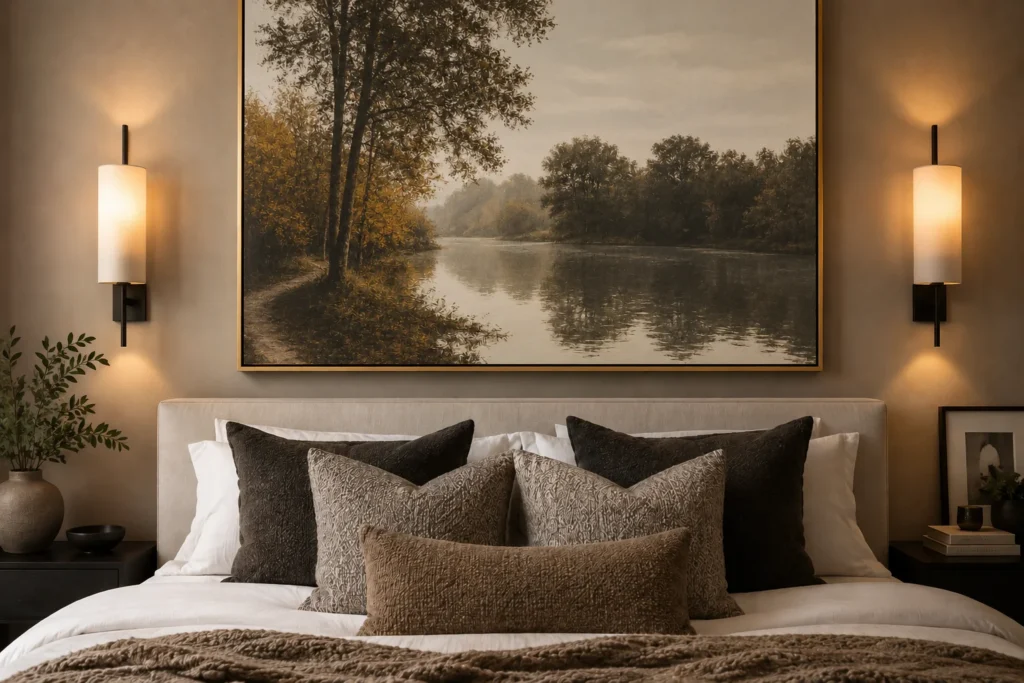
The space above the headboard is one of the most visible spots in the entire room, yet it’s often left empty. A few well-chosen pieces here can totally change the feel of the bedroom.
If you want more inspiration specifically for this space, this guide on over-the-bed wall decor ideas covers several layout options in detail.
Best for: Any bedroom with a visible headboard wall.
Styling tip: Keep the lowest edge of your decor about 8 to 12 inches above the headboard.
Mistake to avoid: Hanging anything too heavy without proper wall anchors.
Matching nightstands create symmetry, which is one of the easiest ways to make a bedroom feel calm and put-together.
Best for: Traditional, modern, and hotel-inspired bedrooms.
Styling tip: Choose nightstands with at least one drawer to keep surfaces clutter-free.
Mistake to avoid: Picking nightstands that are too short or too tall compared to your mattress height.
Relying on a single overhead light is one of the biggest reasons bedrooms feel flat and uninviting. Layering ceiling lighting, lamps, and accent lighting gives you control over the mood at different times of day.
Best for: Every bedroom, regardless of size.
Styling tip: Aim for at least three separate light sources at different heights.
Mistake to avoid: Using lighting that’s too bright or too cool-toned for a relaxing space.
Sconces free up nightstand space and add a soft, ambient glow that overhead lighting can’t replicate.
Best for: Bedrooms with small nightstands or limited surface space.
Styling tip: Mount sconces about 24 to 28 inches above the nightstand surface.
Mistake to avoid: Installing sconces without a dimmer, which limits their flexibility at night.
Wood furniture brings warmth into a bedroom and pairs well with almost any color palette or style.
Best for: Scandinavian, farmhouse, and modern bedrooms.
Styling tip: Stick to one or two wood tones in the room to avoid a mismatched look.
Mistake to avoid: Mixing too many different wood finishes, which can make the room feel disorganized.
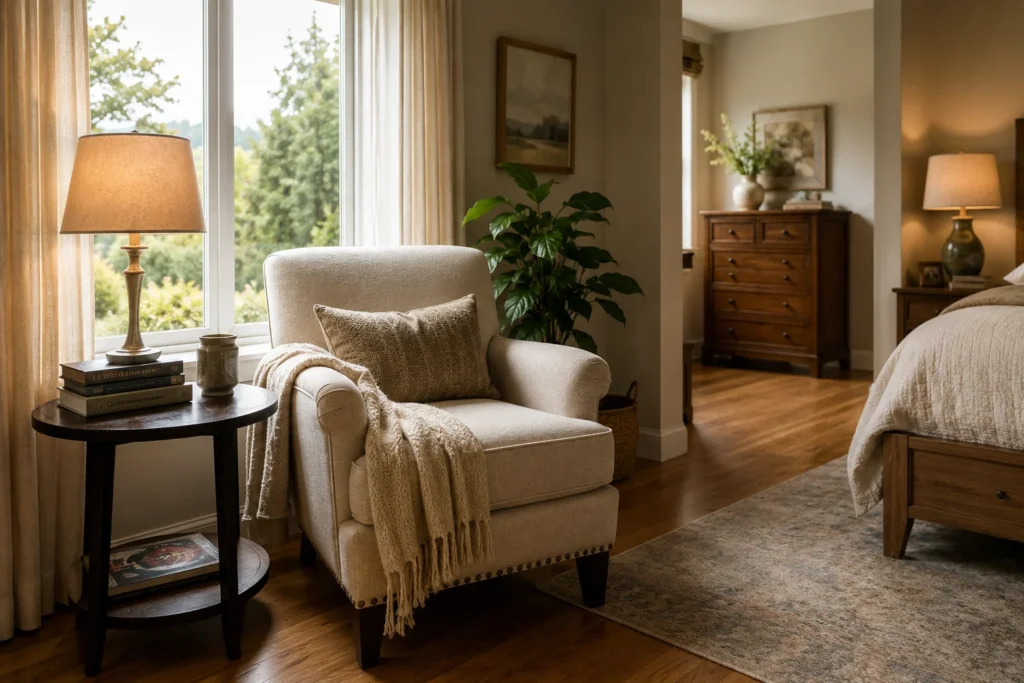
A reading corner with a comfortable chair, a small side table, and a lamp turns an unused corner into one of the most relaxing spots in the home.
Best for: Larger bedrooms with extra floor space.
Styling tip: Position the chair near a window if possible for natural light during the day.
Mistake to avoid: Choosing a chair that’s purely decorative and uncomfortable to actually sit in.
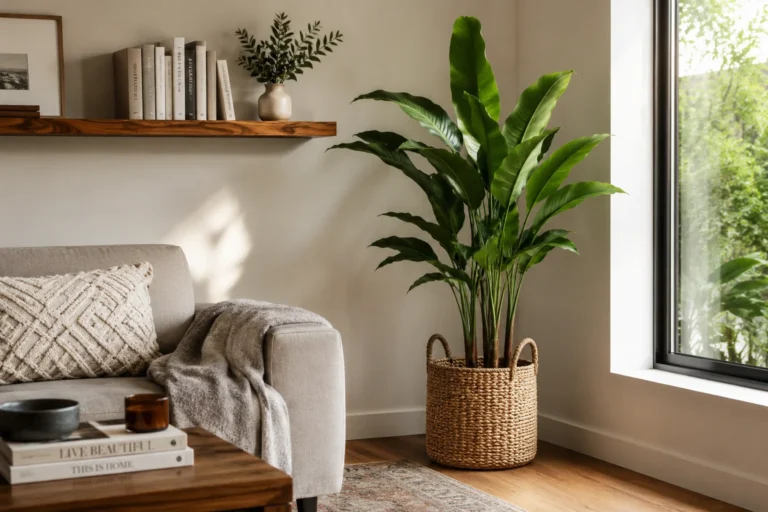
Plants soften hard edges and bring life into a bedroom without taking up much space.
Best for: Any bedroom style, especially boho and Scandinavian rooms.
Styling tip: Choose low-light-tolerant plants like snake plants or pothos for bedrooms with limited sunlight.
Mistake to avoid: Overwatering, which is the most common reason bedroom plants don’t survive.
Throw pillows add color, texture, and personality to a bed without a big investment.
Best for: Every bedroom.
Styling tip: Use an odd number of pillows, usually three or five, for a balanced but not overly symmetrical look.
Mistake to avoid: Overloading the bed with so many pillows it becomes impractical to actually sleep.
A bench at the foot of the bed adds function and visual structure, especially in larger rooms.
Best for: Bedrooms with extra space at the foot of the bed.
Styling tip: Choose a bench slightly narrower than the bed frame for proportion.
Mistake to avoid: Placing a bench that blocks walking paths or door swing.
Floating shelves give you display space without the bulk of a full dresser or bookcase.
Best for: Small bedrooms or rooms needing extra storage. Pair them with ideas from this guide on shelf decor ideas for styling inspiration.
Styling tip: Group shelves in odd numbers and vary the height between them.
Mistake to avoid: Overcrowding shelves, which creates visual clutter instead of style.
Long curtains that reach the floor make ceilings look taller and windows look larger than they are.
Best for: Bedrooms with standard or low ceilings.
Styling tip: Hang the curtain rod a few inches above the window frame to maximize height.
Mistake to avoid: Choosing curtains that stop short of the floor, which can make a window look smaller.
A dresser top is prime real estate for adding personality through a tray, a small mirror, and a couple of personal items.
Best for: Traditional and transitional bedrooms.
Styling tip: Group items in threes at varying heights for a natural, curated look.
Mistake to avoid: Letting the dresser top become a dumping ground for daily clutter.
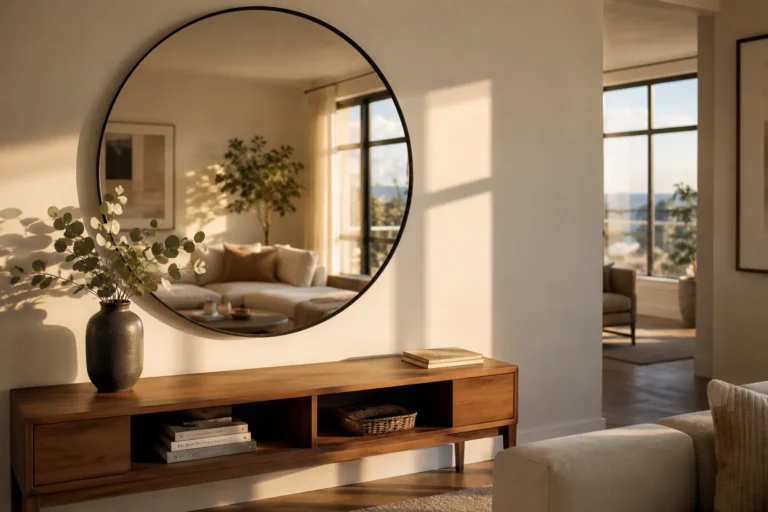
Mirrors reflect light and make any bedroom, especially smaller ones, feel more open and bright.
For more layout ideas, this resource on mirror wall decor ideas is worth exploring.
Best for: Small or dimly lit bedrooms.
Styling tip: Position mirrors to reflect a window or a light source rather than a blank wall.
Mistake to avoid: Hanging a mirror where it directly reflects the bed, which some homeowners find visually distracting at night.
A rug under or near the bed adds softness underfoot and helps define the seating or sleeping area visually.
Best for: Bedrooms with hardwood, tile, or laminate flooring.
Styling tip: The rug should extend at least 18 inches beyond each side of the bed.
Mistake to avoid: Choosing a rug too small for the bed size, which makes the layout look unbalanced.
Swapping a basic flush-mount fixture for a statement chandelier or pendant instantly elevates the entire room.
Best for: Bedrooms with higher ceilings.
Styling tip: Choose a fixture sized proportionally to the room, generally about 12 inches in diameter for every foot of room width.
Mistake to avoid: Hanging a fixture too low, which can make the ceiling feel lower than it is.
Crisp white sheets, a folded throw blanket, and stacked pillows give the bed that polished, hotel-room look many homeowners want to recreate.
Best for: Modern and contemporary bedrooms.
Styling tip: Tuck sheets tightly and use a duvet insert one size larger than the cover for extra fluffiness.
Mistake to avoid: Skipping the throw blanket, which is often what makes the bed look professionally styled.
Combining materials like linen, velvet, wood, and wool keeps a neutral room from feeling boring.
Best for: Minimalist and Scandinavian bedrooms.
Styling tip: Aim for at least three different textures across bedding, rugs, and furniture.
Mistake to avoid: Relying on color alone for visual interest when the palette is neutral.
Photos, travel souvenirs, or artwork that means something to you make a bedroom feel personal instead of like a showroom.
Best for: Any bedroom that needs more personality.
Styling tip: Frame personal pieces consistently so they look curated rather than random. A gallery wall ideas layout works particularly well for this.
Mistake to avoid: Mixing too many frame styles and sizes without any unifying element.
A bedroom feels off when furniture is bunched on one side and empty on the other. Balanced furniture placement is one of the simplest ways to improve a room’s overall feel.
Best for: Every bedroom layout.
Styling tip: Try to balance visual weight on both sides of the bed, even if the pieces aren’t identical.
Mistake to avoid: Pushing all the furniture against the walls, which can make a room feel disconnected.
Storage beds, under-bed bins, and ottoman benches with built-in storage keep clutter out of sight without sacrificing floor space.
Best for: Small bedrooms and bedrooms without a walk-in closet.
Styling tip: Use storage that matches your existing furniture finish so it blends in rather than stands out.
Mistake to avoid: Buying storage furniture before measuring whether it actually fits your layout.
Swapping a few accessories with the seasons, like a heavier throw blanket in winter or lighter linen in summer, keeps the room feeling fresh year-round.
Best for: Any bedroom you want to keep feeling current.
Styling tip: Change no more than two or three items at a time so it still feels cohesive.
Mistake to avoid: Over-decorating with seasonal items that clutter the room instead of refreshing it.
Modern bedrooms favor clean lines, a restrained color palette, and minimal ornamentation. Furniture tends to have simple silhouettes, and decor is intentional rather than abundant.
Minimalist bedrooms strip decor down to the essentials. Every item in the room should serve a clear purpose, and storage is usually hidden to keep surfaces clear.
Farmhouse style leans on natural wood, soft neutral tones, and a mix of vintage-inspired and practical furniture. Texture, like woven baskets and linen bedding, plays a big role here.
Scandinavian bedrooms combine light wood, white or pale walls, and cozy textiles like wool throws. The goal is a bright, calm space that still feels warm rather than sterile.
Traditional bedrooms use richer wood tones, classic furniture shapes, and symmetrical layouts. Decor often includes patterned textiles and more formal artwork.
Boho bedrooms embrace layered patterns, varied textures, and a mix of global-inspired decor. This style works well with plants, woven wall hangings, and warm, earthy colors.
Contemporary bedrooms borrow the best of current trends without committing fully to one style. Expect clean furniture lines paired with occasional bold accents like an accent wall or statement light fixture.
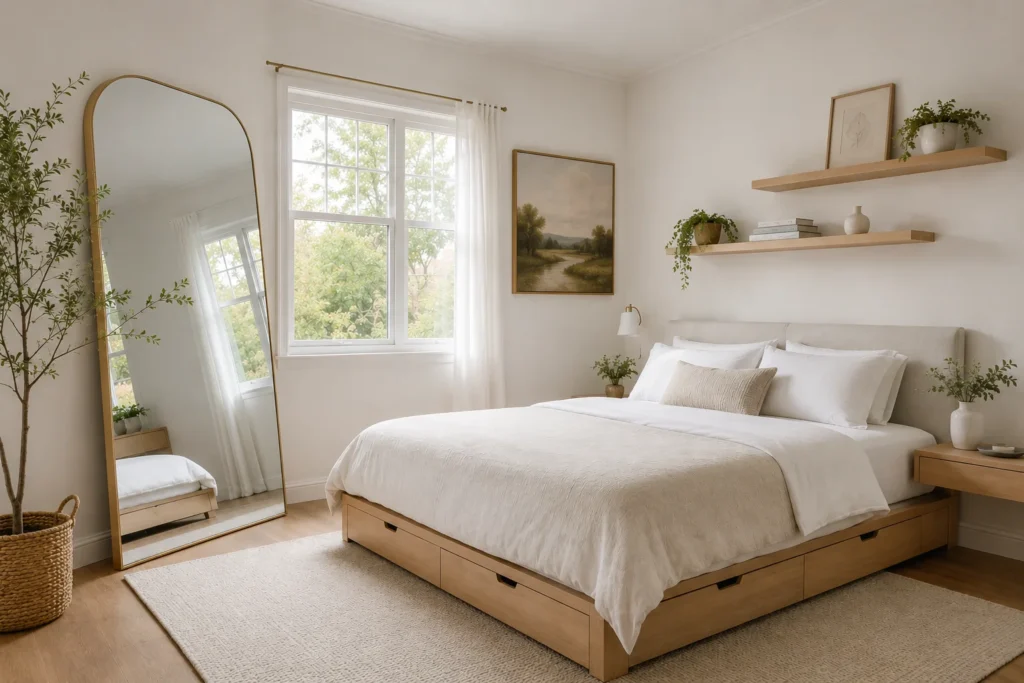
Small bedrooms need a slightly different approach than larger ones, but they can feel just as elegant with the right choices.
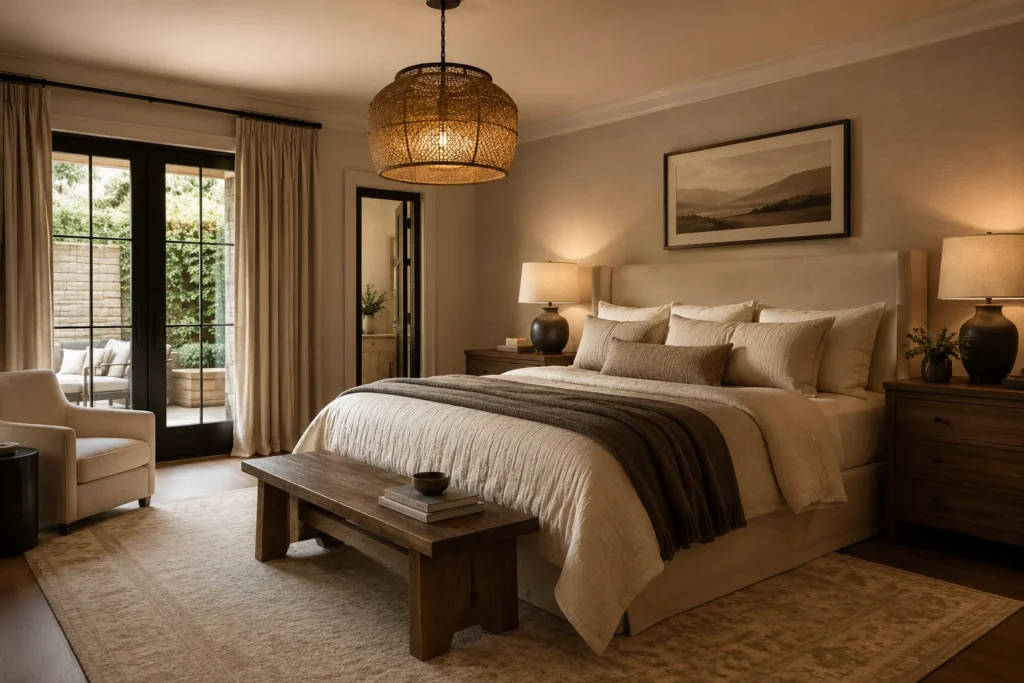
The color palette you choose sets the emotional tone of the entire room, so it’s worth thinking through before buying any accessories.
Even well-intentioned decorating efforts can go wrong. Here are the mistakes that show up most often, along with how to fix them.
You don’t need a big budget to make a noticeable difference in your bedroom.
Luxury in a bedroom usually comes down to a handful of consistent habits, not a high price tag.
One decorating lesson that consistently makes the biggest difference is choosing a calming color palette before buying a single accessory. It creates a far more cohesive bedroom and saves you from buying pieces that don’t end up working together.
If you’re also rethinking your walls, this guide on bedroom wallpaper decorating ideas is a great next step, and for general comfort-focused inspiration, this resource on comfy bedroom ideas rounds things out nicely.
Start with a clear color palette, then build out from there with layered lighting, balanced furniture placement, and a few personal touches. Focus on comfort first, and the style will follow naturally.
Soft neutrals, warm beiges, muted greens, and gentle grays tend to create the most relaxing atmosphere. Avoid overly bright or high-contrast colors in a room meant for rest.
Focus on small, high-impact changes like new bedding, a fresh coat of paint, or rearranged furniture before investing in bigger purchases. Many budget upgrades make as much visual difference as expensive ones.
Oversized artwork, a curated gallery wall, or a few floating shelves with personal items all work well. The key is choosing something proportional to your headboard width.
Focus on symmetry, layered textiles, warm lighting, and decluttering. These details matter far more than the actual price of the furniture.
A comfortable bed, two nightstands, a dresser, and adequate lighting cover the basics. Everything beyond that, like a bench or reading chair, is a bonus depending on your space.
A beautiful master bedroom doesn’t come from chasing every new trend. It comes from getting the fundamentals right: a calming color palette, balanced furniture, layered lighting, and a few personal touches that make the room feel like yours.
Whether you’re working with a small bedroom or a spacious one, a tight budget or a flexible one, the same principles apply. Focus on comfort, function, and a sense of personal style, and the room will naturally come together.
Take it one step at a time. Even a single change, like new bedding or a well-placed mirror, can shift how a room feels. For more practical decorating inspiration, visit Economy Home Decor.