Bring Life to Your Living Space
Bring Life to Your Living Space

Most spare rooms start with good intentions. A reading nook here, a hobby space there. But somehow, the room quietly becomes the home’s unofficial dumping ground, stacked with boxes, spare furniture, and things you haven’t touched in years.
Here’s the good news: with a bit of planning and the right spare room decor ideas, that underused space can become one of the most valuable rooms in your home. Whether you’re working with a large, light-filled room or a compact corner bedroom, there are practical and stylish ways to make it work for your lifestyle.
This guide is packed with actionable extra room decorating ideas grouped by purpose, size, and budget so you can find what actually fits your home.
Before buying a single piece of furniture, pause and think about how the room will actually be used day-to-day. One of the most common mistakes homeowners make is buying furniture for a spare room before deciding on its purpose, which leads to a space that feels cluttered and never quite right.
Ask yourself:
Matching the room to your actual lifestyle, rather than chasing trends, is what makes it truly useful.
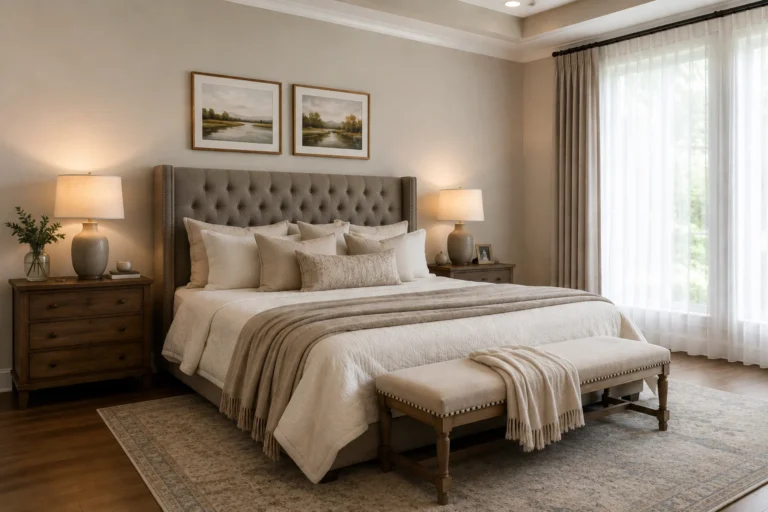
A proper guest room makes visitors feel genuinely welcome rather than like an afterthought. Start with a quality bed, even a full-size works in a smaller room, and layer the bedding with a crisp duvet, extra pillows, and a throw blanket. For more inspiration, check out these comfy bedroom ideas that work equally well for guest spaces.
Tip: Add a small bedside table with a lamp, a glass of water, and a phone charger. These simple touches make a big difference.
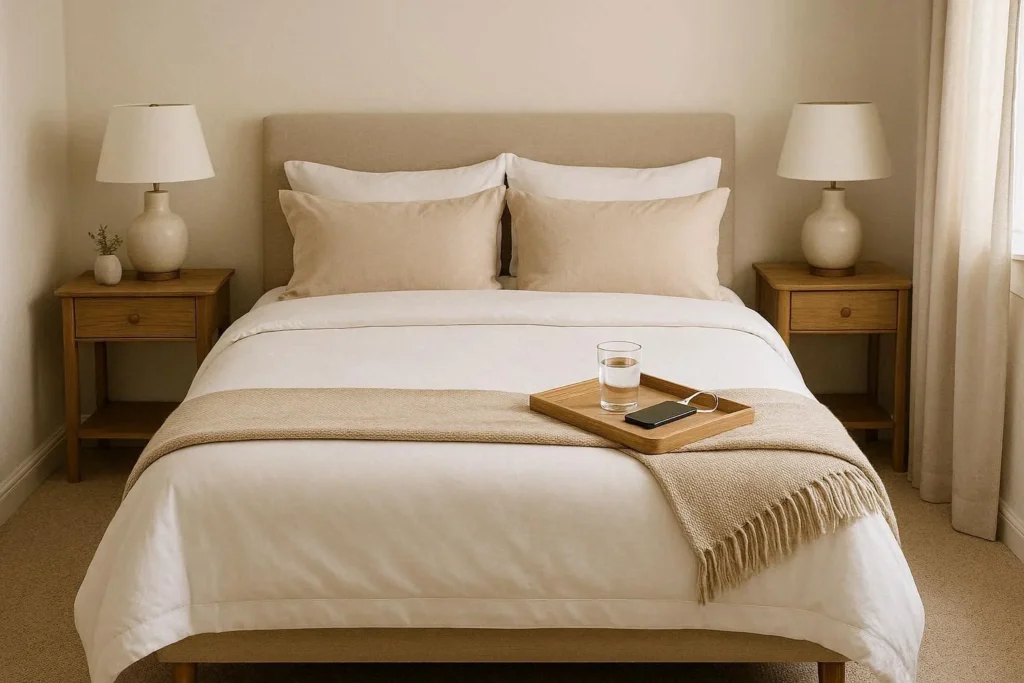
Think about what makes a hotel room feel special: clean lines, matching bedding, uncluttered surfaces, and a sense of calm. You don’t need to spend a lot to recreate that feeling. White or neutral bedding, a couple of matching cushions, and a scented candle go a long way. Explore more bedroom decorating ideas to find a style that suits your home.
Tip: Roll up a spare set of fresh towels and place them at the foot of the bed. It’s a small detail that feels genuinely thoughtful.
If the room needs to serve multiple purposes, a daybed or a sofa bed gives you flexibility without sacrificing floor space. A daybed styled with cushions looks like a sofa by day and functions as a proper bed for guests. A quality fold-out mattress stored in the wardrobe is another practical option.
Tip: A storage ottoman at the foot of the bed doubles as luggage storage and extra seating.
Soft neutrals, warm whites, light greiges, pale sage, create a calm, welcoming atmosphere that works for most guests. Bold colors can feel energizing but may not suit everyone. Neutral tones are also easier to layer with accent colors through cushions and throws if you want to add personality. For more ideas on this, check out these flat decoration ideas that translate beautifully into spare room styling.
Tip: Keep one wall slightly warmer than the rest using a soft taupe or blush to add visual interest without overwhelming the space.
Guests need somewhere to unpack. A small wardrobe, a chest of drawers, or even a rail with hangers gives visitors a place to put their things. Hooks on the back of the door are also a quick, inexpensive win for hanging bags and jackets.
Tip: Clear a few drawers before guests arrive. Even one empty drawer feels more welcoming than a room with no storage at all.
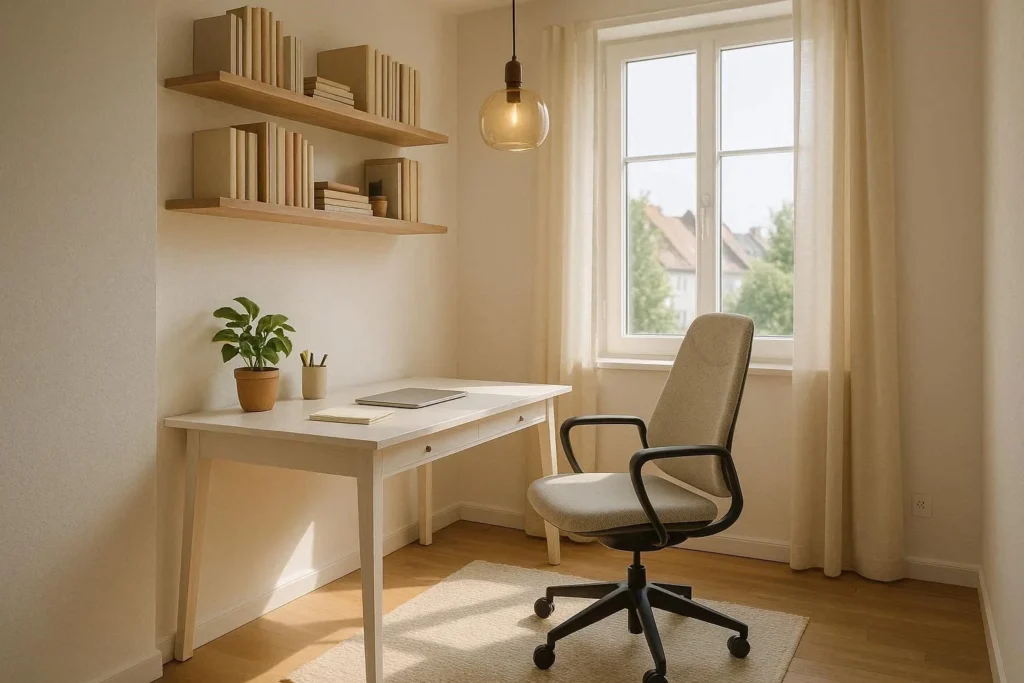
Having a room dedicated to work changes everything. Without a defined workspace, it’s easy to let work bleed into every corner of the home and never fully switch off. A spare room gives you the separation you need. A solid desk, an ergonomic chair, and good lighting are the essentials. Browse these home office decor ideas to find a setup that balances comfort and productivity.
Tip: Face your desk toward the window if possible. Natural light reduces eye strain and genuinely improves focus.
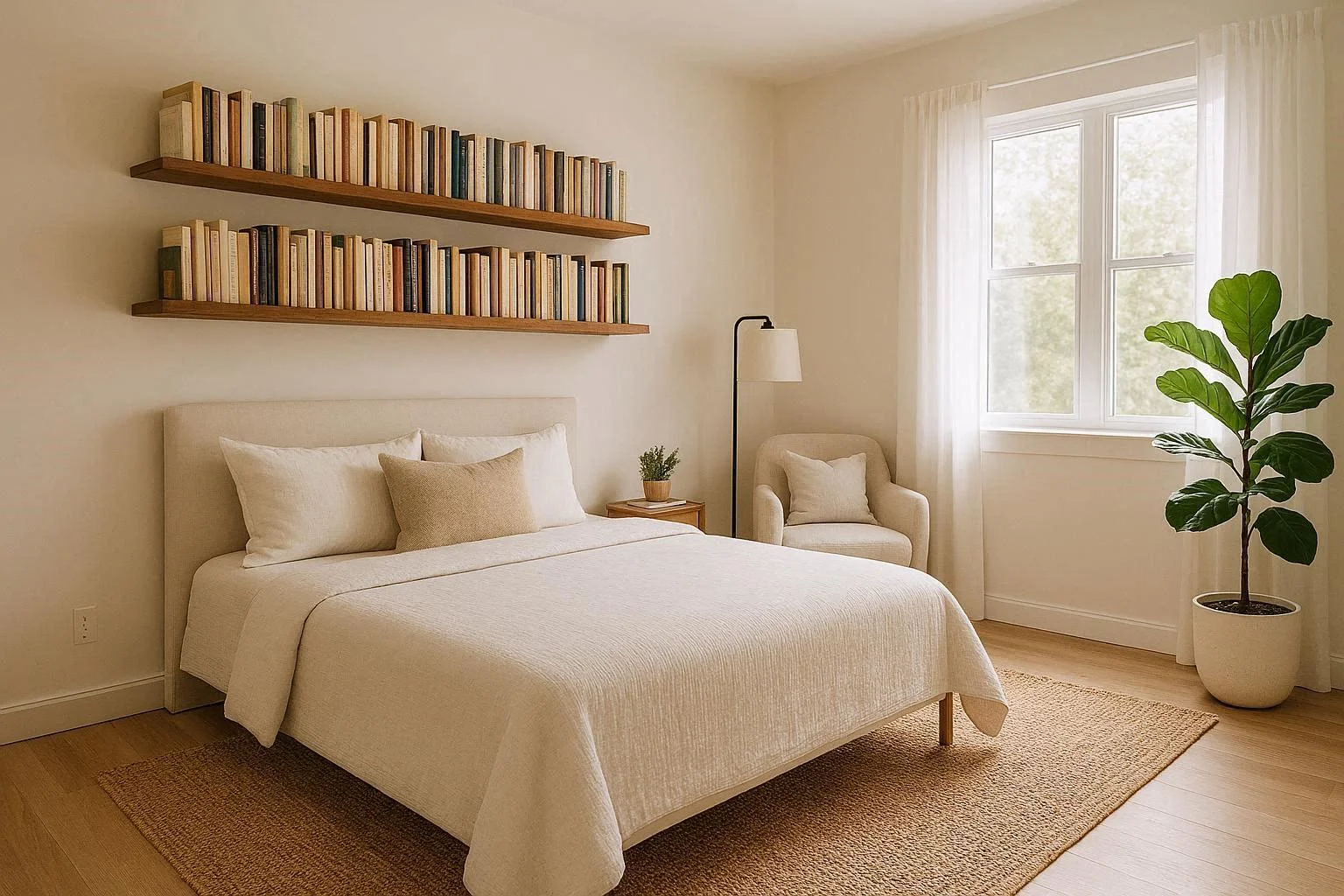
A spare bedroom reading room is one of the most satisfying uses of a quiet, underused space. Line the walls with bookshelves, add a deep armchair with a floor lamp beside it, and layer in a soft rug underfoot. It doesn’t need to be large. Even a small spare room can become a cozy reading retreat.
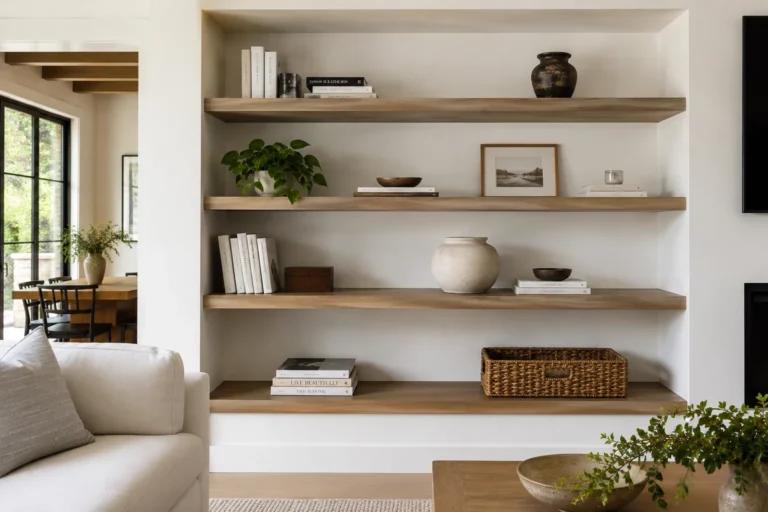
Tip: Install floating shelves at varying heights to add visual interest and maximize wall space without using up floor area.
Whether you paint, craft, sew, or sketch, having a dedicated creative space means your projects don’t have to live on the kitchen table. Set up a large worktable with good overhead lighting, and use pegboards or open shelving to keep supplies organized and accessible.
Tip: Use a durable, wipeable surface on your work table so you can work freely without worrying about mess.
If the room needs to do double duty, a Murphy bed or a daybed allows you to maintain a working office most of the time while welcoming guests when needed. Keep the desk area tidy and well-organized so the room doesn’t feel chaotic when it transitions between functions. This is one of the most practical multifunctional room ideas for homes where space is at a premium.
Tip: Use a curtain or room divider to visually separate the sleeping and working areas when guests are staying.
If you have children at home, a quiet study room away from the main living areas can be transformative. A wide desk, adequate shelving for books and files, and a comfortable chair are the essentials. Good task lighting matters more here than almost anywhere else in the home.
Tip: Add a pinboard or whiteboard to the wall for notes, schedules, and visual thinking. Far more useful than a cluttered desk.
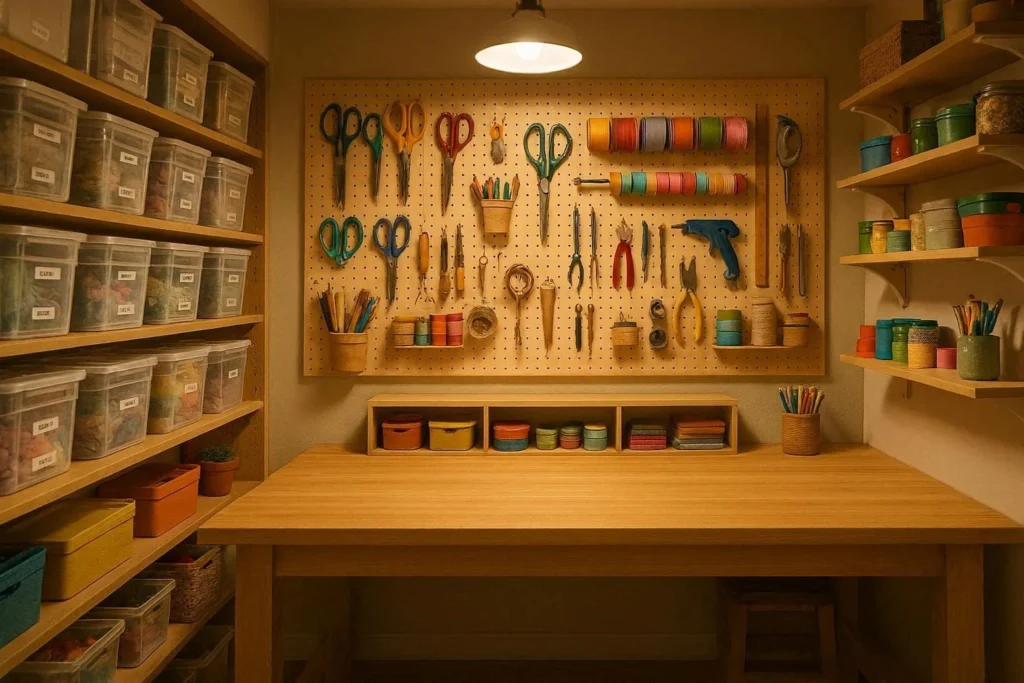
A craft room works best when everything has a home. Use clear storage bins, drawer organizers, and labeled shelves so you can find what you need quickly. A cutting mat on the desk, a good sewing table, or a light box for tracing all make the space more functional and enjoyable to spend time in.
Tip: Install a pegboard on one wall to hang tools, scissors, ribbons, and frequently used items at arm’s reach.
Converting a spare room into a home gym removes the biggest barrier to exercise: getting there. You don’t need a full rack of equipment. A set of dumbbells, a resistance band kit, a yoga mat, and a mirror are enough for a solid workout space. Add a small Bluetooth speaker and good ventilation, and you’re set.
Tip: Rubber floor tiles protect the floor and reduce noise, and they’re easy to install without any specialist tools.
A dedicated music room, even a small one, is a genuine game-changer for musicians. Acoustic panels on the walls reduce sound bleed into the rest of the house, and a proper instrument stand keeps your gear organized and ready to play. Consider soft furnishings like a rug and upholstered chair to help absorb sound naturally.
Tip: Even basic acoustic foam panels make a noticeable difference in sound quality and reduce echo significantly.
An art studio at home means you can work whenever inspiration strikes, without setting up and packing away each time. Good north-facing light is ideal for painting. If that’s not available, invest in a quality daylight bulb. Protect the floor with canvas drop cloths or vinyl flooring that’s easy to clean.
Tip: A tall easel and a trolley for supplies keep the space organized and easy to move around in.
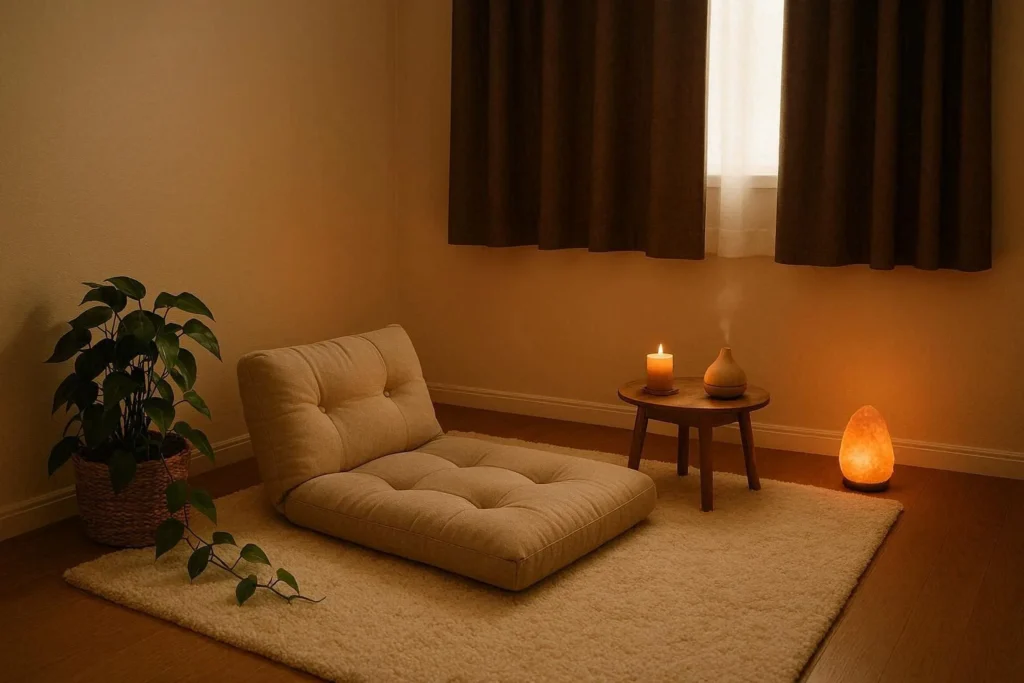
A meditation room doesn’t require much, just intentional simplicity. A comfortable floor cushion or a low chair, a few plants, soft lighting, and minimal clutter are all you need. The key is keeping the room free of screens and work-related items so your brain can genuinely switch off when you step inside.
Tip: Blackout curtains and a small diffuser with calming essential oils complete the atmosphere without any major investment.
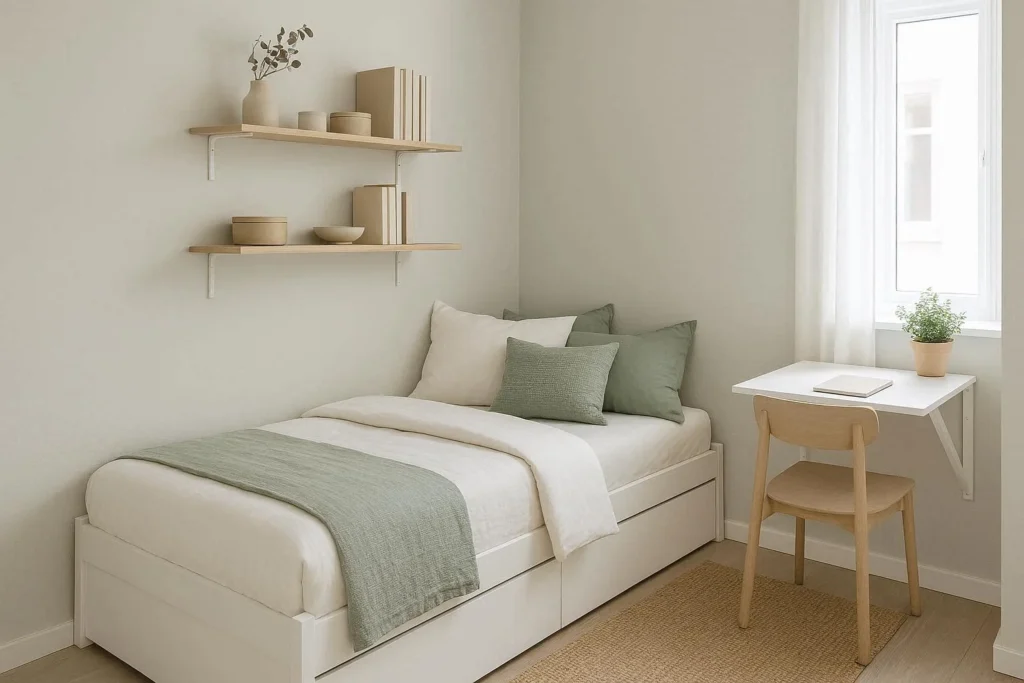
In a small spare room, every piece of furniture should earn its place. Opt for pieces that serve more than one function: a bed with built-in drawers, a desk that folds away, or a storage ottoman that doubles as seating. Avoid large, heavy furniture that dominates the room and reduces flexibility. For more ideas on making compact spaces work harder, these studio flat decorating ideas are full of practical inspiration.
Tip: Measure your room carefully before buying anything. A floor plan sketch, even a rough one on paper, prevents expensive mistakes.
In a compact room, height is your friend. Tall bookshelves, wall-mounted cabinets, and floating shelves all make use of vertical space that would otherwise go to waste. This keeps the floor clear and makes the room feel more open and airy.
Tip: Keep the top shelves for less-used items and the lower shelves for things you need regularly.
Light colors make a small room feel larger and more open. Whites, soft creams, pale blues, and light greys all work well. If you want to add depth, use a slightly darker shade on one wall as a subtle accent rather than painting all four walls a bold color. You’ll find more ideas in this guide to minimalist wall decor ideas that suit compact spaces well.
Tip: Paint the ceiling the same color as the walls (or just slightly lighter) to make the room feel taller.
In a small spare room, less is genuinely more. Every extra piece of furniture, every decorative item, and every unnecessary surface adds visual noise and makes the room feel cramped. Choose a handful of pieces that work hard, and leave breathing room around them.
Tip: If something doesn’t serve a clear purpose in the room, it probably belongs somewhere else.
Bare walls make a room feel unfinished. A few well-chosen pieces of art bring personality and warmth to a spare room without cluttering it. A large single print is often more effective than several small ones fighting for attention. For a wider range of options, explore these wall decor ideas that work across different room styles and sizes.
Tip: Hang art at eye level, around 145 to 150cm from the floor to the center of the piece, as a good general rule.
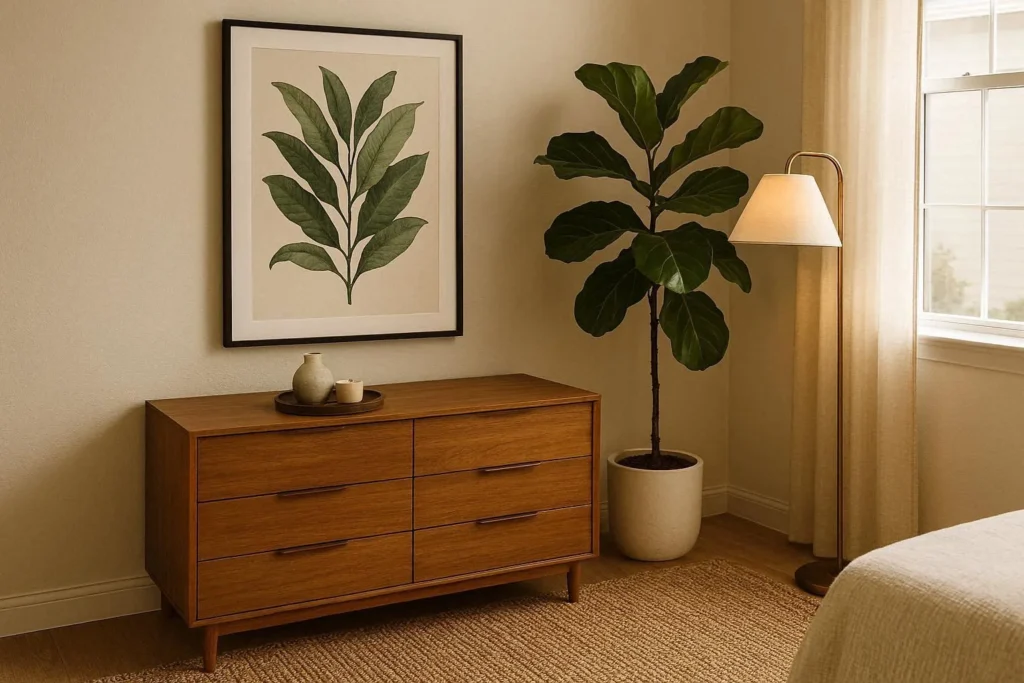
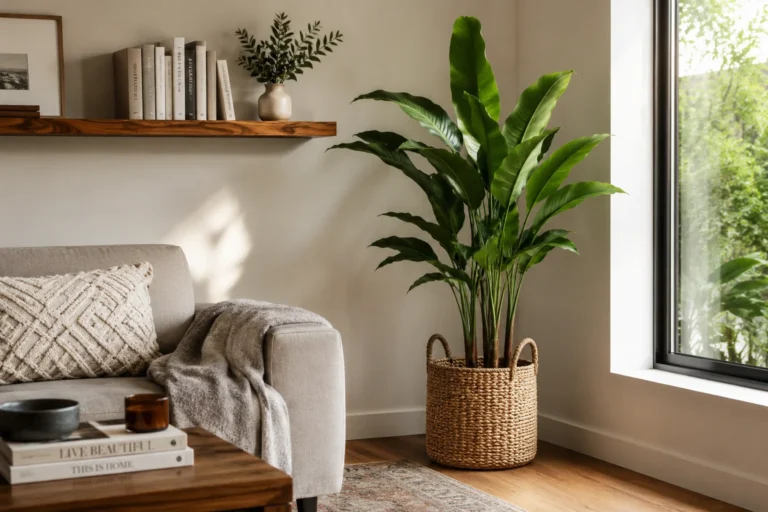
A few well-placed plants make any room feel more alive and welcoming. Snake plants, pothos, and peace lilies are all low-maintenance options that do well in different light conditions. A tall floor plant in a corner adds height and visual interest without taking up much floor space.
Tip: Group plants in odd numbers. Three or five looks more natural than two or four placed symmetrically.
Overhead lighting is rarely enough on its own. Layer your lighting with a floor lamp, a table lamp, and perhaps some warm fairy lights or LED strip lights to add depth and atmosphere. Different lighting layers allow you to adjust the room’s mood depending on how it’s being used.
Tip: Warm-toned bulbs (around 2700K) feel more relaxed and residential. Cooler bulbs (4000K+) work better for task lighting in offices and studios.
A rug anchors the furniture, adds warmth underfoot, and defines the space visually. In a spare bedroom, place the rug so that at least the front legs of all key furniture pieces rest on it. In a home office or hobby room, a rug under the main work area brings the setup together and reduces noise.
Tip: Natural fiber rugs (jute, sisal) add texture and work with almost any color scheme.
Accessories are the finishing layer that makes a room feel complete rather than staged. A few books stacked on a side table, a ceramic vase, a scented candle, or a small tray can pull a room together. The key is restraint. A few meaningful objects always look better than a crowded surface.
Tip: Edit as you go. If you’re not sure whether something belongs, remove it and see if the room looks better without it.
Using it as overflow storage. A spare room that becomes a dumping ground is the most common problem of all. It’s worth being ruthless: if the room is full of things you don’t want in your main living spaces, either find a proper home for them or let them go.
Buying furniture before deciding on the room’s purpose. This leads to awkward layouts and rooms that don’t quite work. Decide on the function first, then furnish accordingly.
Ignoring storage from the start. Storage is not an afterthought. It’s what keeps any room functional over time. Plan for it from the beginning.
Choosing poor lighting. A single overhead bulb is rarely enough. Layered lighting makes a space feel finished and usable at different times of day.
Leaving the room without a clear identity. A room that’s half-gym, half-storage, and half-guest room never really works as any of them. Even a small spare bedroom benefits from having one clear purpose.
You don’t need a large budget to transform an unused room. Some of the most effective changes cost very little:
For more ideas on achieving a great result without overspending, Economy Home Decor has plenty of practical, budget-conscious inspiration for every room in the home.
Options include a guest bedroom, home office, reading room, craft space, home gym, or meditation room. Choose based on what your household actually needs most.
Stick to light colors, space-saving furniture, and vertical storage. Keep the layout simple and layer in good lighting to make the room feel larger.
Only if you host guests regularly. Otherwise, a daybed or fold-out sofa offers flexibility without committing the whole room to sleeping.
Use furniture that does double duty: a Murphy bed, a daybed, or a fold-away desk. Define zones with rugs or curtains and keep the layout flexible.
Soft neutrals and warm whites suit most spare rooms. Cooler tones work well for a home office, while a bold accent wall can energize a gym or creative space.
A spare room is one of the most flexible spaces in any home, and one of the most wasted when it defaults to storage. With a clear sense of purpose and a few thoughtful decorating decisions, it can become a room you actually use and enjoy every day.
The most successful spare room transformations aren’t the ones with the biggest budgets. They’re the ones where the homeowner took the time to think honestly about what they needed, made deliberate choices about furniture and layout, and resisted the urge to fill every corner.
Start with purpose. Layer in function. Finish with the details that make it feel like yours. That’s really all it takes to turn an unused room into one of the best parts of your home.