Bring Life to Your Living Space
Bring Life to Your Living Space

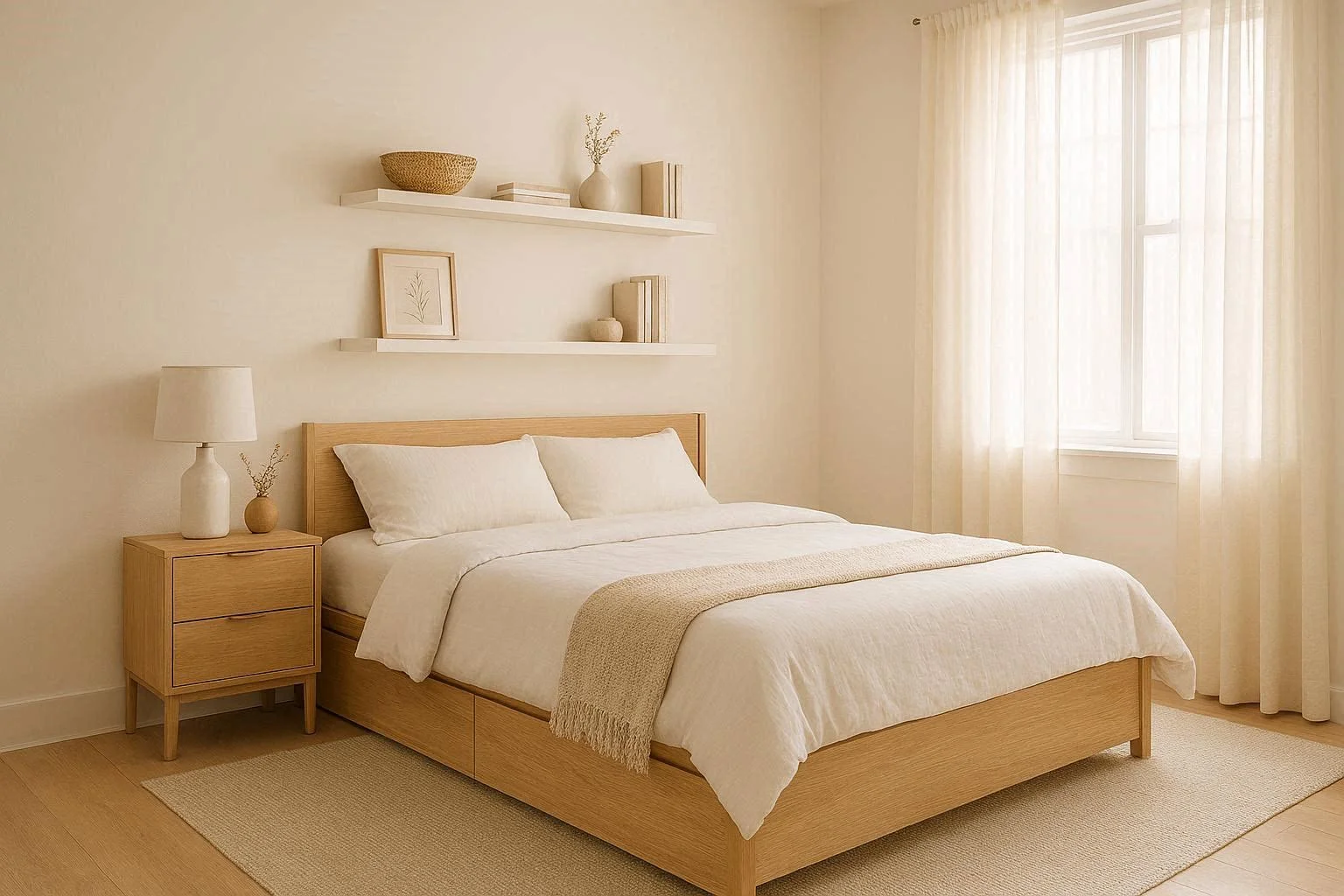
You know that feeling when you walk into your bedroom and instead of feeling calm, you feel… cramped? Like the walls are just a little too close, the furniture is in the way, and there’s nowhere to put anything?
If your bedroom is on the smaller side, you’re not alone. Millions of people especially apartment dwellers, renters, and anyone living in an older home deal with this exact problem every day. And the frustrating part is that most “bedroom decor” advice is designed for Pinterest-perfect rooms with high ceilings and square footage to spare.
This guide is different. These are real, practical small bedroom decor ideas that work in actual small rooms not just on mood boards. Whether you’re working with a 100-square-foot studio bedroom or a narrow secondary room, you’ll find actionable solutions here that don’t require a big budget or a designer’s eye.
Let’s make your small bedroom feel like a sanctuary, not a storage unit.
Before jumping into solutions, it helps to understand why small bedrooms are so tricky in the first place.
Limited square footage is the obvious culprit, but the real problem is that most furniture, decor, and storage systems aren’t designed with small spaces in mind. A standard bed frame eats up a huge chunk of floor space. A typical wardrobe can block an entire wall. And once you add a nightstand, lamp, and dresser, you’ve already run out of room.
Storage is another constant battle. Small bedrooms rarely come with adequate closet space, which means clothes, shoes, and everyday essentials end up competing for floor space.
Visual clutter is perhaps the sneakiest enemy. Even a relatively tidy small room can feel chaotic if there are too many colors, patterns, textures, or pieces of furniture fighting for attention. Your eye doesn’t know where to rest, and the room reads as messy even when it isn’t.
And then there are the common mistakes most people make without realizing it: pushing all the furniture against the walls (which actually makes rooms feel smaller), using dark paint because it “feels cozy,” and cramming in too many decorative items. We’ll address all of these below.
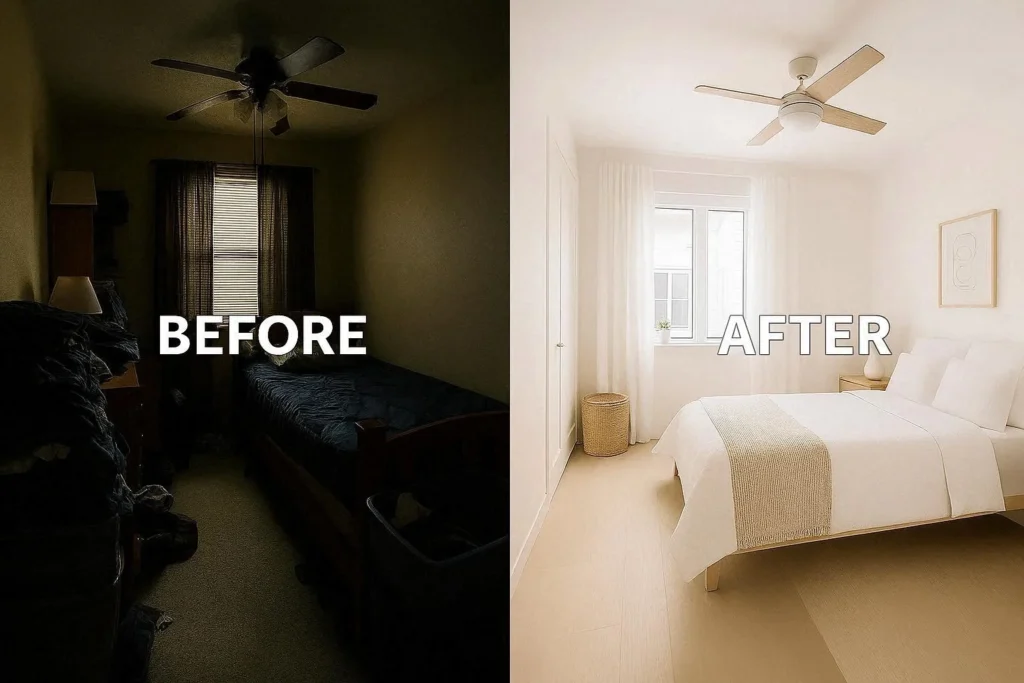
This one is tried and true for a reason it genuinely works. Light colors reflect natural and artificial light, making a room feel more open. Think soft whites, warm creams, pale sage greens, or light blush tones.
Real-life tip: Don’t just stop at the walls. Painting your ceiling the same color as your walls (or one shade lighter) removes the visual “cap” that makes rooms feel low and boxy. This single trick can make a room feel noticeably taller.
Works best in: Any small bedroom, but especially those with limited natural light.
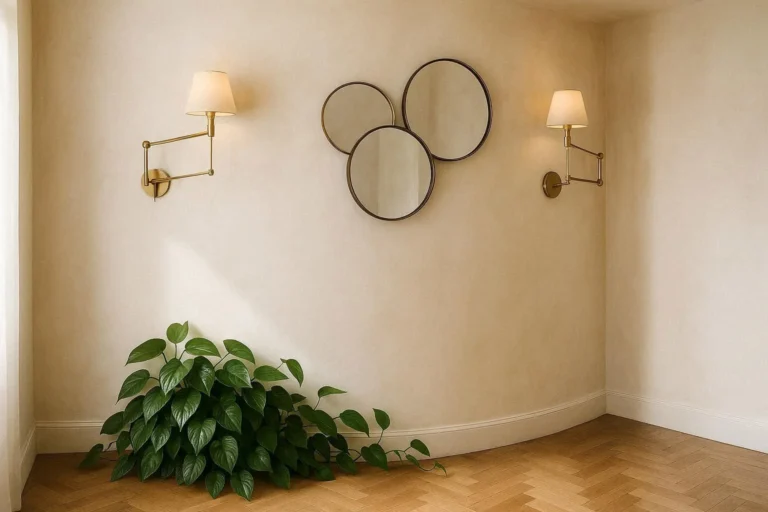
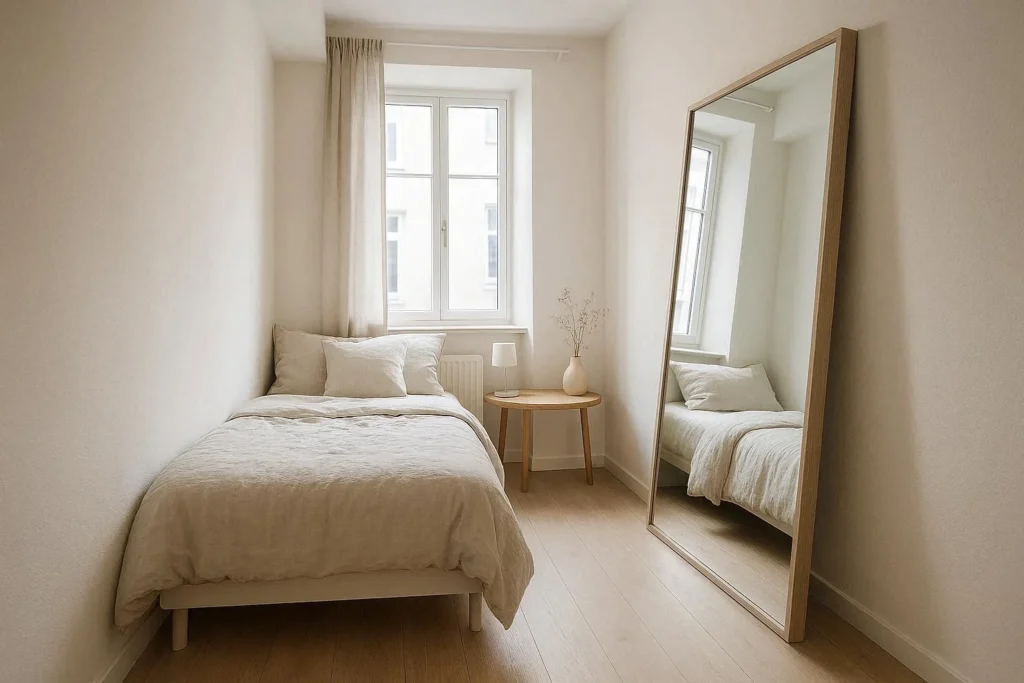
A well-placed mirror is one of the most powerful tools in a small bedroom. It bounces light around the room and creates the illusion of depth making the space feel nearly twice as large.
Real-life tip: Place a large floor mirror or a full-length mirror on a wall opposite or adjacent to your window. You’ll instantly feel like the room opened up. Even a large decorative mirror above a dresser can make a noticeable difference.
Works best in: Narrow bedrooms or rooms with only one window.
A bed is a bed unless it has storage drawers underneath. A bench is a bench unless it opens up to hold extra blankets. In small bedrooms, every piece of furniture should do double duty.
Look for:
Real-life tip: A storage bed alone can eliminate the need for a separate dresser, which saves an enormous amount of floor space.
Works best in: Studio apartments and rooms without closets.
When floor space is scarce, go up. Vertical storage keeps items off the floor and draws the eye upward, making ceilings feel higher.
Real-life tip: Install shelving that runs from around 5 feet up to the ceiling. The top shelves can hold seasonal items or bins you don’t access daily, while the lower shelves hold everyday essentials.
Works best in: Rooms with high ceilings or anyone who needs extra storage without floor footprint.
Floating shelves are a renter’s best friend. They add storage and display space without taking up floor space, and they can be removed (and holes patched) when you move out.
Real-life tip: Group floating shelves in odd numbers a trio of shelves at varying heights looks intentional and stylish rather than improvised.
Works best in: Rental apartments or rooms where you don’t want to commit to large furniture.
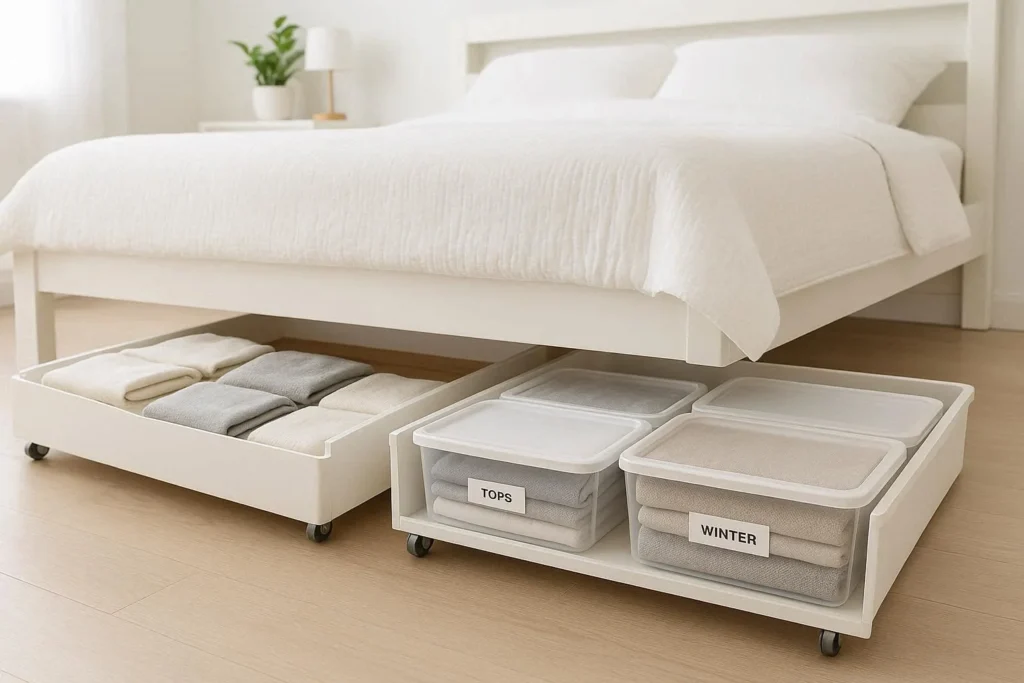
The space under your bed is some of the most underutilized real estate in any small bedroom. Flat storage bins, rolling drawers, or vacuum storage bags for seasonal clothing can free up significant closet and dresser space.
Real-life tip: If your bed frame sits low, bed risers can raise it 6–8 inches, dramatically increasing the usable storage space beneath.
Works best in: Any small bedroom, but especially those without adequate closet space.
Minimalism doesn’t mean cold or sterile it means intentional. In a small bedroom, every item that doesn’t serve a purpose is taking up visual and physical space.
Real-life tip: Do a quick audit of your bedroom. Anything that doesn’t have a clear home, a clear purpose, or bring you genuine joy should be relocated or removed. A small, curated selection of meaningful decor always looks better than a room full of random items.
Works best in: Every small bedroom. This is the foundation everything else builds on.
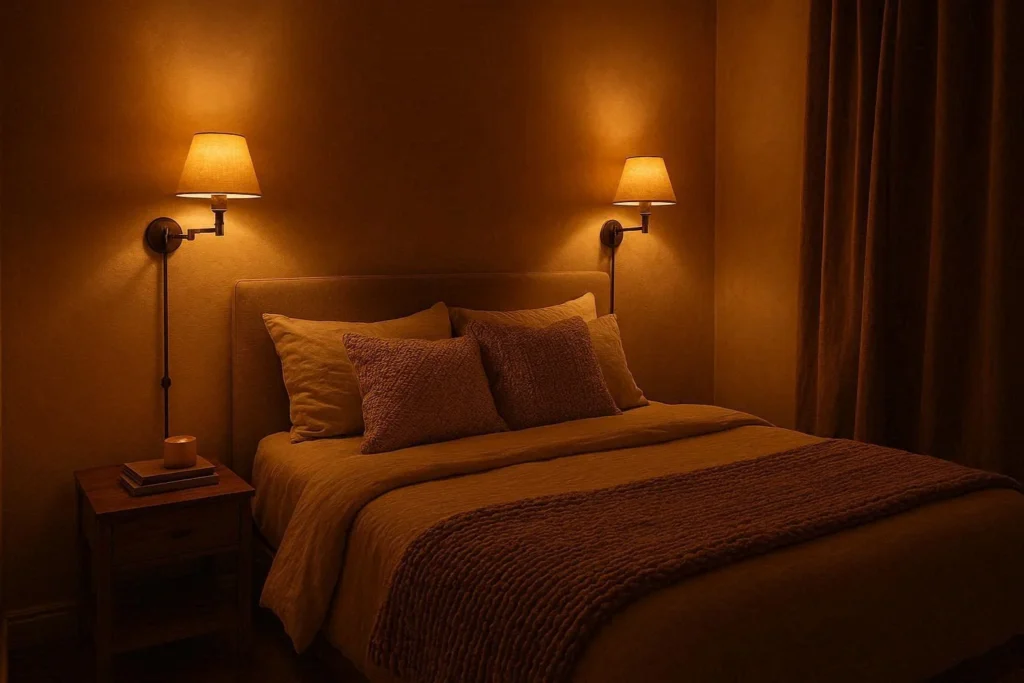
Bedside table lamps are charming, but they take up precious nightstand surface space. Wall-mounted sconces or swing-arm wall lamps solve this problem instantly.
Real-life tip: Mount sconces at reading height (about 24–36 inches above the mattress) on either side of the bed. This creates a clean, hotel-like look and frees up your nightstand for just the essentials.
You can find beautiful, affordable wall sconce options in our wall sconce decorating ideas guide.
Works best in: Bedrooms with narrow nightstands or those trying to achieve a minimal, streamlined look.
This is one of the most impactful and least expensive tricks in decorating a small bedroom. Instead of hanging curtains at the window frame, mount the rod close to the ceiling and extend it several inches beyond the window on each side.
Real-life tip: The curtains will frame the window with extra fabric that hangs beside not in front of the glass, so you lose no natural light. Meanwhile, the room visually gains several feet in both height and width.
Works best in: Any room, but especially those with short windows or low ceilings.
Clutter is the single biggest enemy of a small bedroom. Even beautiful decor loses its impact when it’s surrounded by piles of clothes, random items on the nightstand, or cords running along the floor.
Real-life tip: Spend 15 minutes a week maintaining your bedroom. Put things back where they belong, remove anything that doesn’t belong in the bedroom, and keep surfaces mostly clear. This alone transforms how a small space feels.
Works best in: Every small bedroom this is non-negotiable.
Instead of decorating all four walls (which can overwhelm a small room), focus on one: the wall behind your bed. This becomes a visual anchor, adds personality, and actually helps the room feel more intentional and larger.
Options for statement walls include:
For a deeper look at wall decor possibilities, our over-the-bed wall decor ideas guide has dozens of inspiration options.
Works best in: Bedrooms that feel plain or lack personality.
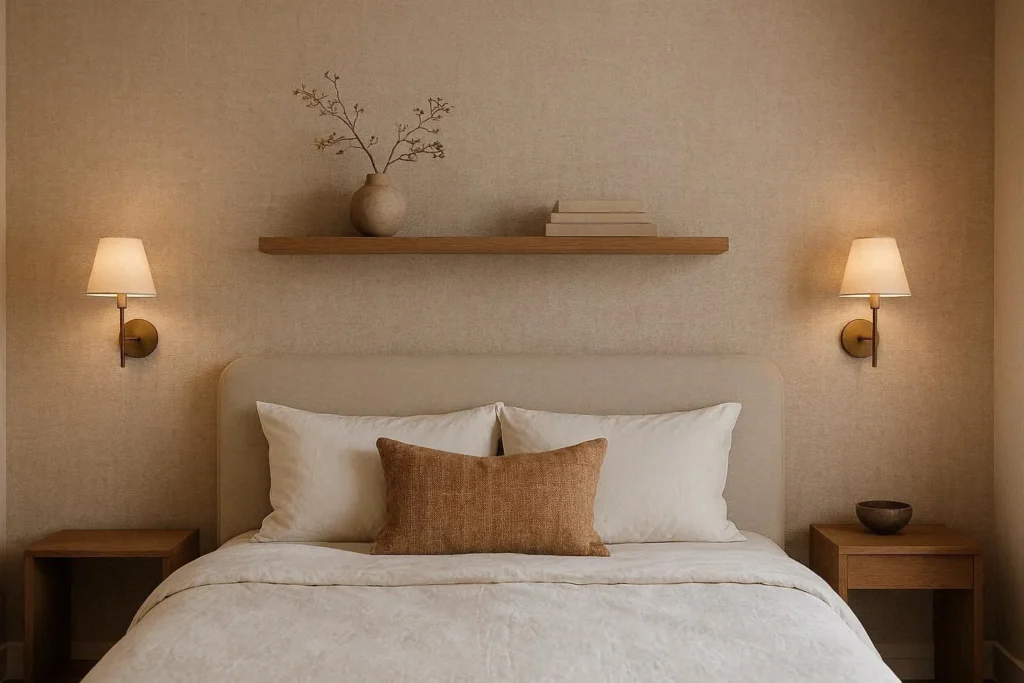
Small bedrooms don’t need to sacrifice warmth and comfort to feel open. The trick is layering textures linen, cotton, knit, velvet in a cohesive color palette rather than adding more objects.
Real-life tip: Use two or three complementary textures on your bed (a smooth duvet, a knit throw, a couple of textured pillows). This creates that cozy, layered look without visual clutter.
Works best in: Minimalist bedrooms that need softening, or anyone who wants their bedroom to feel like a boutique hotel.
Standard nightstands can be surprisingly bulky. In a small bedroom, opt for wall-mounted floating shelves as nightstands, narrow ladder-style bedside tables, or even a small stool.
Real-life tip: The smaller the nightstand, the more floor space shows and more visible floor space makes a room feel larger. Keep the nightstand surface to just the essentials: a light, a book, a glass of water.
Works best in: Very narrow bedrooms or those with a small gap between the bed and the wall.
A bed with storage, an upholstered bench at the foot of the bed that opens for storage, a mirror that doubles as a jewelry armoire hidden storage is the secret weapon of small bedroom decorating.
Real-life tip: Look for furniture with a “clean” exterior that gives no hint of the storage inside. The goal is to keep the room looking streamlined while quietly hiding all the stuff that would otherwise clutter the space.
Works best in: Rooms without closets or those that need to store more than the space seems to allow.
A rug anchors the room and gives it a sense of intention and coziness. In a small bedroom, the rug should be large enough that the front legs of the bed sit on it this grounds the entire sleeping area.
Real-life tip: Choose a rug in a light, neutral color or a subtle pattern. A rug that’s too bold can make the floor feel busier and the room smaller.
Works best in: Rooms with hard floors that need warmth and definition.
Using too many colors in a small bedroom fragments the eye and makes the space feel chaotic. Sticking to two or three complementary tones creates a calm, cohesive look.
Real-life tip: Choose one primary color (usually your wall color), one secondary color (your bedding or main furniture), and one accent color for throw pillows, a small vase, or a rug. That’s all you need.
Works best in: Any small bedroom, but especially those that currently feel visually busy.
Furniture you can see through (glass, acrylic, lucite) takes up visual space without blocking sightlines. A clear acrylic nightstand or a glass-top dresser makes the room feel more open.
Real-life tip: This works particularly well when paired with light wall colors. The furniture blends into the background, and the room feels airier as a result.
Works best in: Modern or minimalist bedrooms.
Plants add life and freshness to a bedroom, but in a small space, one well-chosen plant is better than a collection. A tall snake plant in a corner draws the eye upward and adds a sculptural quality without eating floor space.
Real-life tip: Hang a small trailing plant (like pothos) from a wall hook to add greenery without using any floor or surface space at all.
Works best in: Any bedroom that feels a bit flat or lifeless.
Some bedrooms are beyond small they’re genuinely micro-scale. Studio apartments where the “bedroom” is a corner. Shared bedrooms with two occupants. Oddly shaped rooms where nothing fits right.
Here’s what works specifically for the tiniest spaces:
Studio apartments: Use a room divider (a bookshelf, curtain on a ceiling-mounted track, or tall plant) to visually separate the sleeping area from the living space. This creates psychological boundaries that help each zone feel more purposeful. For more inspiration, see our studio flat decorating ideas.
Shared bedrooms: Use vertical space and bunk beds with built-in storage or desk areas underneath. Matching bedding sets in each person’s area creates visual order.
Rental-friendly ideas: Command hooks, tension rods, peel-and-stick wallpaper, and furniture-mounted solutions require no permanent installation and come down cleanly when you move. These make it possible to fully decorate a small rental bedroom without losing your security deposit.
You don’t need to spend a lot to make a big impact. Some of the most effective small bedroom transformations cost almost nothing.
DIY projects that work: Paint is the single most cost-effective upgrade in any room. A fresh coat in a new color (or even the same color if it’s faded) can completely transform a bedroom for under $40. Painting old furniture a dresser, nightstand, or bed frame in a new color is another high-impact, low-cost project.
Thrift stores and secondhand shops are excellent sources for furniture that can be painted or refinished, decorative mirrors, and unique accent pieces. A secondhand dresser with new paint and new hardware looks custom.
Swap, don’t buy. Before purchasing anything new, look at what you already own in other rooms. A piece of wall art from the living room, a lamp from the hallway, a throw from the linen closet sometimes the perfect item for your bedroom is already in your house.
DIY floating shelves can be built for $15–25 using basic lumber from a hardware store. Painted white, they look like they came from a boutique home goods store.
For more budget-conscious decorating strategies, our guide on budget-friendly economy home decor tips covers the full picture.
Even well-intentioned decorating can backfire in a small space. Here are the most common errors and how to sidestep them:
Overcrowding with furniture. More furniture does not equal more function in a small bedroom. Every piece you add reduces the visible floor space, which makes the room feel smaller. Ask yourself: is this furniture earning its spot, or just filling space?
Using dark colors incorrectly. Dark colors aren’t automatically wrong in small bedrooms a dramatic dark wall can actually look stunning in the right context. The mistake is using dark colors on all four walls and the ceiling without enough light to balance it. If you love dark colors, try one accent wall instead.
Too many decorative items. A gallery wall with 15 frames, a shelf with 12 objects, throw pillows on throw pillows more is not more in a small bedroom. Edit ruthlessly. Give each item space to breathe.
Poor lighting. Relying on a single overhead light creates harsh shadows and makes the room feel clinical and flat. Layer your lighting: ambient (the overhead), task (reading lights), and accent (a small LED strip behind the headboard, for example). Multiple light sources at different heights make any room feel warmer and larger.
Ignoring the back of the door. An over-the-door organizer, hook rack, or mirror can add meaningful storage or function without using any floor space.
Knowing what works from experience is one thing hearing from people who have done this hundreds of times is another.
According to Charles Parry, founder of Economy Home Decor, small bedrooms demand functionality first and style second. Solve the storage and layout problems, he argues, and the style follows naturally. He also stresses the importance of scale (choosing furniture sized for the actual room, not a larger one) and lighting, which he considers the most underestimated element of all. In his experience, people spend money on furniture and decor, then wonder why the room doesn’t feel right and nine times out of ten, the real culprit is poor lighting, not the furniture itself.
Start with function: clear the clutter, invest in multi-functional furniture (especially a storage bed), and use vertical space with shelves. Then layer in the aesthetic elements light colors, mirrors, layered textiles once the functional foundation is solid. The key is not to rush to add things; a small bedroom benefits far more from thoughtful subtraction than from addition.
Light, soft tones open up a space the most: off-white, warm cream, pale grey, soft sage, or light blush. If you want more personality, try a light color with a slightly warm undertone (like linen or pale butter) rather than a stark, cool white, which can feel clinical. The ceiling and trim in the same or slightly lighter tone as the walls also helps the room feel larger and more cohesive.
Think in layers: under the bed, overhead (high shelves), on the back of the door, inside furniture (storage beds, ottomans, nightstands with drawers), and on the walls (floating shelves, wall-mounted hooks). The goal is to keep everything off the floor as much as possible visible floor space is what makes a room feel open.
Luxury in a small bedroom comes from quality and intention, not quantity. Invest in high-quality bedding in a neutral, sophisticated tone. Add layered lighting rather than a single overhead light. Keep surfaces mostly clear and styled with just a few meaningful objects. A large mirror, soft rugs, and curtains that hang floor to ceiling all contribute to a pulled-together, elevated look without requiring a big space.
A small bedroom isn’t a limitation it’s a design challenge, and those are often more interesting than blank slates. The rooms that feel the most personal and intentional are usually the ones where every element had to earn its place.
Start small. You don’t have to implement all 18 ideas at once. Pick the two or three that resonate most maybe it’s painting the walls, adding under-bed storage, and swapping to wall sconces and see how the room transforms before adding more.
At Economy Home Decor, we focus on practical decorating ideas that work in real homes, not just perfectly styled interiors.
Your small bedroom has more potential than you think. Go find it.