Bring Life to Your Living Space
Bring Life to Your Living Space

There’s something almost magical about the way a well-placed garland can change the entire feel of a room. In just a few minutes, a simple strand of greenery, flowers, or fabric draped over a mantel or woven through a staircase banister can take a space from plain to genuinely beautiful, without touching a single wall or buying a piece of furniture.
Garlands are one of those rare decorating tools that work in every home, every season, and almost every budget. Whether you’re styling a rented apartment where you can’t put holes in walls, sprucing up a house before guests arrive, or simply craving a seasonal refresh, garlands offer flexibility that most other decor elements just don’t and if you’re working with limited square footage, our flat decoration ideas guide pairs well with everything in this article.
According to Charles Parry, founder of Economy Home Decor, simple decorative elements like garlands can add warmth and personality to a room without requiring a complete redesign. And honestly, once you start seeing the possibilities, it’s hard to look at a bare mantel or an empty staircase railing the same way again.
This guide covers everything from the different types of garlands available to specific room-by-room ideas, seasonal styling, DIY projects, and the most common mistakes to avoid. Let’s get into it.
A decorative garland is essentially a length of connected materials, natural, artificial, or a mix of both, that can be draped, hung, or arranged to add visual interest to a space. They’ve been around for centuries, from ancient Roman laurel wreaths to Victorian holiday swags, and they remain popular today for one simple reason: they work.
Garlands bring a sense of life and movement to a room. Unlike a framed print or a vase of flowers sitting in one spot, a garland travels across a surface, drawing the eye along its length and naturally directing attention to key architectural features like fireplaces, doorways, and staircases.
Here are the main types you’ll encounter:
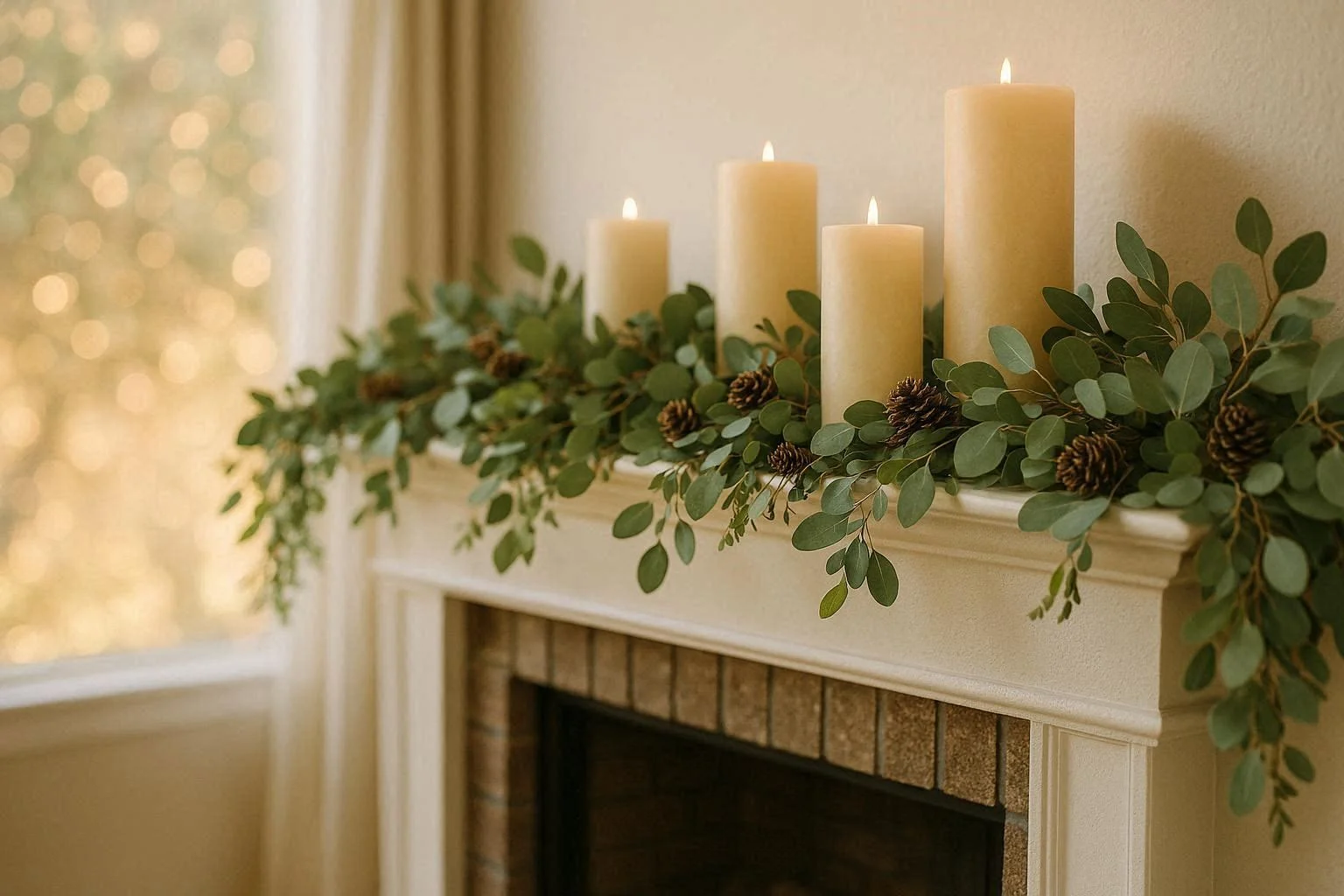
The mantel is probably the most natural home for a garland, and for good reason. It’s an elevated, horizontal surface that practically begs for something draped across it. For a classic look, choose a lush eucalyptus or pine garland and let it drape naturally with gentle cascades on each end. Layer in some candles of varying heights, a few pinecones, and maybe a lantern or two.
Color-wise, deep greens paired with warm brass or copper accents never fail. For a softer, romantic look, try dried white flowers mixed into greenery with cream pillar candles. One practical tip: use clear adhesive hooks or removable clips on the mantel’s underside to anchor the garland so it doesn’t slowly slide off through the day.
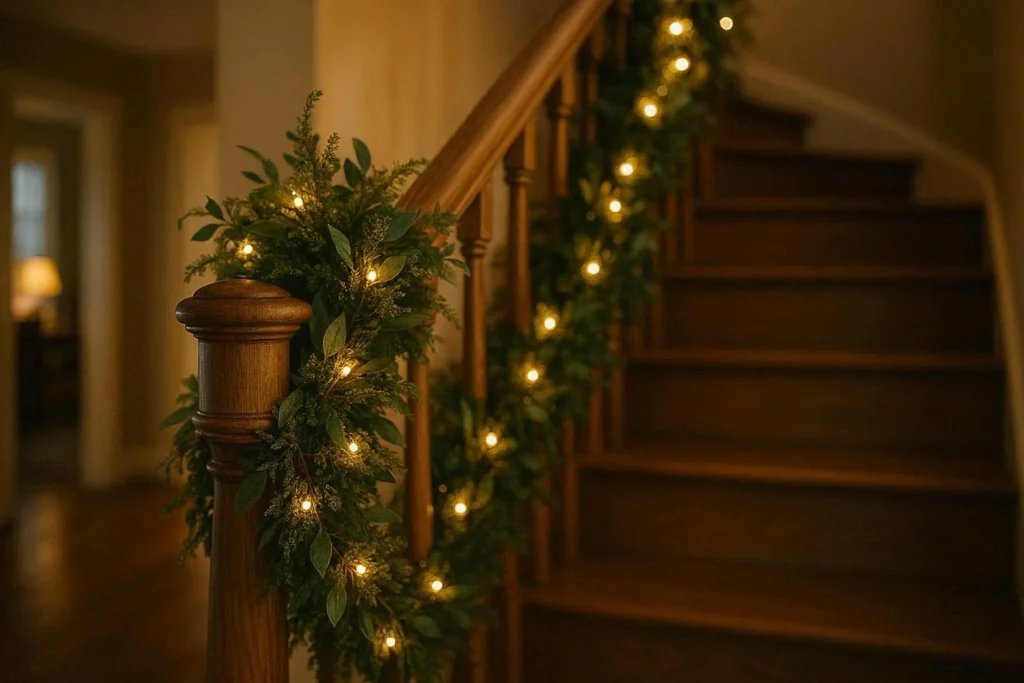
A garland winding down a staircase banister is one of the most striking garland displays you can create in a home. It takes a little patience to do it well, but the visual payoff is worth every minute.
Use zip ties or florist wire to secure the garland every few balusters, then disguise the ties with ribbon, twine, or small bows. For holiday styling, intertwine fairy lights as you go for a warm, glowing effect. Eucalyptus garlands work beautifully here because the movement of people on the stairs releases that lovely herbal scent throughout the day.
Draping a garland above a doorway creates a natural frame that makes even ordinary rooms feel more intentional and finished. This is especially effective in older homes with high doorways or archways. Use Command hooks on either side of the frame and let the garland dip gently in the middle.
Greenery garlands work for everyday use, while dried flower varieties give a boho or cottagecore feel. For entryways and front doors, a simple eucalyptus swag tied with a ribbon is elegant and incredibly welcoming.
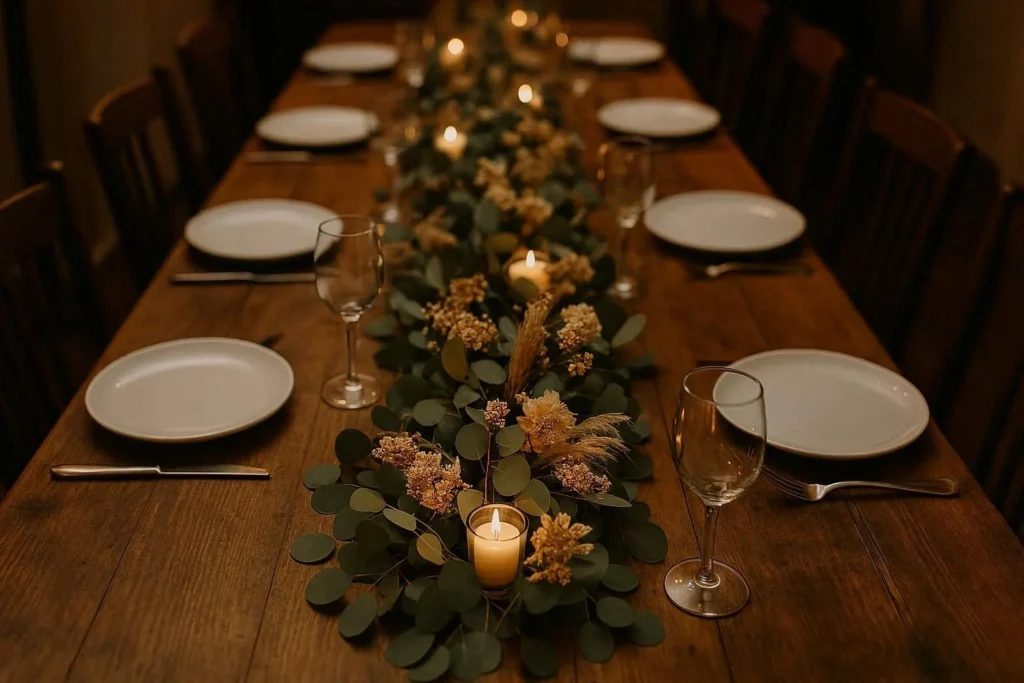
Instead of a traditional centerpiece, try running a garland down the middle of your dining table as a table runner. This works best for longer tables where a single vase or bowl would feel lost in the middle.
Mix eucalyptus with seasonal flowers, tuck in some tea light candles in small holders, and scatter a few polished stones or fruit for added texture. For more ideas on styling your table for everyday meals and special occasions, take a look at our breakfast table decor ideas guide too.
Windows are often underused in home decorating. Draping a garland along the top of a window frame or weaving it through curtain rods adds a lovely, layered look. Fairy light garlands work especially well here because they let in light while adding a soft, warm glow after dark.
For a more structured look, go with a symmetrical garland that hangs in matching swags from each corner. For something more relaxed, choose a vine-style garland that trails naturally and asymmetrically.
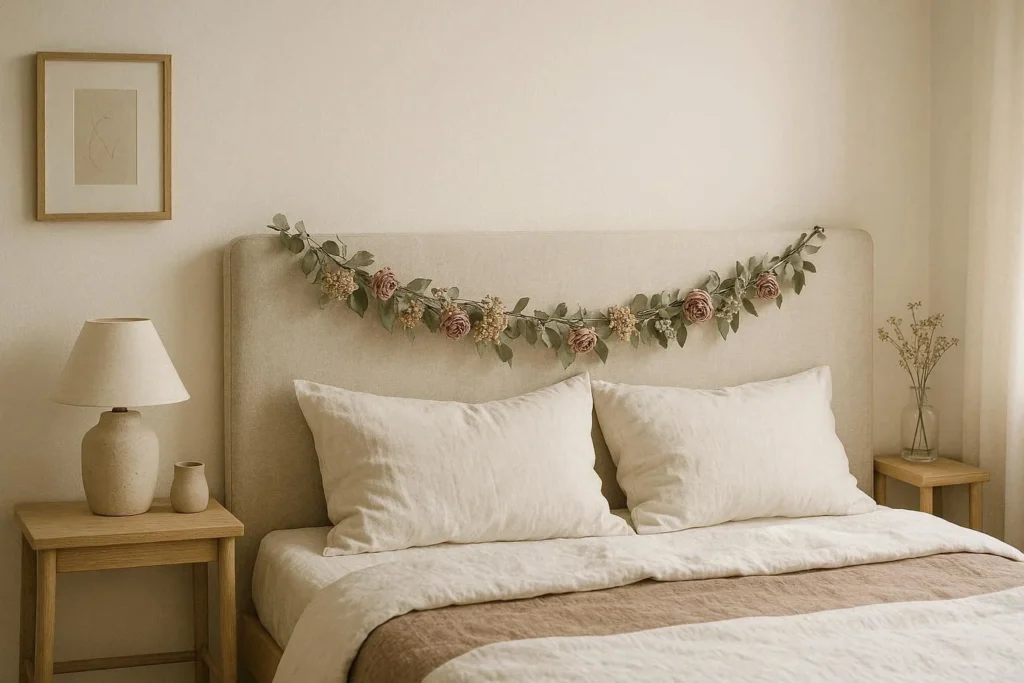
This is one of those ideas that feels unexpectedly luxurious once you try it. Draping a soft, trailing garland over a headboard, or weaving fairy lights through its frame, turns a bedroom into something that feels genuinely special.
Dried flower garlands in muted tones like dusty rose, sage green, and ivory are particularly beautiful here. They’re light, they won’t wilt, and they add texture and softness that fabric alone can’t quite achieve. Secure them loosely with small velcro ties or thin floral wire so they stay in place without damaging your headboard.
Bookshelves and floating shelves are perfect spots for smaller, more delicate garlands. Weave a thin bead garland or a light vine garland through book stacks, frames, and decorative objects to tie a shelf display together.
For seasonal updates, swap a neutral eucalyptus garland for an autumn berry garland in fall or a snowy cedar garland in winter. It’s a small change that makes a big visual difference, and if you’re looking for more ways to add cozy texture to a room, our blanket ladder ideas guide is a great place to start.
First impressions matter, and a well-styled entryway garland tells guests immediately that someone who cares about their home lives there. Try a console table with a garland draped across its surface, anchored with candles or a tray on each side.
If your entryway has a mirror, drape a garland around its frame. If there’s a coat rack or hooks, weave a short garland across the top. Even a small apartment entryway can be transformed with a single, well-placed eucalyptus swag.
Not all garlands need to live on horizontal surfaces. Wall-mounted garlands, pinned in arching or swooping shapes, make beautiful statement pieces, especially in rooms where you want to add organic texture without heavy artwork.
A botanical garland of dried leaves, seed pods, and cotton stems arranged in an arc above a sofa or bed can serve as your primary wall decor. It’s earthy, interesting, and completely unique to your space.
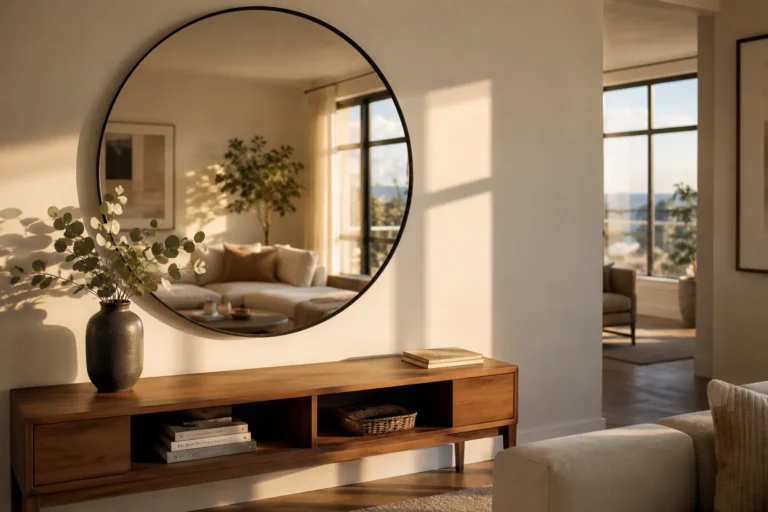
Framing a mirror with a garland is a wonderfully simple way to make it look intentional and decorative rather than just functional. Round mirrors work particularly well with circular garland arrangements, while rectangular mirrors look beautiful with garlands draped across the top and trailing down each side.
Choose a garland that complements the mirror’s frame. Warm-toned metals pair well with dried floral garlands in amber and gold tones, while white or silver frames look beautiful with eucalyptus or pale dried flowers.
Don’t limit garland ideas to indoors. A porch railing wound with a seasonal greenery garland, or a pergola threaded with outdoor fairy lights and vine garlands, can transform your outdoor space into a genuinely welcoming destination.
For outdoor use, always choose garlands rated for exterior conditions, or opt for real cut greenery which is naturally water-resistant for a few weeks. Cedar and pine hold up particularly well in cooler weather, while eucalyptus is a good choice for mild climates.
Holiday garland decorating is where most people start, and for good reason. It’s the tradition that connects generations. But beyond the standard mantel garland, consider layering holiday greenery throughout your home: across windowsills, looped through door handles, running along the top of kitchen cabinets, or framing a bathroom mirror.
The key to holiday garland styling that looks considered rather than chaotic is repetition. Use the same base greenery throughout the home and vary only the accents, a ribbon here, a cluster of berries there. Consistency creates cohesion.
Spring garland decorating is about welcoming lightness after a long, heavy winter. Think fresh greenery, pastel dried flowers, or branches of cherry blossom and forsythia. A eucalyptus garland with small white or blush dried flowers woven in feels fresh and seasonal without being overly themed. Place it on a console table, a dining table, or draped over a bedroom mirror.
Summer calls for brightness and a touch of the tropical. Lemon leaf garlands, citrus fruit swags, and bright wildflower arrangements capture the energy of the season. Outdoor spaces really shine in summer. A pergola wrapped in a simple vine garland with globe lights creates an outdoor dining area that feels like a proper destination.
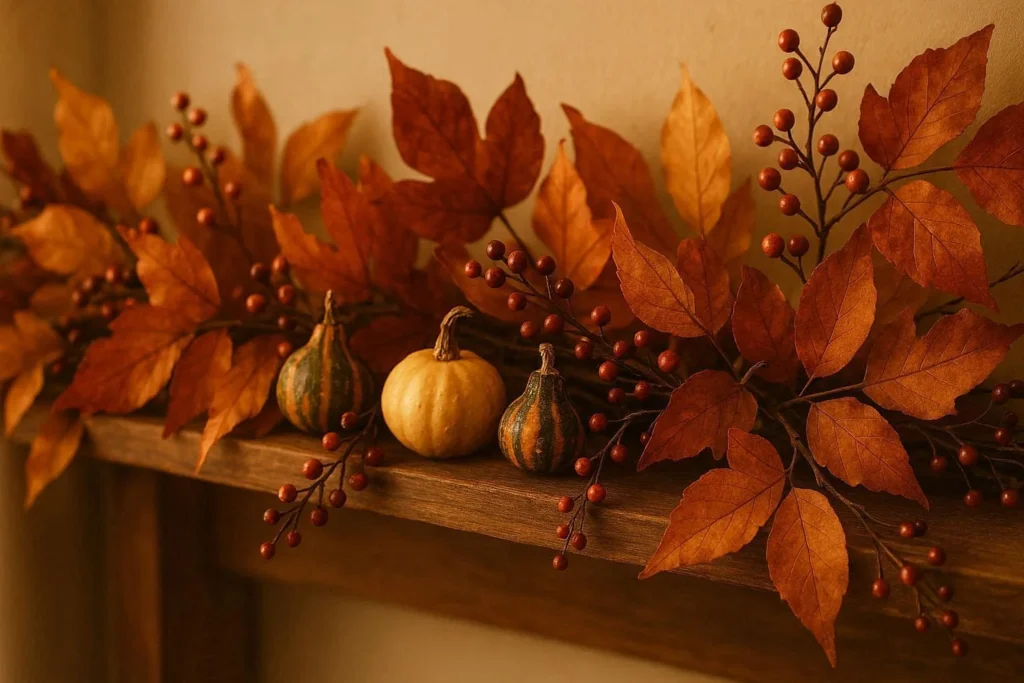
Fall might be the best season for garland decorating. The natural palette of amber, rust, burgundy, and gold translates beautifully into dried leaf garlands, berry and twig arrangements, and mixed greenery with deep-colored accents. A fall garland running across a fireplace mantel alongside pumpkins, candles, and wooden candlesticks is an almost irresistible combination. If you want more fall styling inspiration, check out our guide to cozy home decor ideas.
Winter garland decorating is synonymous with the holiday season for most people, but it can extend well beyond Christmas. Frosted cedar, white cotton, and gold bead garlands create a sophisticated winter aesthetic that works from December well into January. For Christmas specifically, a classic pine garland with red berry clusters, pinecones, and warm white lights remains the gold standard for a reason. It’s timeless.
Some of the most beautiful garlands you’ll ever own are the ones you make yourself. Here are four easy projects worth trying:
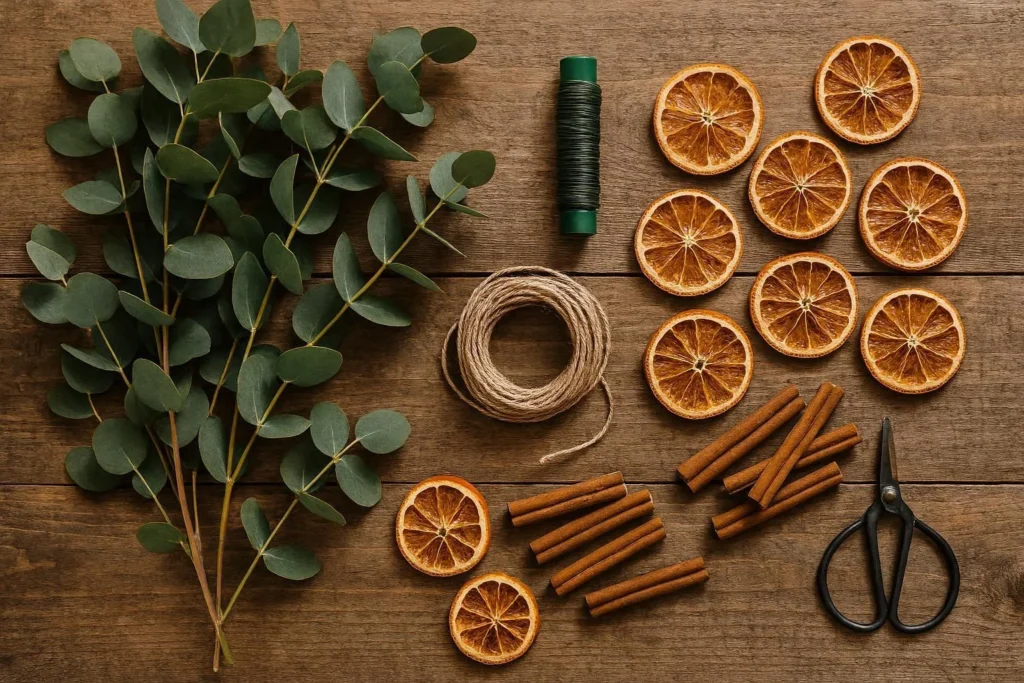
Buy a bundle of fresh or dried eucalyptus from a flower market or grocery store. Tie small bunches together using floral wire, overlapping each bunch slightly to create a full, lush strand. Fresh eucalyptus will dry naturally in place and maintain its color for weeks. A 6-foot garland costs just a few dollars to make at home versus $40 or more at a home decor store.
Slice oranges thinly, pat them dry, and bake on a low heat (around 200F / 93C) for 2-3 hours until fully dried. Thread them onto twine with cinnamon sticks and dried cranberries between each slice. The result is a gorgeous, fragrant garland perfect for autumn and winter. The scent alone is worth the effort.
Cut circles, triangles, or banner shapes from kraft paper, patterned scrapbook paper, or even old book pages. Fold each piece over a length of twine and secure with a dab of glue. Paper garlands are ideal for parties, nurseries, and temporary seasonal decor. They’re lightweight, customizable, and can be made in an evening.
Take a strand of battery-operated fairy lights and weave it through a base of dried foliage, branches, or a simple cotton cord. The result is a garland that looks beautiful during the day and absolutely magical after dark. These work particularly well in bedrooms, on bookshelves, and framing windows.
Not every spot in your home will work equally well for a garland. Here’s a quick breakdown of the highest-impact placement areas:
More is not always more. A single well-styled garland with thoughtfully chosen accents will always look better than a surface cluttered with too many elements competing for attention. If you have a garland on the mantel, keep the surrounding decor minimal. Let the garland breathe.
Garland colors should work with the room, not fight it. A bright red-and-green holiday garland in a room with cool blue tones will feel jarring. Take a photo of your room and use it as a reference when choosing garland colors. Neutral greenery is almost always a safe starting point because it works with virtually any palette.
Placing a garland too high on a wall where it can’t be properly seen, or too far from the room’s natural focal point, wastes the impact it could have. Think about where the eye naturally travels when someone enters the room. That’s where your garland should live.
Cheap artificial garlands often have an unmistakable plasticky sheen that immediately reads as fake. If you’re going artificial, invest in a quality option. The difference in appearance is dramatic. Look for garlands with varied leaf shapes, realistic color gradations, and natural-looking stems. Or go the dried floral route, which gives you the longevity of artificial with the beauty of real botanicals. For more ways to elevate your walls and surfaces, browse our wall decor ideas guide.
Garlands are one of the most forgiving and flexible decorating tools available to you. They don’t require a big budget, they don’t demand professional installation, and they can be changed out with the seasons without leaving a mark on your walls or furniture.
Start small if you’re new to it. Pick one room, one surface, and one garland, even a $10 bundle of fresh eucalyptus from the grocery store, and see how it changes how the room feels. Chances are, you’ll be back for more.
The best garland in your home will be the one that reflects your style, fits your space, and makes you smile every time you walk past it. Experiment freely, trust your instincts, and don’t be afraid to mix materials, textures, and colors until you find the combination that feels like home. And when you’re ready to keep exploring, Economy Home Decor has budget-friendly decorating ideas for every room, every season, and every kind of space.
A eucalyptus or pine garland works best on a mantel as both drape naturally, hold their shape well, and suit almost any decor style.
Use removable Command hooks or adhesive clips to anchor garlands without leaving marks, making them ideal for renters.
Absolutely, dried eucalyptus, floral, and bead garlands work beautifully year-round and aren’t tied to any particular season.
Fresh eucalyptus lasts two to three weeks before drying out, and once dried it can hold its colour and shape for several months.
A eucalyptus garland is the easiest to make just bundle small sprigs together with floral wire and connect them end to end.