Bring Life to Your Living Space
Bring Life to Your Living Space

If you love wine, there is something deeply satisfying about having a dedicated space to store and showcase your collection. Custom wine cellars have moved beyond luxury estates and into everyday homes, and for good reason. They protect your bottles from heat, light, and vibration while adding a striking design feature to your living space.
But a wine cellar that looks amazing and fails to do its job is a costly mistake. The best designs balance visual appeal with real functionality, and that balance starts at the planning stage, not the decorating stage.
This guide walks you through everything you need to know, from choosing the right location to picking materials and finishes, so you can create a wine storage space you will genuinely use and enjoy for years. If you want to deepen your knowledge of wine alongside your custom wine cellar design project, Heritage Vine is a helpful resource for tasting notes, pairing guides, and wine education.
Location is the single most important decision in custom wine cellar design. You need a space that naturally stays cool, avoids direct sunlight, and has minimal vibration. Basements are the traditional choice for good reasons: they stay cooler, maintain more stable temperatures, and are naturally insulated from the rest of the house.
Practical tip: Avoid locations near appliances that generate heat, like refrigerators, dryers, or HVAC units. Even mild heat exposure over time can damage a wine collection.
Before you design anything, count your current bottles and think honestly about where your collection is headed. A common planning mistake is building for today rather than tomorrow. If you currently own 200 bottles and buy regularly, you may need space for 400 or more within a few years.
Practical tip: A rough rule of thumb is to plan for 1.5 to 2 times your current collection size when setting your initial capacity.
Wine cellars are not easy to expand once built. If you invest in custom wine cellar design, build in flexibility from the start. Modular racking systems are a smart choice because they can be added to or reconfigured without major construction.
Think about how you will actually use the space day to day. A beautiful cellar that requires moving 30 bottles to reach a specific label quickly becomes a nuisance. Organize by variety, region, or drinking timeline so your most-used bottles are within easy reach.
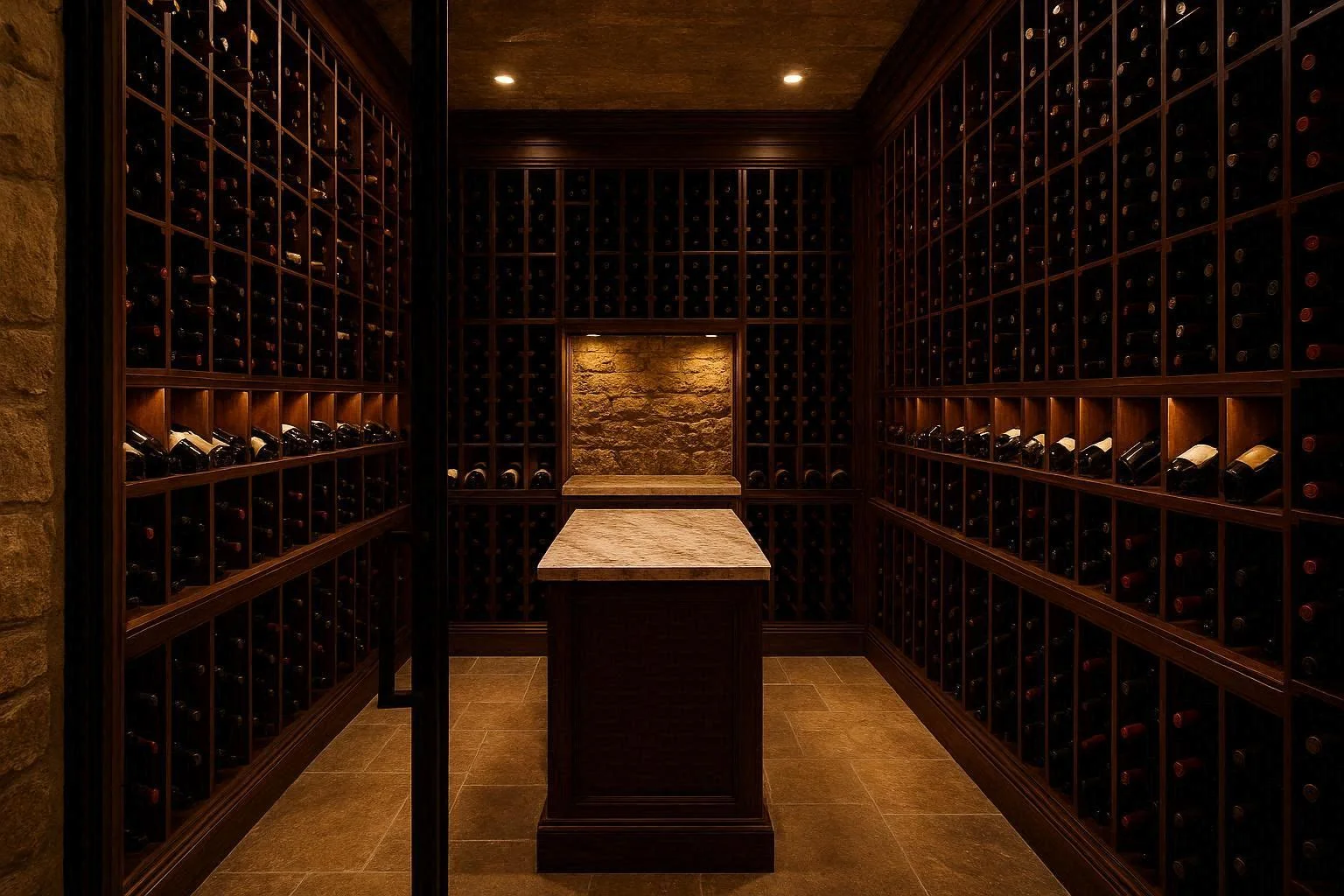
A walk-in wine cellar offers the most storage flexibility and the most dramatic visual impact. You can line all four walls with racks, add a central island for display, and include a small tasting counter. This is the classic choice for serious collectors and one of the most popular wine cellar ideas for larger homes.
The space beneath a staircase is often wasted. A well-designed under-stair wine room can hold a surprisingly large collection in a compact footprint. Climate control is more challenging here, so it works best for frequent drinking wines rather than long-term aging bottles.
A basement wine room conversion is often the most practical and cost-effective option. Basements already offer natural temperature stability, and the space is typically away from foot traffic and noise. Adding proper insulation, a cooling unit, and custom racking transforms an unused corner into a functional wine room.
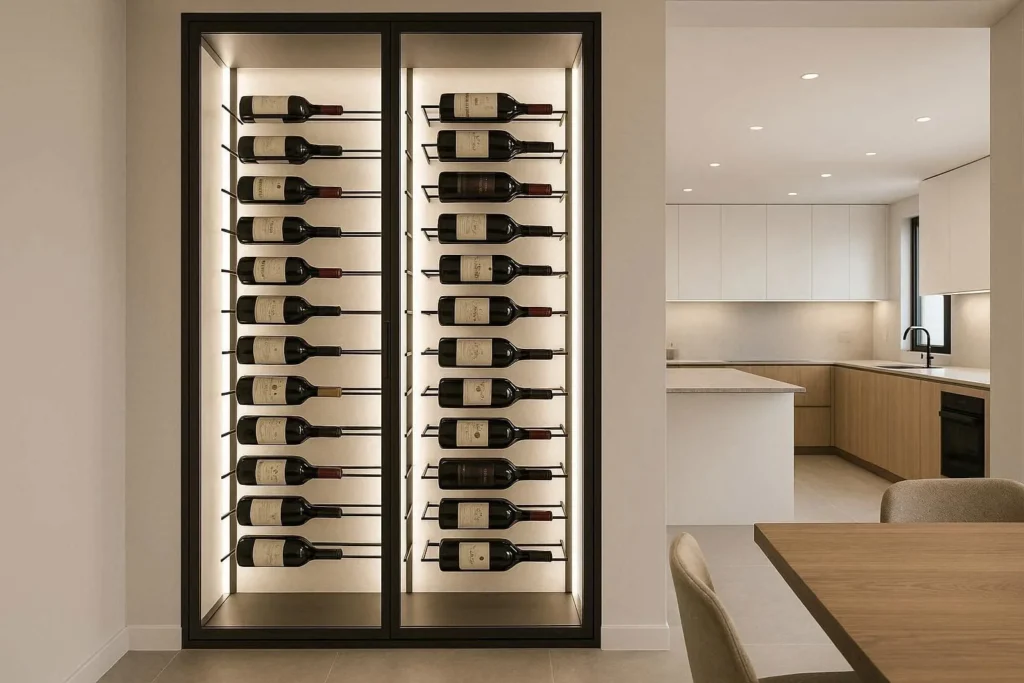
For homes without a basement, a glass-enclosed wine display is a stunning alternative. Built into a dining room wall or kitchen, these refrigerated units keep wine at the right temperature while putting your collection on show. They double as conversation pieces and are a popular choice in modern and open-plan interiors. You can pair these with creative flat decoration ideas to make them feel intentional rather than out of place.
A dedicated wine cellar is not the only option. A converted closet, a pantry corner, or even a repurposed cabinet can work surprisingly well with the right cooling unit and some thoughtful shelf decor ideas. The key is consistent temperature and protection from light.
Wine storage requires a consistent temperature between 55 and 65 degrees Fahrenheit. Fluctuations are more damaging than a steady, slightly warmer temperature. For cellars in non-basement spaces, a dedicated wine cooling unit is essential.
Ideal humidity for wine storage sits between 50 and 70 percent. Too dry, and corks can shrink and allow air into the bottle. Too humid, and mold can develop on labels and wooden racks. Most wine cooling units handle both temperature and humidity together.
Proper airflow prevents hot spots and keeps cooling systems running efficiently. Make sure your cooling unit has enough clearance and that air can circulate around the bottles. For glass-enclosed displays, built-in ventilation is usually part of the unit itself.
Heat and UV light both degrade wine over time. Choose LED lighting with low UV output and avoid incandescent or halogen bulbs. Warm-toned LEDs work especially well in wine cellars because they enhance the rich colors of the bottles and racks without generating heat. Think of lighting the way you would approach wall art ideas: it should add atmosphere, not just visibility.
Organize your racks in a way that makes sense for how you drink. Many collectors organize by type and then by drinking window, placing bottles they will open soon in the most accessible spots. Label each section clearly so guests and family members can find bottles without disrupting the rest of the collection.
Modern wine cellars favor clean lines, metal hardware, glass panels, and minimal ornamentation. The bottles themselves become the visual feature. This style pairs naturally with contemporary open-plan homes and works well in glass-enclosed display designs. For inspiration on how to keep decorating intentional and clutter-free, explore minimalist wall decor ideas.
Traditional cellars use arched ceilings, stone walls, dark wood racking, and warm amber lighting. They evoke the classic European estate cellar and work beautifully in older homes or spaces with architectural character.
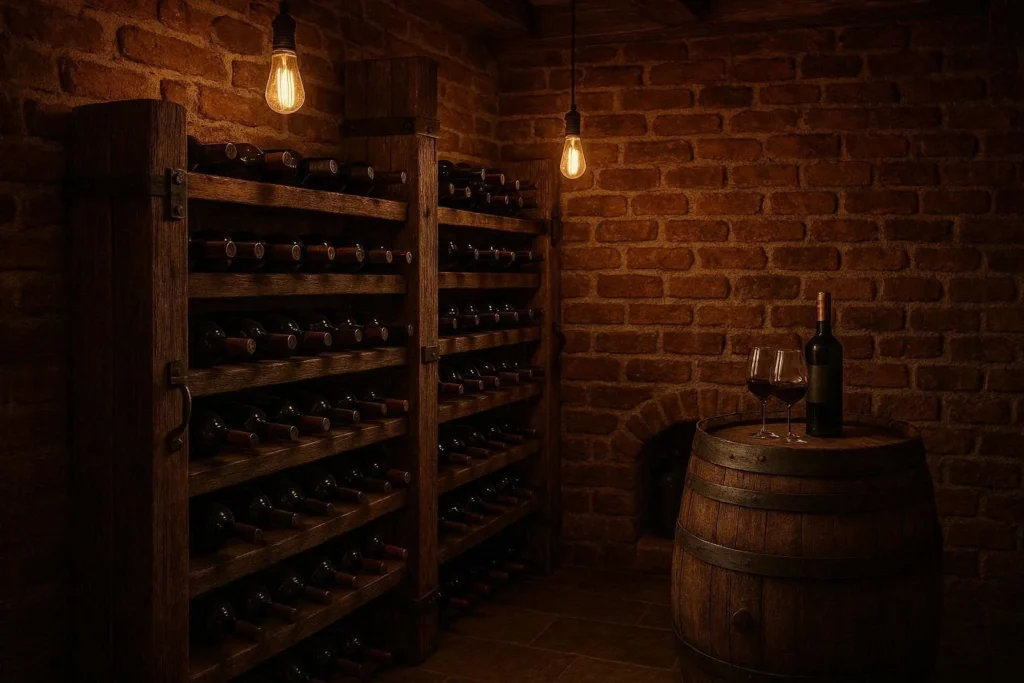
Rustic designs lean into natural materials, reclaimed wood, exposed brick, and earthy tones. The aesthetic is warm and relaxed, and it works especially well in farmhouse or cottage-style homes. Rough-hewn wooden racks and iron hardware complete the look.
Luxury wine cellar design goes beyond storage into full entertainment. Temperature-controlled tasting rooms, custom marble flooring, bespoke cabinetry, and curated art create an immersive experience. This is a space meant for entertaining as much as storing. Pair it with thoughtfully chosen living room wall decor ideas to create a cohesive flow through your home.
A minimalist cellar does more with less. Simple metal or floating wooden racks, neutral walls, and restrained lighting keep the focus entirely on the bottles. This style works well in smaller spaces and suits homeowners who prefer understated elegance over bold design statements.
Wood is the most traditional and widely used material for wine storage. Redwood and mahogany are popular choices because they resist moisture and do not warp easily. Pine is a more affordable option, though it requires a sealant in humid environments.
Metal racks offer a modern, industrial look and are often modular, making them easy to expand. They are durable, moisture-resistant, and work well in contemporary and minimalist wine cellar designs.
Exposed stone or brick walls add texture and a sense of history to a wine cellar. Natural stone also has good thermal mass, which helps stabilize temperature. It pairs well with both traditional and rustic design styles.
Glass doors and panels add drama and visibility. They work especially well in glass-enclosed wine displays and modern designs. Make sure any glass used in a cellar is UV-filtering to protect your collection from light damage.
Slate, travertine, and sealed concrete are practical and durable choices for wine cellar flooring. They handle moisture well and are easy to clean. Avoid wood flooring in high-humidity environments, as it can warp over time. A well-chosen surface pairs nicely with the overall visual balance; think of it the way you would a coffee table decor ideas approach: grounding the room without competing with the main feature.
One pattern that comes up again and again in home wine storage projects is that homeowners invest heavily in the look of a cellar before sorting out the fundamentals. Stunning racks and beautiful lighting mean very little if the temperature fluctuates or the capacity runs out in two years.
Here are the most common mistakes to avoid:
A dedicated cellar is not essential to store wine properly. Here are practical options for smaller homes:
Even compact solutions benefit from thoughtful organization. Label your sections, keep everyday drinkers accessible, and store aging bottles out of the way.
Building a full custom wine cellar is not in every budget, and that is perfectly fine. There are solid alternatives that protect wine without a major construction project:
For more decorating inspiration and home design ideas, visit Economy Home Decor.
It depends on the size of your collection and your growth plans. A small home cellar might hold 500 to 1,000 bottles, while larger dedicated rooms can hold several thousand. A good starting point is to estimate your current collection, double it, and design for that number.
Yes. Converted closets, under-stair spaces, and glass-enclosed wall units all work in small homes. The key is proper temperature control, not the size of the space.
The ideal range is 55 to 65 degrees Fahrenheit (13 to 18 degrees Celsius), with 55 to 58 degrees being optimal for long-term aging. Consistent temperature is more important than hitting a precise number.
Redwood and mahogany are the best wood choices for racks because they resist moisture. Metal systems are also excellent for durability and modern aesthetics. Slate or sealed concrete floors handle humidity well.
Costs vary widely. A basic converted closet might cost a few thousand dollars, while a full custom walk-in cellar with cooling systems, custom racking, and premium finishes can run from $15,000 to well over $50,000 depending on size and materials.
A well-designed custom wine cellar is part storage solution, part home feature, and part daily pleasure. The most successful designs start with the practical foundations: the right location, adequate capacity, reliable climate control, and thoughtful organization. Once those elements are in place, the aesthetic choices, whether you lean rustic, modern, luxury, or minimalist, become much easier to make confidently.
Take your time in the planning phase. Think about how your collection might grow, how you want to use the space day to day, and what materials and finishes fit the character of your home. A wine cellar built with that kind of intention will serve you well for decades, and it will look beautiful doing it.