Bring Life to Your Living Space
Bring Life to Your Living Space

There is something both exciting and intimidating about a huge blank wall. You know it has potential, but every time you stand in front of it, you draw a blank. Too small of a piece gets lost. Too random of a mix looks cluttered. And leaving it bare makes the whole room feel unfinished.
If that sounds familiar, you are not alone. Large walls are one of the most common decorating challenges in homes. The good news is that with the right approach, they are also one of the easiest spaces to transform. This guide covers 18 practical and stylish decoration ideas for a large wall, grouped by category so you can find what works best for your space.
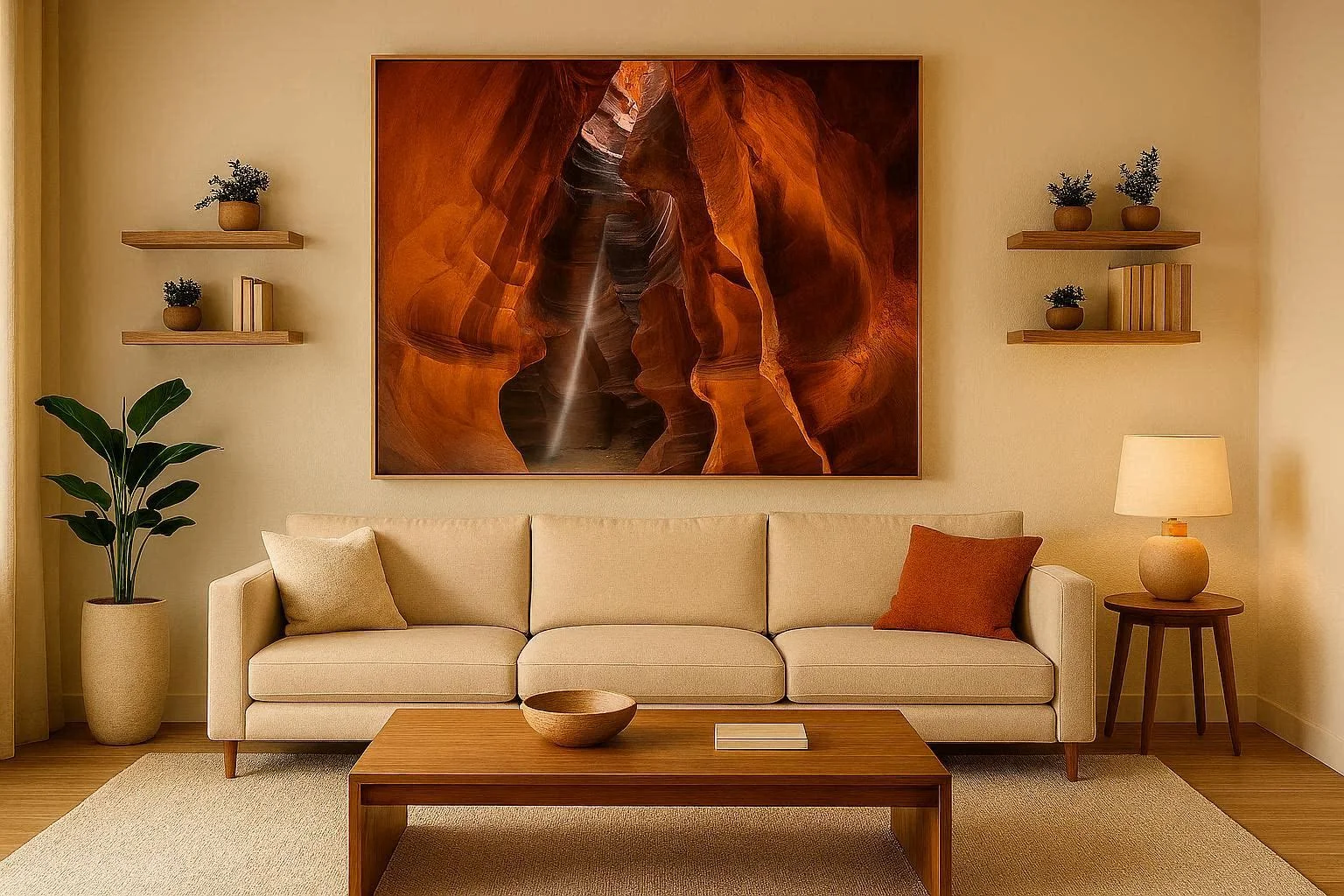
Sometimes the simplest solution is the boldest one. A single oversized artwork, canvas, or print can anchor a large wall without any additional clutter. Choose something that connects with the room’s color palette or mood.
Hang it so the center sits at eye level, roughly 57 to 60 inches from the floor. This placement feels natural whether you are standing or sitting. For more inspiration on choosing the right piece, browse wall decor ideas that suit different room styles. You can also visit Economy Home Decor for more ideas across every room in the house.
Budget tip: Large canvas prints from online print shops or even a framed fabric panel can look just as striking as expensive original art.
A gallery wall lets you use a collection of smaller frames, prints, or photos to fill a big space in a cohesive way. Mix frame sizes but keep a consistent color for the frames themselves, such as all black, all gold, or all natural wood.
Lay your arrangement out on the floor before you start hammering. This saves you a lot of patching. Keep spacing between pieces consistent, around two to three inches, for a tidy but relaxed look.
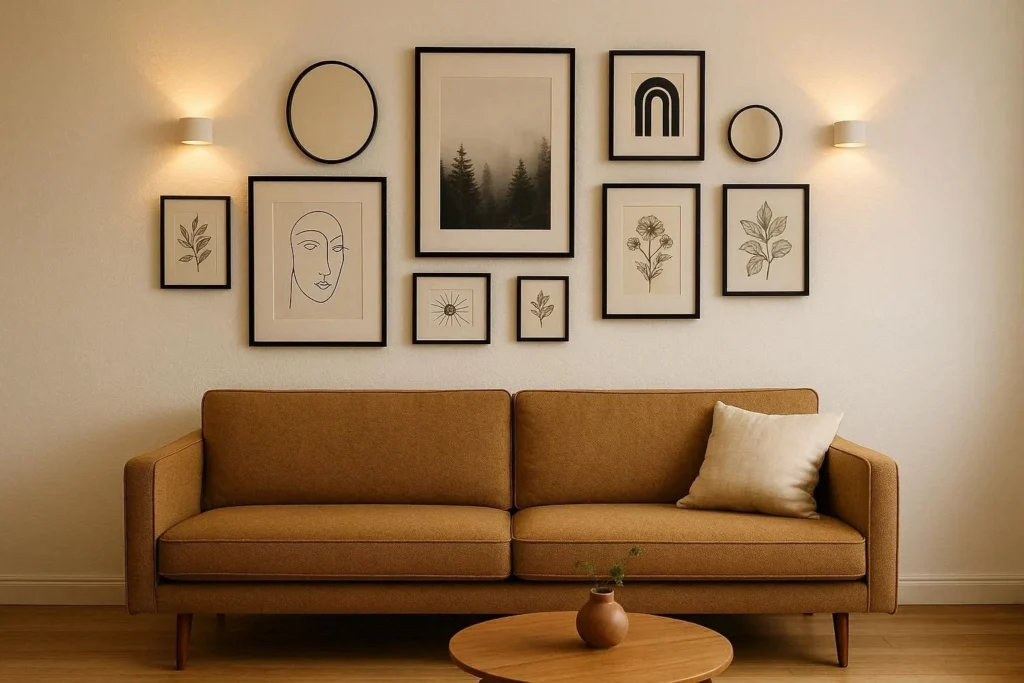
A set of matching prints arranged in a row or grid creates a polished, intentional look. Botanical illustrations, city maps, vintage travel posters, or abstract art all work well as a series.
Stick to an odd number of pieces when possible. Three or five framed prints in a horizontal line feels more dynamic than an even-numbered row.
Budget tip: Free printable art from sites like Unsplash or Canva can be printed at a local shop and framed affordably.
A woven tapestry, macrame wall hanging, or large fabric panel adds warmth and texture that regular framed art cannot. These are especially effective in bedrooms, bohemian spaces, or any room that needs softness.
For bedroom decorating ideas, a large textile above the bed is both decorative and cozy, replacing the need for a headboard entirely.
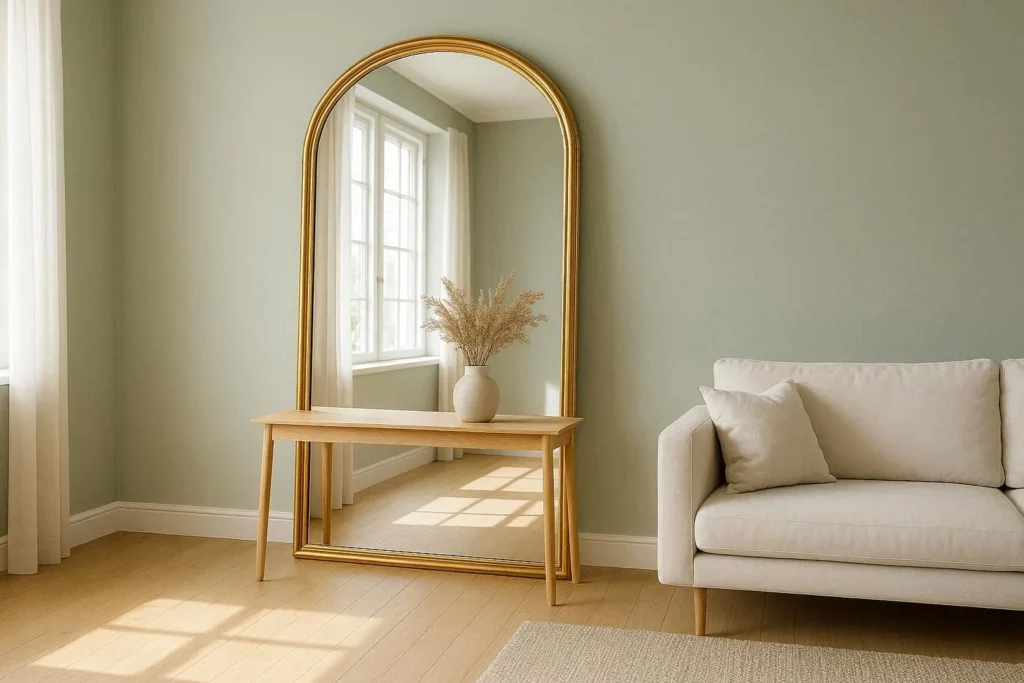
A large mirror does double duty. It fills empty wall space while making the room feel bigger and brighter by bouncing natural light around. In living rooms, entryways, and dining rooms, this is one of the most effective large wall decor ideas you can use.
Choose a statement frame style, arched, sunburst, or ornately carved, to make the mirror itself a piece of art. Lean it against the wall for a casual, editorial look or hang it for a more traditional feel.
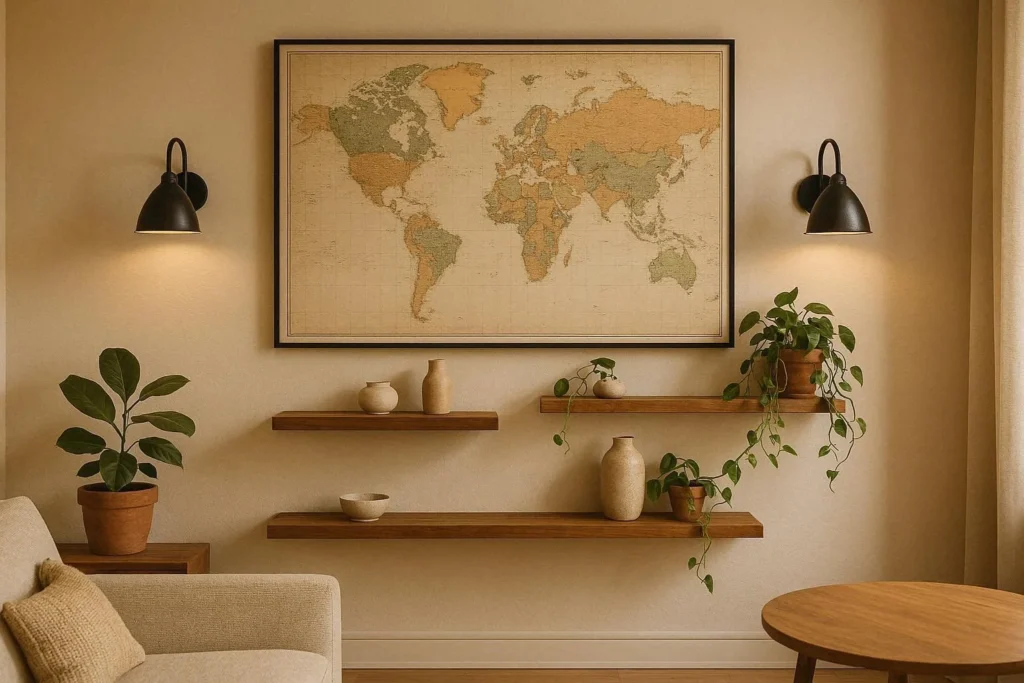
Floating shelves transform a plain wall into useful storage and display space. Stagger them at different heights to create visual interest and use them to style books, plants, candles, and small objects.
A cluster of three to five shelves at varying lengths works well on walls between eight and twelve feet wide. Keep the items on each shelf minimal so the display looks curated rather than crowded.
Budget tip: Plank shelves with simple L-brackets are inexpensive and easy to install yourself.
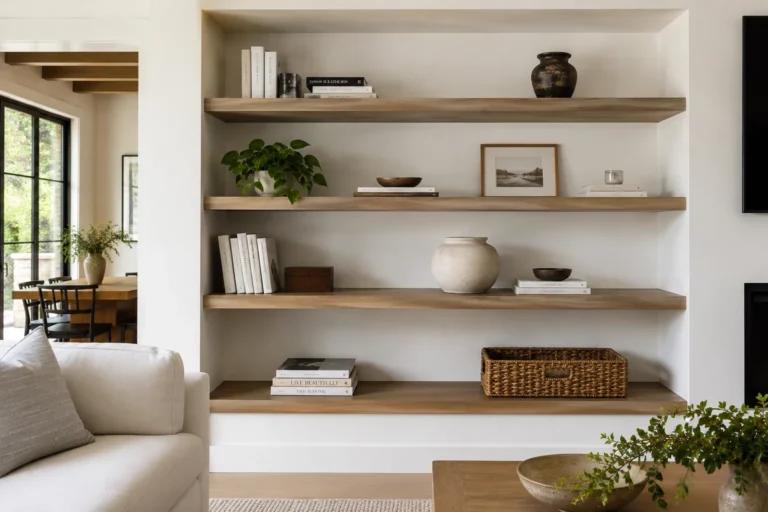
For a truly dramatic large wall solution, a built-in bookcase or floor-to-ceiling shelving unit fills the entire space with purpose. It works in home offices, libraries, and living rooms where you want both function and style.
Style the shelves by mixing books with decorative objects, plants, and baskets. Avoid packing every shelf completely; negative space is part of what makes a styled bookcase look good.
In kitchens, craft rooms, or home offices, a large pegboard or slatted panel turns wall space into flexible, visible storage. Hooks, shelves, and containers can be rearranged as your needs change.
Paint the pegboard in a fun accent color to make it feel more intentional and design-forward rather than purely utilitarian.
Painting one large wall in a bold or moody color is one of the fastest and most affordable ways to transform a space. Deep greens, earthy terracottas, dusty blues, and charcoal all create a strong visual anchor without needing anything else on the wall.
Color blocking, painting geometric shapes or sections in contrasting colors, takes this further and adds a modern graphic quality to the room.
A single wall of patterned or mural wallpaper creates an instant focal point. Botanical prints, abstract designs, classic stripes, or scenic murals all work beautifully on a large wall.
Peel-and-stick wallpaper has made this option much more accessible and renter-friendly. You get the impact of a full wallpapered wall without the permanent commitment.
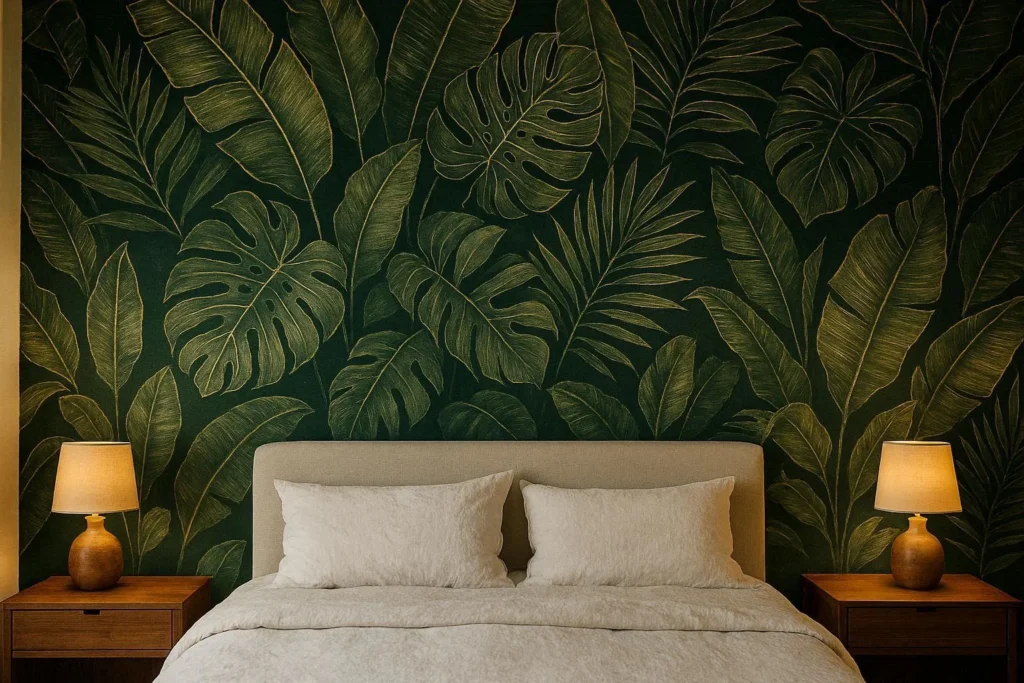
Budget tip: Use a single roll of wallpaper as a framed panel rather than covering the whole wall for a more affordable version of this look.
Wood paneling, shiplap, or board-and-batten adds architectural texture and dimension to a large flat wall. It works in farmhouse, coastal, Scandinavian, and transitional interiors.
You do not have to panel the whole room. One accent wall in a living room or bedroom done in vertical wood paneling creates a clean, high-end look on a manageable budget.
Stenciling lets you create a pattern or mural effect on a large wall using paint and a reusable stencil. It is more affordable than wallpaper and far more customizable. Geometric, Moroccan tile, and botanical patterns are popular choices.
Use a sponge or roller brush for a clean, even application, and work in sections across the wall. Stencil decorating is more beginner-friendly than it looks, and there are hundreds of free stencil patterns available online to get you started.
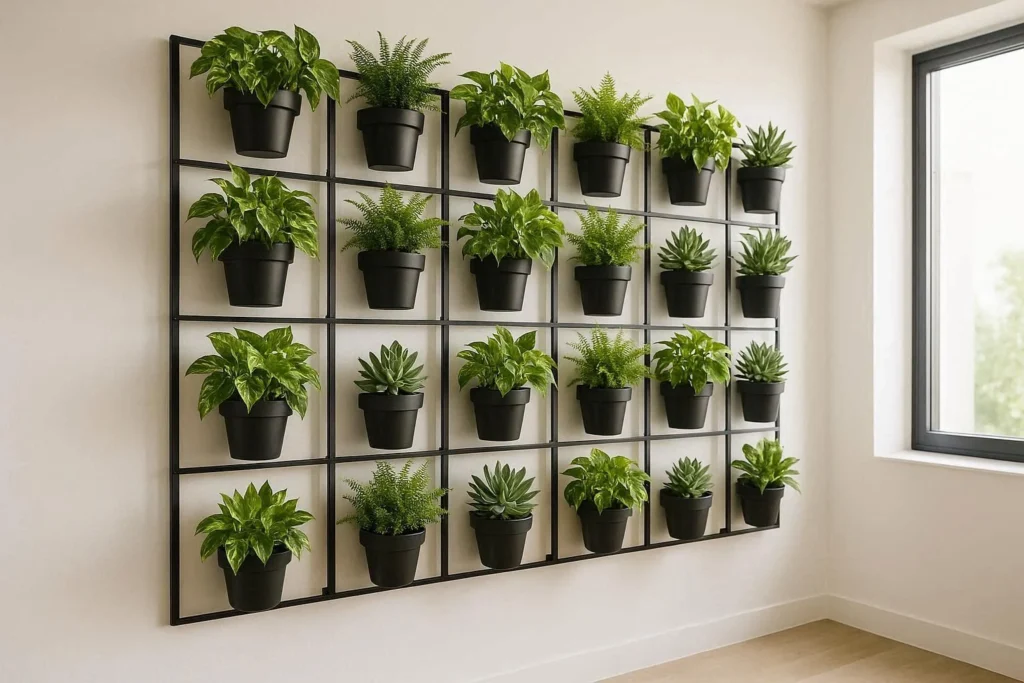
A vertical plant arrangement or living wall brings a large empty space to life with texture, color, and natural energy. Use wall-mounted planters, hanging pots, or a modular plant frame to create a grid of greenery.
For rooms without much natural light, use pothos, ferns, or air plants, which are tolerant of lower light conditions. Even a row of trailing plants on a long shelf can achieve a lush effect.
Wall-mounted lighting fixtures serve a practical purpose and add visual warmth to a large wall. A pair of sconces flanking a mirror, artwork, or a fireplace creates symmetry and draws the eye.
String lights, neon signs, or backlit panel frames are other ways to add ambient light while filling a large wall decoratively. Pairing sconces with a large mirror or artwork on either side is a classic approach that always looks intentional.
An oversized wall clock works particularly well in kitchens, living rooms, and dining areas. It is functional, visually bold, and requires no additional layering. Choose one that is at least 24 to 36 inches in diameter to make an impact on a large wall.
Metal, wood, and minimalist Roman numeral styles all suit different aesthetics. An oversized clock on a plain painted wall can feel like a complete design statement on its own.
Combining different types of wall decor creates depth and personality. Try mixing framed art with floating shelves, plants, and a mirror. Or layer a large textile with a few smaller frames around it.
The key is to tie everything together with a consistent color palette or material, such as natural wood tones, black metal frames, or a shared earthy color family. This prevents the mix from feeling chaotic.
For living room wall decor ideas, a mixed media wall display is especially impactful behind a sofa or entertainment unit.
Adding picture rail molding, panel molding, or wainscoting to a large wall gives it architectural interest even if it stays painted a single color. This technique is common in traditional and classic interiors but works in modern spaces too when kept simple and geometric.
It is a relatively affordable DIY project that elevates the look of any room significantly.
A large framed vintage map, world atlas print, or custom illustrated map is both decorative and personal. It fills a big wall naturally given its scale and works in home offices, libraries, and casual living spaces.
Choose a map that has meaning to you, a country you have traveled to, a city you love, or a custom map of your hometown.
With so many options, it helps to narrow down your choices based on a few practical factors.
Room size and ceiling height: In rooms with high ceilings, go vertical. Tall shelving, floor-to-ceiling artwork, or vertical paneling all draw the eye upward and make the proportions feel balanced. In rooms with standard ceilings, horizontal arrangements like gallery walls or long shelves work better.
Furniture placement: The wall you are decorating should complement the furniture in front of it. A large sofa or bed calls for a substantial piece above it. A console table or sideboard works well with a mirror, artwork, or a small gallery grouping.
Style preference: Match the decor approach to the overall feel of the room. Minimalist spaces benefit from one bold piece or a clean wall treatment. Eclectic or bohemian rooms can handle a layered gallery wall or textile display. Traditional spaces suit mirrors, molding, and symmetrical arrangements.
If you are working with a long or narrow room, these narrow living room decorating ideas will help you handle wall space without making the room feel tighter. And for out-of-the-box inspiration, check out these creative home decor ideas that go beyond the expected.
Using decor that is too small: One of the most frequent mistakes is hanging a small piece of art on a large wall and wondering why it looks lost. As a general rule, your artwork or display should cover at least two-thirds of the wall width above your furniture.
Hanging things too high: Art hung too close to the ceiling feels disconnected from the room. Keep the center of your artwork or display at eye level, around 57 to 60 inches from the floor in most cases.
Overcrowding: More is not always better. A cluttered wall can feel chaotic and overwhelming. If you are doing a gallery wall or mixed media display, leave breathing room between pieces and include some intentional negative space.
Ignoring the room’s existing style: A large wall becomes a problem when the decor on it clashes with the rest of the room. Tie your choices back to the colors, materials, and mood already present in the space.
You do not need a mansion to have a large wall problem. Many small rooms have one tall or wide wall that feels out of proportion with the rest of the space. Here are some smart approaches.
Use vertical scale: A tall narrow mirror or a vertical stack of frames draws the eye up and makes a small room feel taller and more spacious.
Stick to light colors and reflective surfaces: Light paint colors and mirrors on large walls keep a small room from feeling boxed in. Avoid very dark accent walls in truly small rooms unless the ceiling is high enough to handle it.
One statement, done well: In a small room, one well-chosen large piece tends to work better than a gallery wall. It keeps the space from feeling busy while still making the wall feel intentional.
Use the wall for storage: In small bedrooms, living rooms, or kitchens, turning a large wall into functional shelving kills two birds with one stone. It fills the wall and adds the storage you probably need.
You have a lot of options: oversized artwork, a gallery wall, a large mirror, floating shelves, wallpaper, wood paneling, wall sconces, or a combination of these. The key is choosing something that fits the scale of the wall and connects with the rest of the room’s style.
Focus on high-impact, low-cost approaches. A fresh coat of bold paint is one of the cheapest ways to transform a large wall. DIY gallery walls using printed art in simple frames, peel-and-stick wallpaper, or handmade macrame are all budget-friendly options that look polished.
For most setups, center your wall decor above the main furniture piece below it. A gallery wall or large artwork should be centered over a sofa, bed, or console table. However, spreading decor across an entire wall can work beautifully when using floor-to-ceiling shelves or paneling that fills the space edge to edge.
Balance comes from using decor that is proportional to the wall. Avoid too many small pieces scattered without structure. Use a mix of heights and textures, keep a consistent color palette, and always leave some negative space so the wall does not feel overloaded.
For a large wall, aim for artwork that is at least 24 by 36 inches as a minimum starting point. Above a sofa, the art or arrangement should ideally be about two-thirds the width of the sofa. For walls over ten feet wide, go bigger or use a multi-piece arrangement.
A large empty wall is not a problem. It is an opportunity. Whether you go bold with a statement mural, practical with floor-to-ceiling shelves, or layered with a gallery display, there are plenty of ways to make that space feel intentional and beautiful.
In many homes, large walls feel intimidating at first because there are no obvious starting points. The trick is to anchor your design around the furniture below the wall, choose a scale that matches the room, and build from there. Start with one strong element, then layer in smaller details if needed.
Do not be afraid to experiment. Rearrange, swap things out, and let the room evolve over time. The best-decorated homes are the ones that feel lived in and personal, not just styled for show.