Bring Life to Your Living Space
Bring Life to Your Living Space

Minimalist decorating has moved far beyond a passing trend. More homeowners are choosing simplicity because it genuinely changes how a home feels to live in. Fewer distractions, easier upkeep, and rooms that feel calm instead of chaotic.
A common misconception is that minimalist homes are cold, empty, or impersonal. That is not true minimalism. Real minimalist home decor essentials are about choosing pieces with purpose, not stripping a room bare. Done well, a minimalist space feels warm, functional, and unmistakably yours.
This guide breaks down exactly how to build that kind of home. You will find practical decorating advice for every room, budget-friendly ideas, common mistakes to avoid, and a full list of essentials that work in almost any style of home.
Minimalist home decor is built on a simple idea: every item in a room should serve a purpose or bring genuine value, whether that is function, beauty, or both.
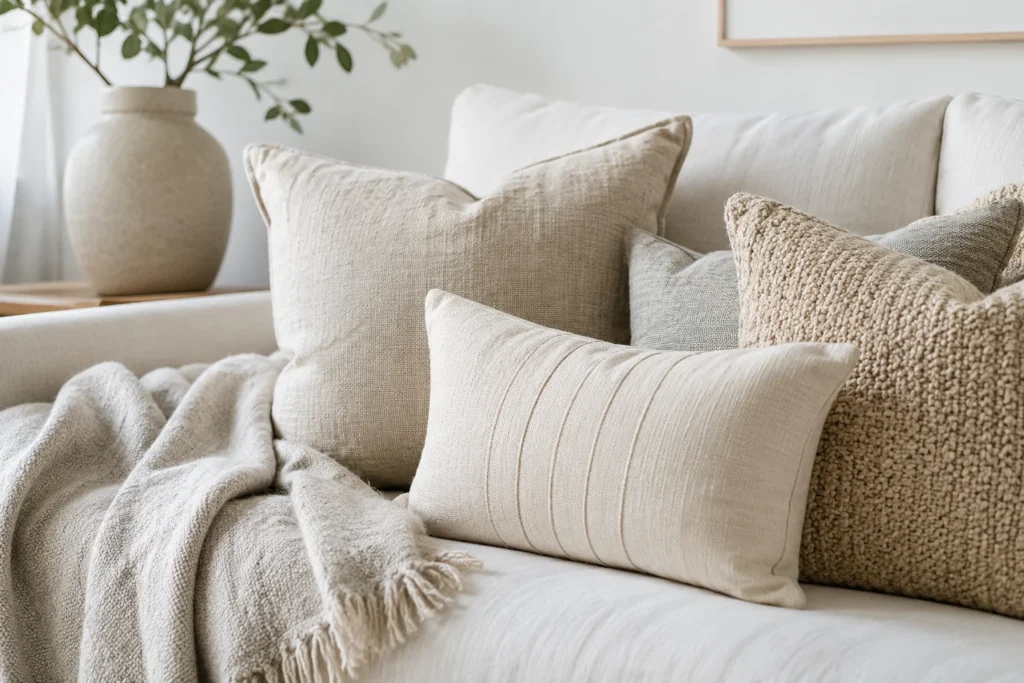
A few core principles guide this approach:
Minimalism is not about owning as little as possible. It is about owning the right things, arranged with care.
These are the building blocks of a clean, functional, and inviting minimalist home. Each one plays a specific role, and most work in nearly any room.
A neutral base keeps a room visually calm and lets furniture and textures stand out.
- Where it works best: Walls, large furniture, and flooring.
- Practical tip: Stick to two or three main tones throughout the home for a cohesive flow.
- Common mistake: Using too many competing neutrals that clash instead of complementing each other.
A minimalist living room still needs to feel livable, and the sofa is usually the anchor piece.
- Where it works best: Living rooms and family rooms.
- Practical tip: Choose a simple silhouette in a durable, easy-to-clean fabric.
- Common mistake: Prioritizing looks over comfort, which makes a room feel more like a showroom than a home.
A rug defines a space and adds warmth underfoot without cluttering the visual field.
- Where it works best: Living rooms, bedrooms, and dining areas.
- Practical tip: Choose a solid or subtly textured rug rather than a busy pattern.
- Common mistake: Picking a rug too small for the furniture arrangement, which makes the room feel disconnected.
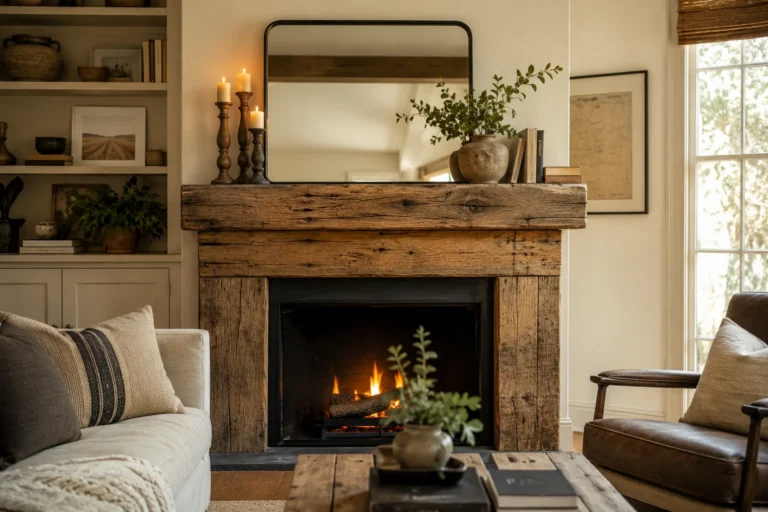
Wood brings texture and warmth that keeps a minimalist room from feeling sterile.
- Where it works best: Coffee tables, shelving, dining tables, and bed frames.
- Practical tip: Mix light and warm wood tones sparingly for depth.
- Common mistake: Pairing too many different wood finishes, which creates visual noise.
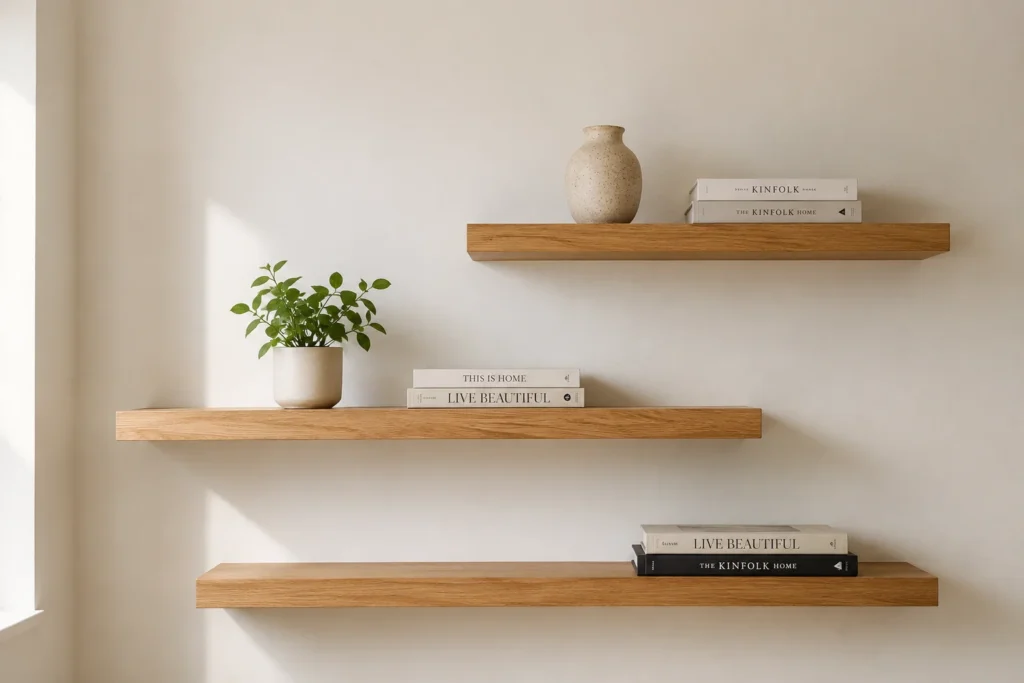
Floating shelves offer storage and display space without adding visual bulk. For layout inspiration, these living room shelf ideas show how to keep shelving simple and intentional.
- Where it works best: Living rooms, hallways, and kitchens.
- Practical tip: Style with three to five items per shelf, leaving breathing room between them.
- Common mistake: Overloading shelves until they look cluttered instead of curated.
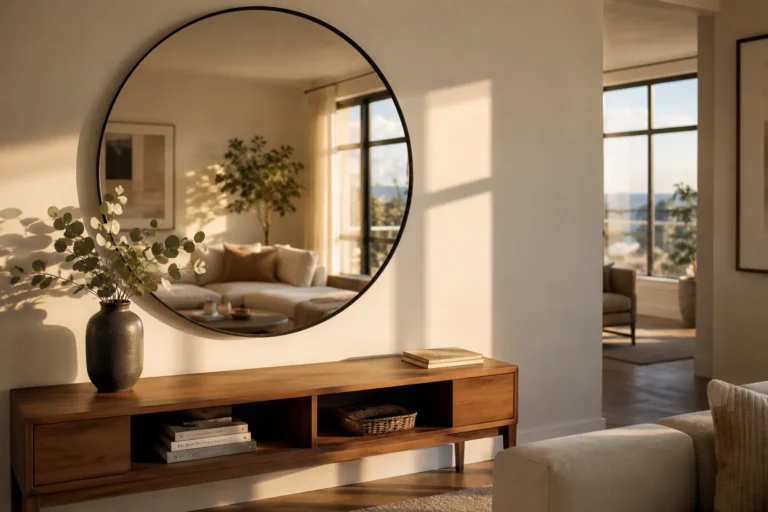
A well-placed mirror adds light, depth, and a polished focal point. These mirror wall decor ideas offer better direction for minimalist spaces than heavily ornate options.
- Where it works best: Entryways, living rooms, and bedrooms.
- Practical tip: Position it to reflect natural light or an appealing view.
- Common mistake: Choosing an ornate frame that fights with the room’s simple aesthetic.
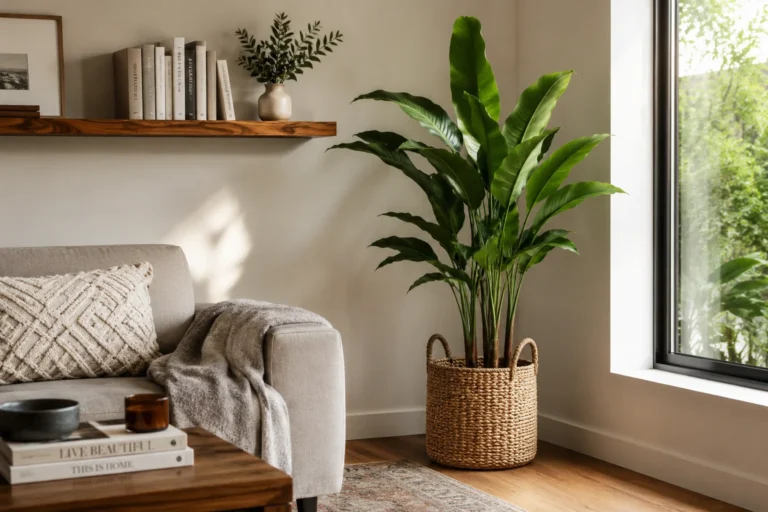
Plants soften hard lines and bring life into a neutral room.
- Where it works best: Living rooms, kitchens, and home offices.
- Practical tip: Choose one or two larger plants rather than many small ones scattered around.
- Common mistake: Using artificial plants that look obviously fake, which undermines the natural feel minimalism relies on.
Simple artwork adds personality without overwhelming the space. Explore these wall decor ideas for pieces that fit a calmer aesthetic.
- Where it works best: Living rooms, hallways, and bedrooms.
- Practical tip: One or two well-chosen pieces make more impact than a wall full of small prints.
- Common mistake: Choosing art that is too small for the wall, leaving it feeling like an afterthought.
Curtains soften windows and add gentle texture without heavy patterns.
- Where it works best: Living rooms and bedrooms.
- Practical tip: Choose light, neutral linen that lets sunlight filter through.
- Common mistake: Hanging curtains too short, which makes ceilings feel lower and rooms feel smaller.
A coffee table should support daily life, not just sit there looking sculptural. These coffee table decor ideas show how to style the surface without cluttering it.
- Where it works best: Living rooms.
- Practical tip: Choose one with a shelf or drawer for hidden storage.
- Common mistake: Picking a table too large or small for the sofa, which throws off the room’s proportions.
Baskets hide everyday clutter while adding natural texture.
- Where it works best: Living rooms, bedrooms, and entryways.
- Practical tip: Use woven baskets for blankets, toys, or miscellaneous items that tend to pile up.
- Common mistake: Choosing baskets that clash in material or color with the rest of the room.
A simple vase adds shape and softness to a shelf or table without needing flowers.
- Where it works best: Coffee tables, shelves, and dining tables.
- Practical tip: Group vases in odd numbers of varying heights for visual interest.
- Common mistake: Overcrowding a surface with too many small decorative objects.
Good lighting shapes the entire mood of a minimalist room.
- Where it works best: Living rooms, bedrooms, and dining areas.
- Practical tip: Choose fixtures with clean, unfussy shapes in matte finishes.
- Common mistake: Relying only on one overhead light, which creates flat, uninviting lighting.
Texture is what keeps minimalist rooms from feeling flat or cold.
- Where it works best: Sofas, beds, and accent chairs.
- Practical tip: Choose knits or bouclé in a tone that complements, not matches, your palette.
- Common mistake: Skipping texture altogether in favor of an all-smooth, all-neutral look.
Books add color, height variation, and a lived-in feel to shelves and tables.
- Where it works best: Coffee tables, shelves, and side tables.
- Practical tip: Stack two or three books and top with a small object like a candle or vase.
- Common mistake: Using books purely as props rather than ones you actually enjoy.
Sconces free up floor and table space while adding a warm glow.
- Where it works best: Bedrooms, hallways, and living rooms.
- Practical tip: Install at eye level for reading nooks or beside a bed.
- Common mistake: Choosing overly decorative sconces that clash with the room’s simplicity.
A tray corrals small items and keeps surfaces looking intentional rather than messy.
- Where it works best: Coffee tables, dressers, and entryway consoles.
- Practical tip: Use one tray per surface to group remotes, keys, or candles.
- Common mistake: Leaving items loose and scattered instead of contained.
Beyond baskets, woven bins and boxes help store items out of sight while still looking natural.
- Where it works best: Closets, bedrooms, and living rooms.
- Practical tip: Label or designate specific bins for specific categories to keep things easy to find.
- Common mistake: Using mismatched storage that looks chaotic when placed together.
Simple, high-quality bedding instantly makes a minimalist bedroom feel like a retreat.
- Where it works best: Bedrooms.
- Practical tip: Stick to solid colors or subtle textures like waffle weave or linen.
- Common mistake: Overloading the bed with too many decorative pillows that need to be removed every night.
One well-chosen chair can add personality and comfort without cluttering the room.
- Where it works best: Living rooms and bedroom reading corners.
- Practical tip: Choose a shape or texture that contrasts gently with the sofa.
- Common mistake: Adding a chair simply to fill space rather than for actual use.
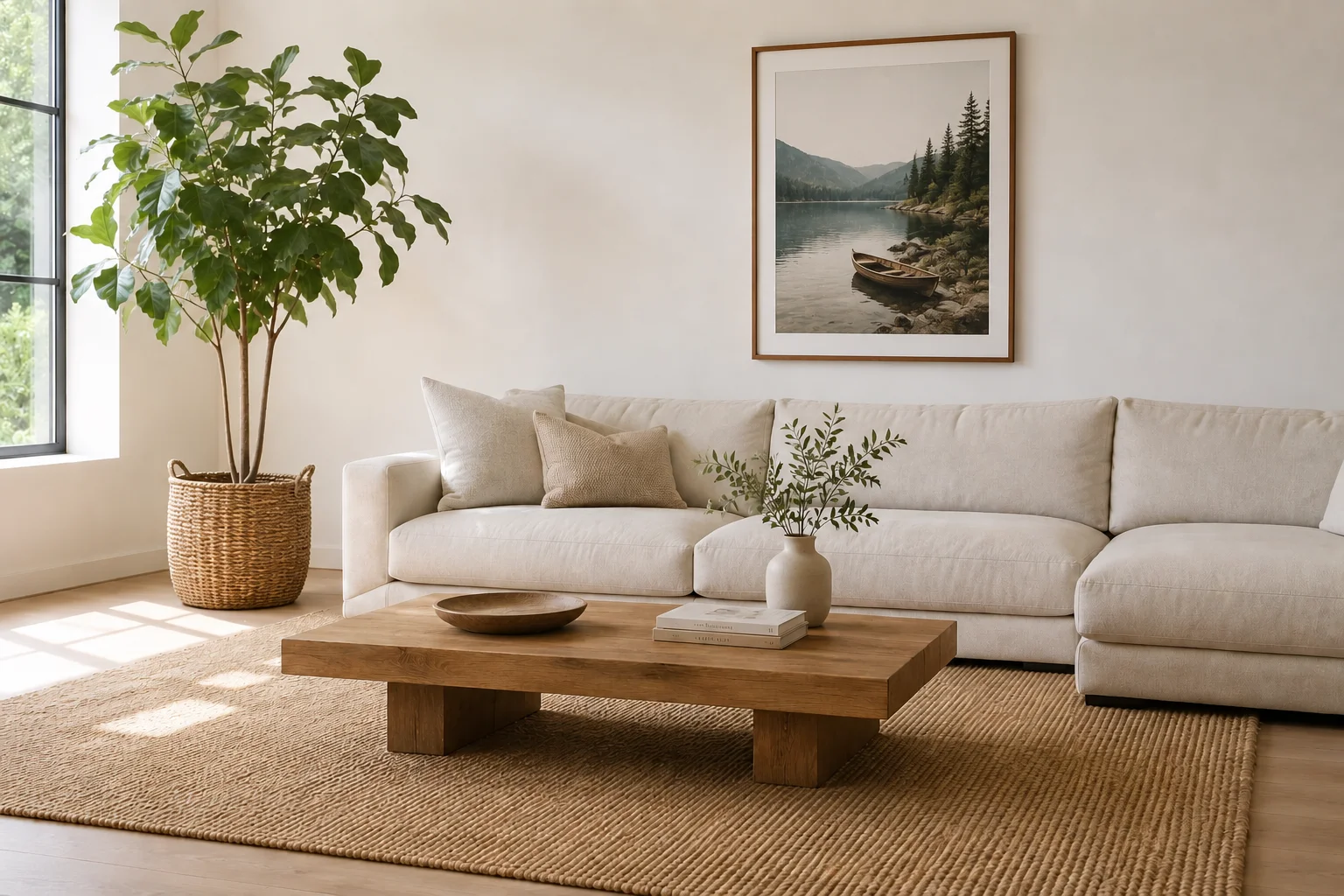
Keep furniture to what you actually use daily: a sofa, a chair, a coffee table, and simple storage. Layer in a rug, plants, and one or two pieces of art to add warmth. These living room wall decor ideas can help you choose pieces that complement an open, uncluttered layout.
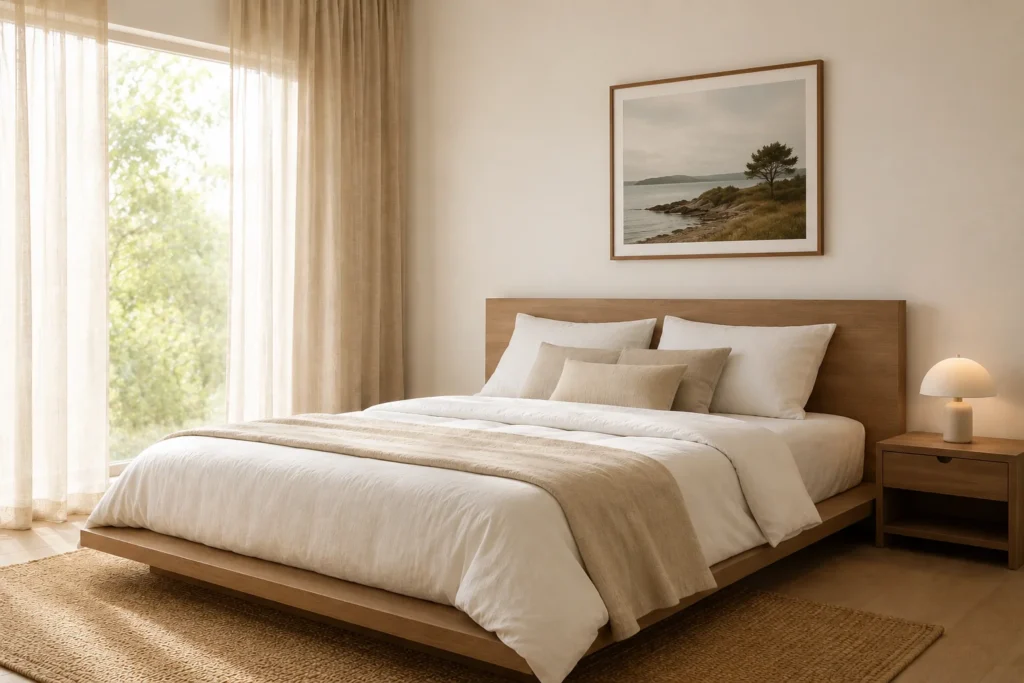
A minimalist bedroom should feel like a place to rest, not a place full of visual tasks. Focus on a comfortable bed, soft bedding, and a nightstand with only the essentials. For layout and styling direction, these master bedroom decor ideas offer calming, practical inspiration.
Choose a simple table and chairs in natural materials, then let a single centerpiece, like a ceramic vase or wooden bowl, do the visual work. Avoid over-decorating the table, since it needs to stay functional for everyday meals.
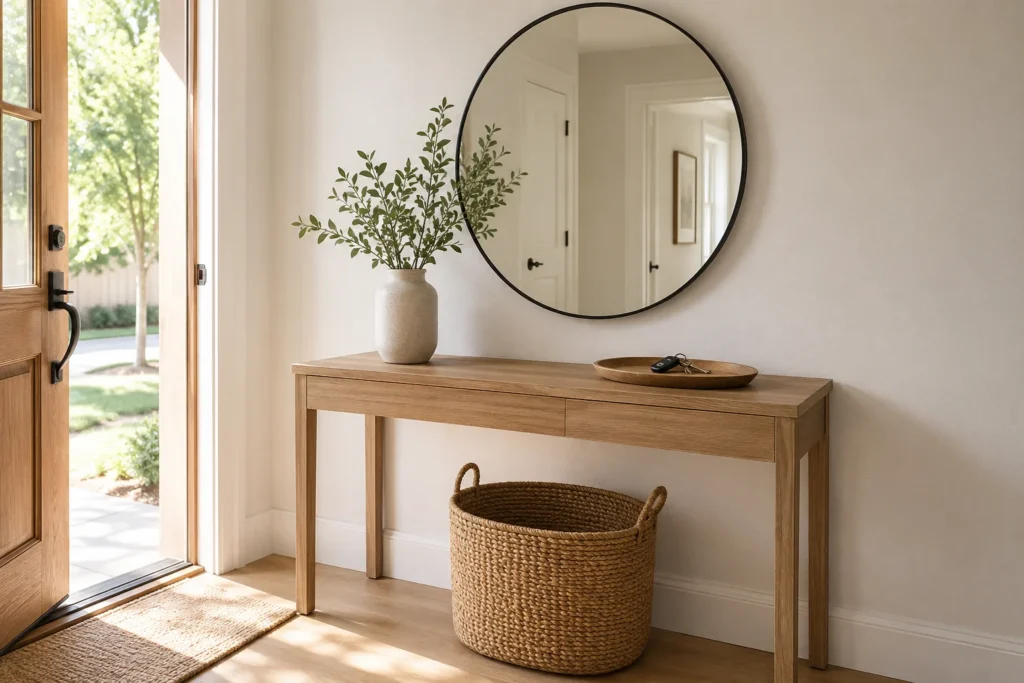
An entryway should welcome you home without feeling like a dumping ground. A small console, a mirror, and a basket or tray for keys and mail keep this space functional and tidy. If you want to add personality here, these gallery wall ideas work well above a console table.
Minimalist home offices work best with a clean desk, closed storage for cables and paperwork, and one or two plants for a bit of life. Keep the wall behind your workspace simple to avoid visual distraction during the day.
Color sets the tone for a minimalist home, and each shade brings something different to the table.
The goal is not to pick one color and repeat it everywhere. It is to choose a small, complementary palette and use it consistently throughout the home.
Removing too much furniture. A room needs enough furniture to be functional. Cutting too much leaves a space feeling unfinished rather than intentional.
Making rooms feel cold. Skipping texture and warmth in favor of only clean lines can make a home feel more like a waiting room than a living space. Layering fabrics and natural materials solves this.
Ignoring texture. Smooth surfaces everywhere flatten a room visually. Mixing wood, linen, wool, and ceramic keeps things interesting.
Poor lighting. Harsh overhead lighting undermines even the best-decorated minimalist room. Layer in lamps and warm-toned bulbs instead.
Buying trendy decor instead of timeless pieces. Trend-driven purchases date quickly and often end up replaced within a year or two. Choosing classic shapes and natural materials holds up longer.
Lack of personality. Minimalism does not mean impersonal. Meaningful objects, family photos, or travel finds still have a place when displayed thoughtfully.
Clutter hidden in plain sight. Stacks of mail, cords, or loose items on shelves undo a minimalist look fast. Browsing a few shelf decor ideas can help you group items with more intention instead of letting them pile up.
Minimalist decorating does not require a large budget. Some of the most effective changes cost little or nothing at all.
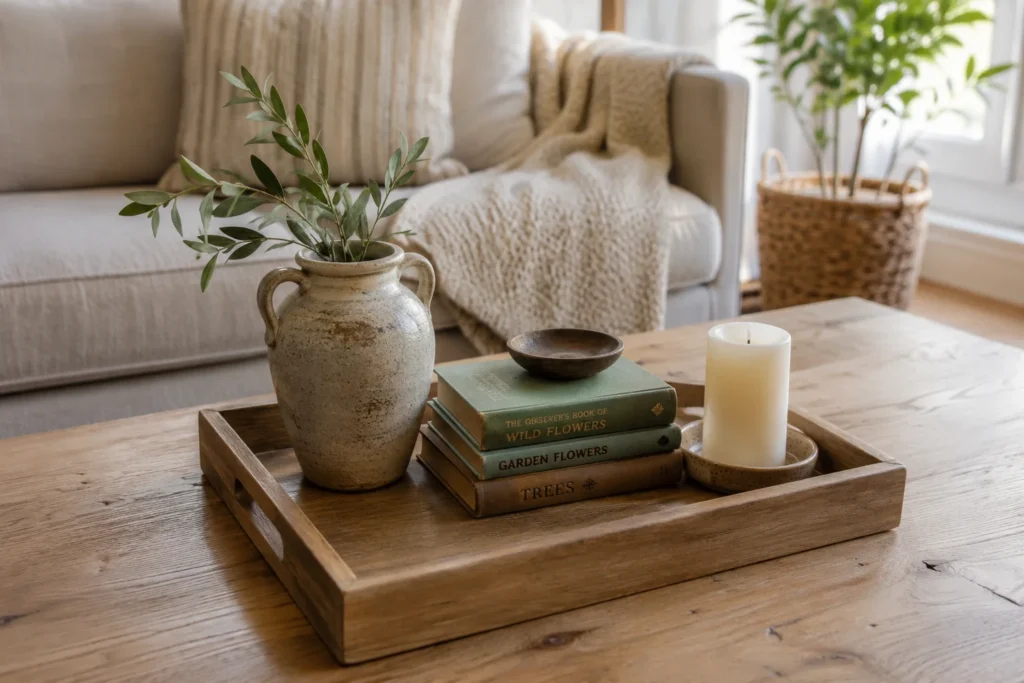
One of the biggest improvements I have noticed when decorating minimalist spaces is that removing unnecessary accessories often makes the remaining pieces stand out far more than adding new decor ever could. It is a shift in mindset as much as a shift in style.
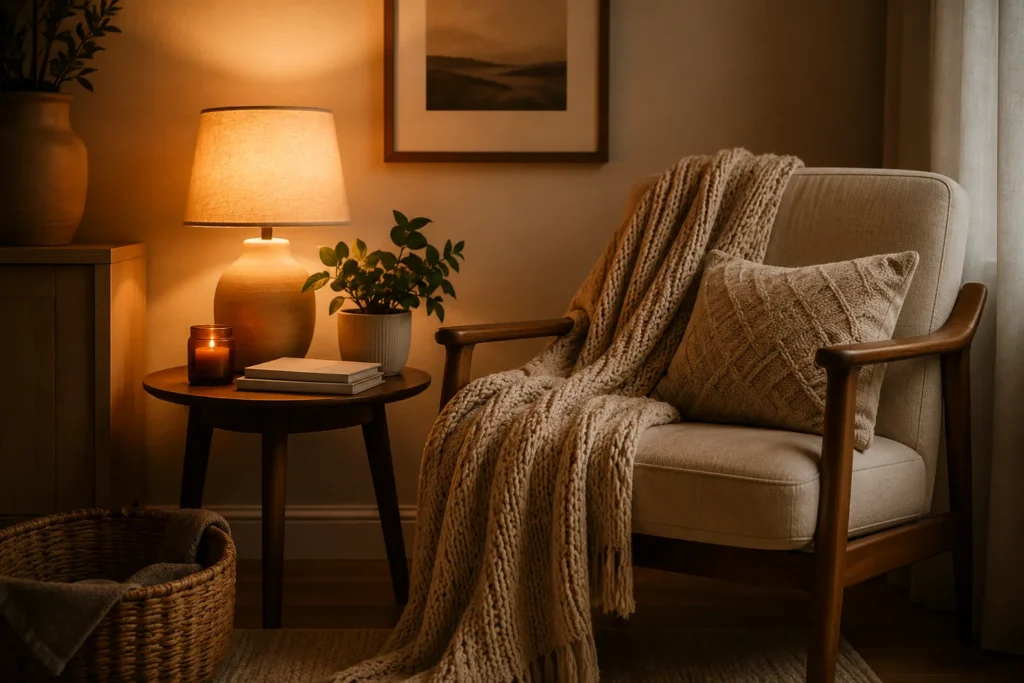
A minimalist home should never feel like it is missing something. The key is balancing simplicity with warmth.
The essentials include a neutral color palette, quality furniture, natural materials like wood and linen, functional storage, simple lighting, and a few meaningful decorative pieces like art, plants, or ceramics.
Focus on texture, warm lighting, and a few personal touches rather than filling every surface. Layering fabrics and adding greenery keeps a room feeling full without clutter.
Neutral tones like white, beige, soft gray, and warm earth colors work best. Natural wood and small black accents add contrast and depth.
Rearranging existing furniture, adding plants, using linen textiles, and choosing a simple paint color are all low-cost ways to achieve a minimalist look.
Furniture with clean lines, natural materials, and genuine function suits minimalist homes best. Pieces should be comfortable and well-made rather than purely decorative.
Yes. Minimalist decor continues to grow in popularity because it prioritizes comfort, function, and timeless design over passing trends.
Minimalist home decor essentials are not about owning less for the sake of it. They are about choosing pieces with intention, layering in warmth, and letting your home reflect how you actually live.
Start with the basics: a neutral palette, comfortable furniture, natural materials, and a few pieces that genuinely matter to you. Add texture and lighting to keep things cozy, and avoid decorating trends that will feel dated in a year.
A calm, stylish home is built one intentional choice at a time. For more practical decorating inspiration and timeless home styling ideas, visit Economy Home Decor.