Bring Life to Your Living Space
Bring Life to Your Living Space

There’s something uniquely frustrating about a rectangular living room. You move the sofa one way it feels too cramped. You push everything back against the walls now the room feels cold and oddly empty in the middle. You try again. Nothing quite works.
Sound familiar?
Rectangular rooms are actually one of the most common living room shapes, but they come with real challenges: the long walls create a tunnel effect, corners get ignored, and furniture often ends up in one awkward cluster at one end of the room.
The good news? With the right approach, a rectangular room can feel warm, functional, and surprisingly spacious. Here are the layout ideas that genuinely work no guesswork, no generic advice.
This is the most common mistake people make in rectangular rooms and it almost always backfires. When every piece of furniture hugs the walls, the center of the room becomes a dead zone, and the whole space feels stretched and cold.
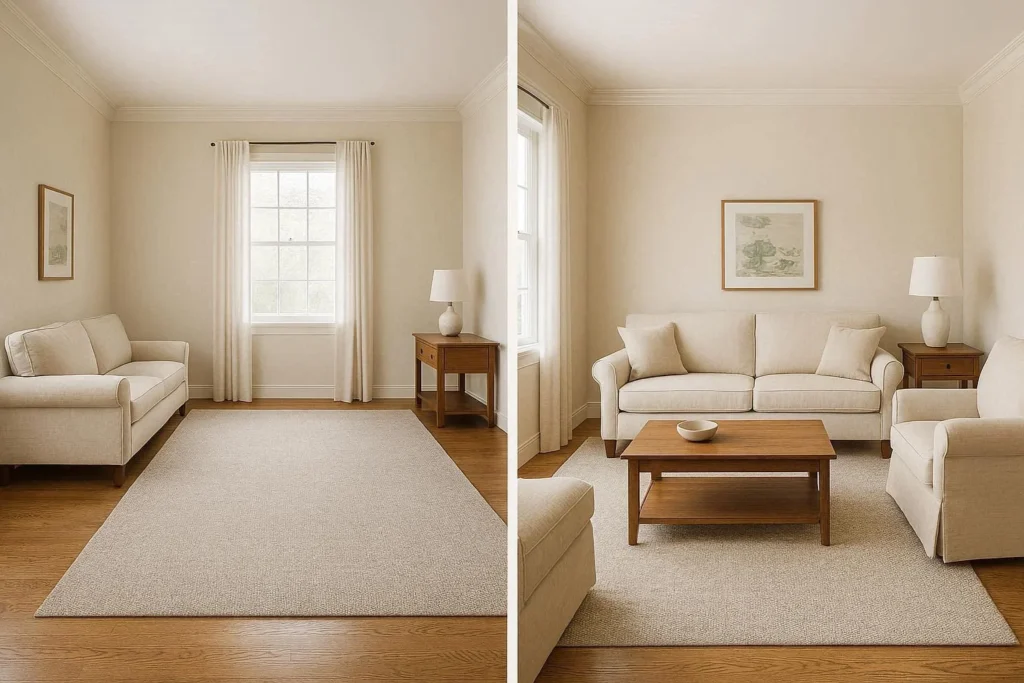
Instead, try floating your main seating group toward the middle of the room. A sofa placed even 12–18 inches away from the wall instantly makes the layout feel more intentional and inviting. This also naturally creates space behind it for a console table, which adds both function and visual layering.
Before you move a single piece of furniture, figure out your focal point. In most living rooms, it’s one of these:
Once you have a focal point, everything else arranges itself around it. Your main seating should face or angle toward that point. This gives the room a clear sense of direction and purpose.
In a rectangular room, placing your sofa along the longest wall is the default instinct and it works well in narrow rooms where space is limited. It keeps traffic flowing and prevents the room from feeling blocked.
However, in a wider rectangular space, placing the sofa on the shorter wall and facing down the length of the room can be even more effective. It creates a more balanced, room-like feel rather than the typical “hallway” effect.
Try both mentally before committing.
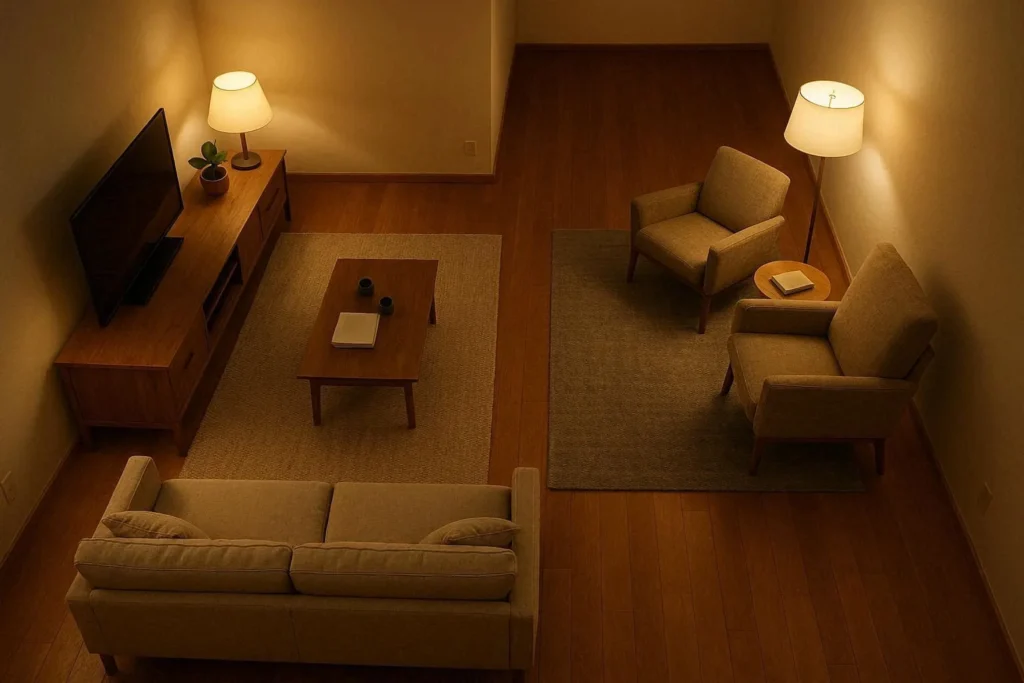
One of the best things about a longer rectangular room is that you can divide it into two functional areas. Think of it as two separate zones side by side:
Use the layout itself to define these zones angled chairs, a change in rug, or even just the direction furniture faces. This makes a long room feel rich and layered rather than just long.
Rugs are one of the most underrated tools in rectangular living room layouts. A well-placed rug anchors your seating group and visually “contains” the space so it doesn’t feel like furniture floating in a corridor.
A few rules that actually work:
For ideas on how to decorate around different furniture colors and textures, check out these living room decorating ideas with black furniture that show how contrast and anchoring work together beautifully.
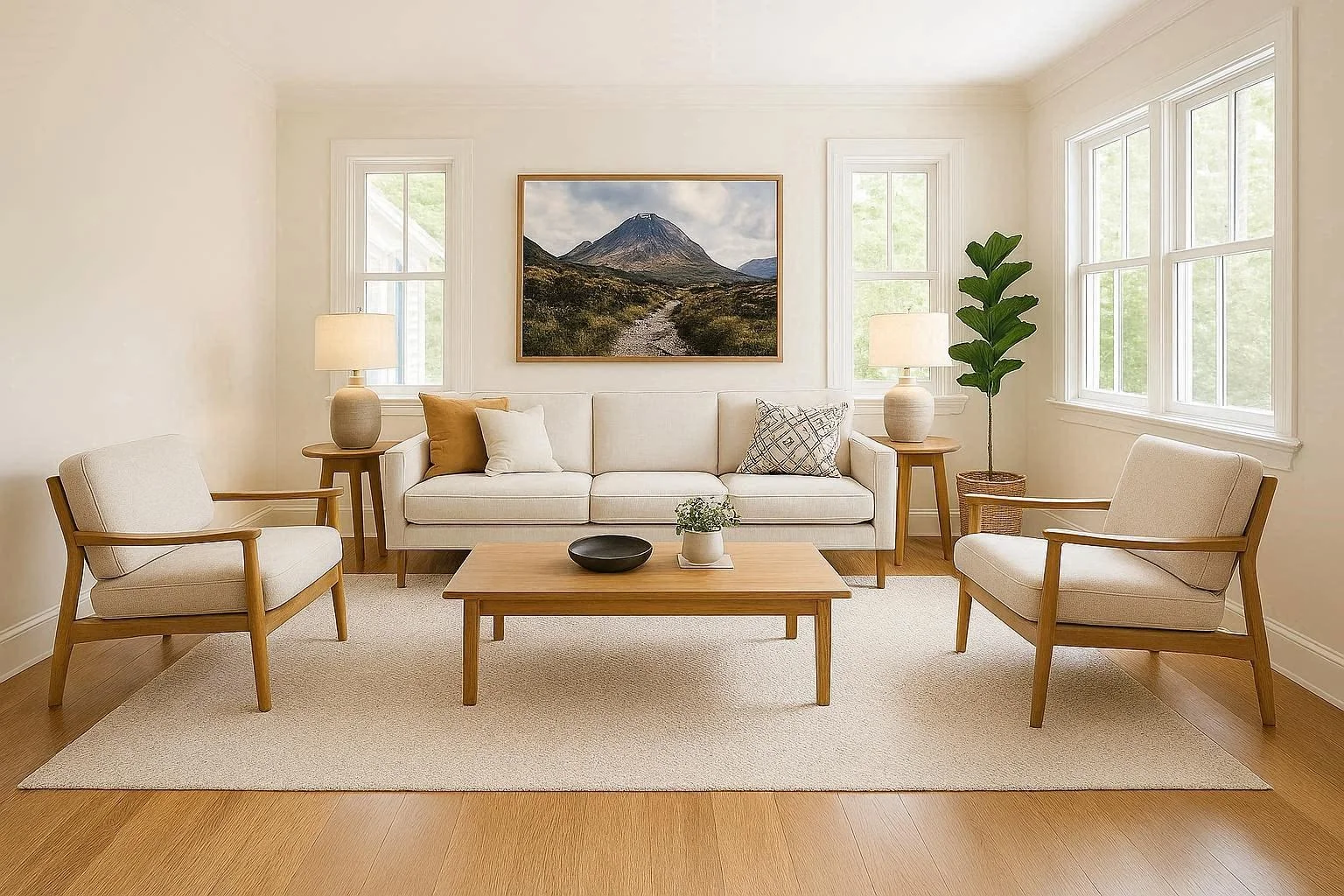
Symmetry is calming and works especially well in rectangular rooms because it naturally fills the width of the space evenly. The classic setup: sofa on one side facing two armchairs on the other, with a coffee table in between.
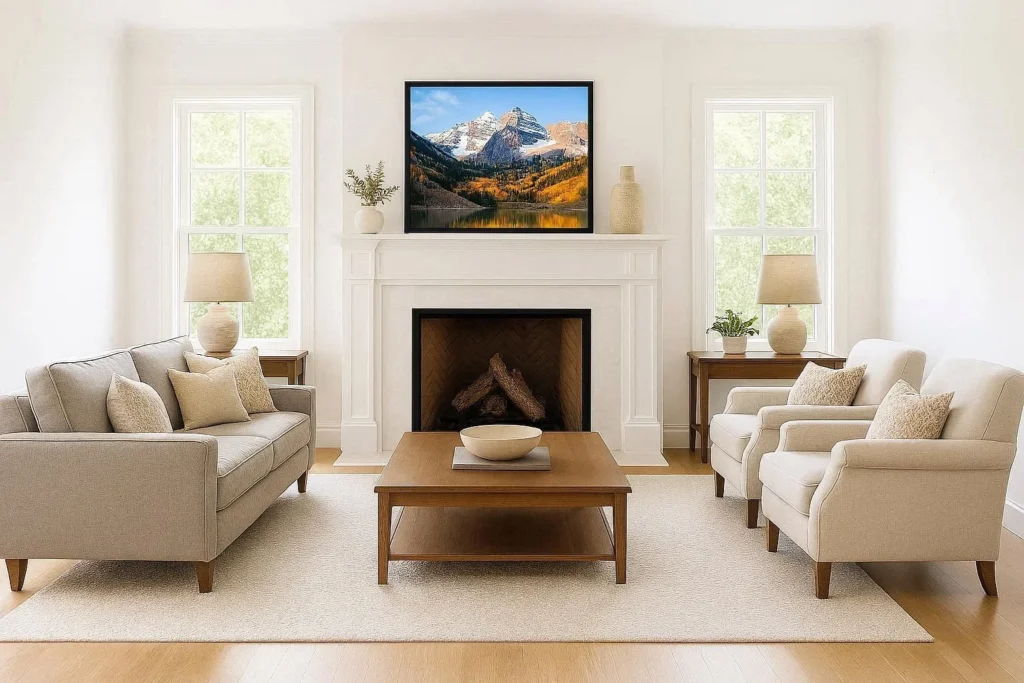
This layout creates a defined conversation area that feels balanced and complete. It also works well when centered on a fireplace or TV wall.
If your room is longer than wide, you can extend symmetry down the length by mirroring small accent tables or floor lamps on each end.
Not everyone loves perfect symmetry and in some rectangular rooms, it can actually feel too rigid. An asymmetrical layout (sofa + one armchair on a diagonal, for example) creates visual interest and a more relaxed atmosphere.
The key with asymmetry is visual balance, not mirror-image matching. A large sofa on one side can be balanced by two chairs plus a tall floor lamp on the other. Different sizes, same visual weight.
If you’re floating your sofa away from the wall, the gap behind it can feel unfinished. A narrow console table solves this perfectly. It provides a surface for lamps, books, or décor and it visually “backs” the sofa so it doesn’t look like it’s adrift in the middle of the room.
This is one of those small moves that makes a big difference in how finished a room feels.
In a rectangular room, the TV typically goes on one of the shorter walls. This way, seating naturally fills the length of the room and faces the screen without anyone sitting awkwardly far away or too close.
Avoid mounting the TV on a long wall if you can it forces you to line all your seating along the opposite wall, which brings you right back to that flat, one-dimensional layout that makes rectangular rooms feel like waiting rooms.
If you’re working with an open-plan space, a TV cabinet or credenza that can be seen from multiple angles is worth considering.
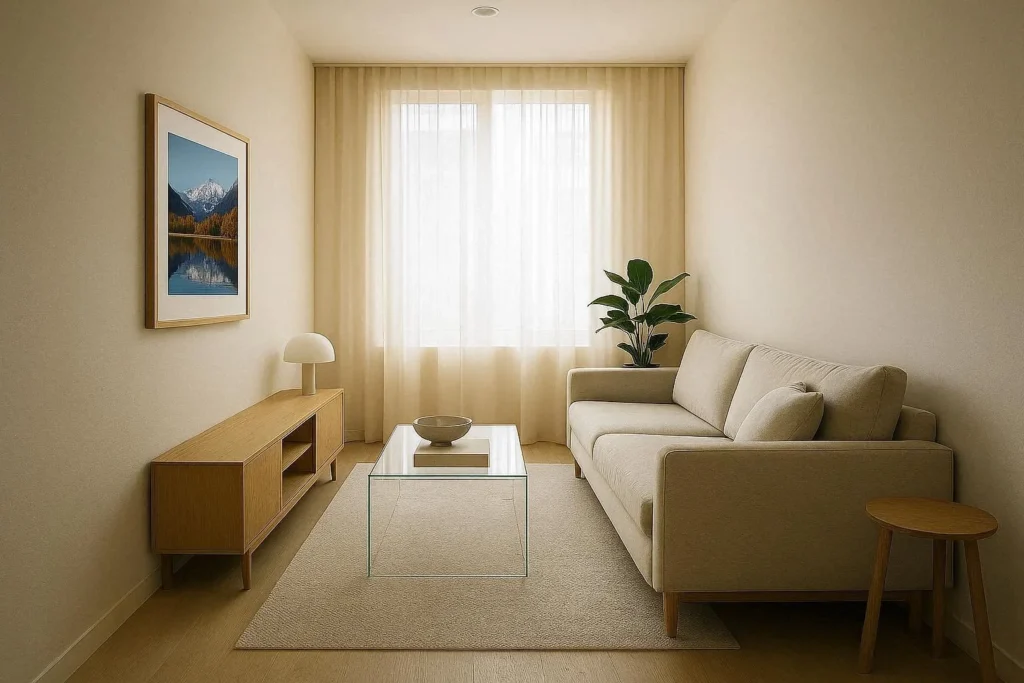
In a narrow rectangular room, bulky upholstered furniture can quickly eat up floor space and make the room feel even more compressed. Instead, look for:
These choices keep the room visually light and easy to move through.
Rectangular rooms often have long, bare wall stretches that get ignored in favor of furniture arrangement. But the walls are part of the layout too.
Tall bookshelves on one end of the room add height and visual weight. A gallery wall breaks up a long expanse and draws the eye. A large mirror on a side wall creates the illusion of width.
For inspiration on what to hang and how to arrange it, these wall decor ideas offer plenty of practical starting points for rooms of different proportions.
Placing a key piece of furniture usually an armchair or accent chair at a slight diagonal can completely change the energy of a rectangular room. It interrupts the rigid parallel lines that make long rooms feel like corridors.
This works especially well in a corner or at the end of a seating group. It’s a subtle move, but it makes the layout feel more curated and less like everything was just slid into place.
If you’re starting from scratch, here’s a simple process that takes the guesswork out:
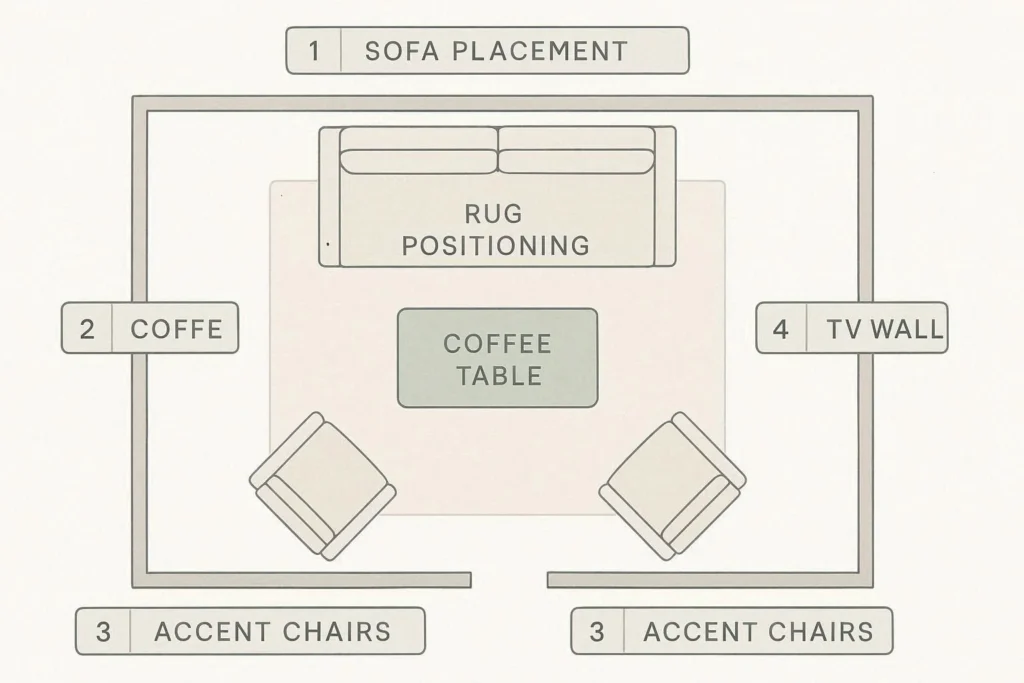
Step 1 Measure your room. Write down the full dimensions, including doorways, windows, and any built-ins. Sketch a rough floor plan.
Step 2 Identify your focal point. Fireplace? TV? Window? Mark it on your sketch.
Step 3 Place your largest piece first. Usually the sofa. Position it to face or angle toward the focal point, not automatically against the longest wall.
Step 4 Add secondary seating. Armchairs or accent chairs that create a conversation area. Leave at least 18 inches between pieces for comfortable movement.
Step 5 Add your coffee table. It should be roughly two-thirds the length of your sofa and placed 12–18 inches away from the sofa edge.
Step 6 Fill in with accent pieces. Side tables, floor lamps, and rugs come last and tie the arrangement together.
Smaller rectangular rooms need a slightly different approach. The goal is to maximize every inch without making the space feel cramped.
For more specific strategies, these small living room decor ideas go deeper on what works in compact spaces. And if your space is particularly slim, these narrow living room decorating ideas address that specific challenge directly.
The most effective approach is to divide the room into two functional zones rather than trying to fill the length with one big seating group. Use rugs, furniture placement, and lighting to define each zone. Float furniture away from the walls to make the space feel intentional rather than stretched.
On one of the shorter walls, ideally. This allows seating to face it naturally along the length of the room, without anyone sitting uncomfortably far away. Avoid placing the TV on a long wall unless the room is wide enough to allow proper viewing distance across the shorter dimension.
Not always, and usually not in the main seating area. Floating furniture toward the center (even just slightly) creates a more inviting layout and prevents the hollow, tunnel-like feel that comes from lining everything up along the walls.
Use rugs to anchor separate zones, and let the direction furniture faces do the dividing work. Two seating areas angled differently, even in the same open space, clearly signal that they’re separate zones. A sofa placed with its back toward one zone and its front toward another is also a natural room divider.
Along the long wall, with legs slightly off the wall rather than flush against it. Choose a sofa with a slimmer profile and visible legs to keep the room feeling open. Avoid oversized sectionals in narrow spaces they tend to dominate the room and limit traffic flow.
A rectangular room isn’t a design problem it’s an opportunity. Once you stop fighting the shape and start working with it, the layout possibilities open up quickly.
The core ideas to take away: float your furniture rather than lining it up along walls, create distinct zones in longer rooms, use rugs to anchor your seating groups, and match furniture scale to the room’s actual dimensions.
Most importantly, don’t be afraid to experiment. Furniture can be moved. What looks off in a sketch might feel perfect in person and vice versa. Start with the focal point, place the big pieces first, and let the rest follow.
You’ve got the room. Now make it work for you.