Bring Life to Your Living Space
Bring Life to Your Living Space

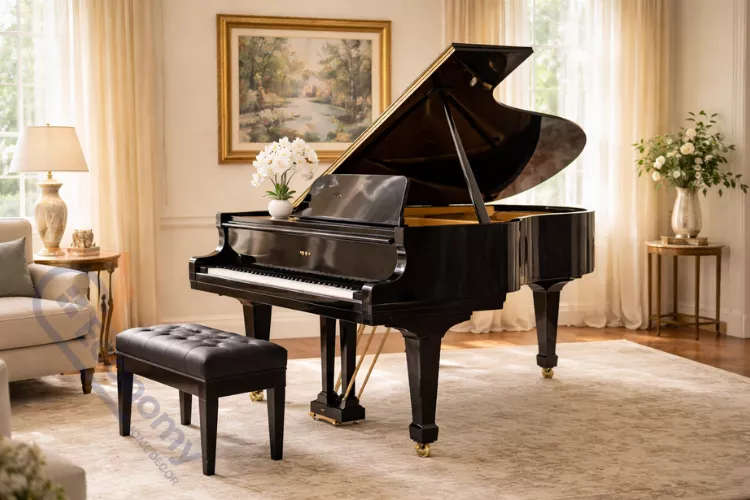
A piano is more than just a musical instrument it’s a stunning piece of furniture that commands attention and deserves thoughtful styling. Whether you own a sleek grand piano or a classic upright, decorating around it properly can transform your entire room into an elegant, cohesive space. The challenge many homeowners face is striking the perfect balance between showcasing this beautiful instrument and creating a functional, inviting environment. When decorated thoughtfully, your piano becomes a captivating focal point that reflects your personal style while maintaining its primary purpose as a musical instrument. This guide will walk you through expert piano decorating ideas and styling tips to help you create a harmonious living space that celebrates both form and function.
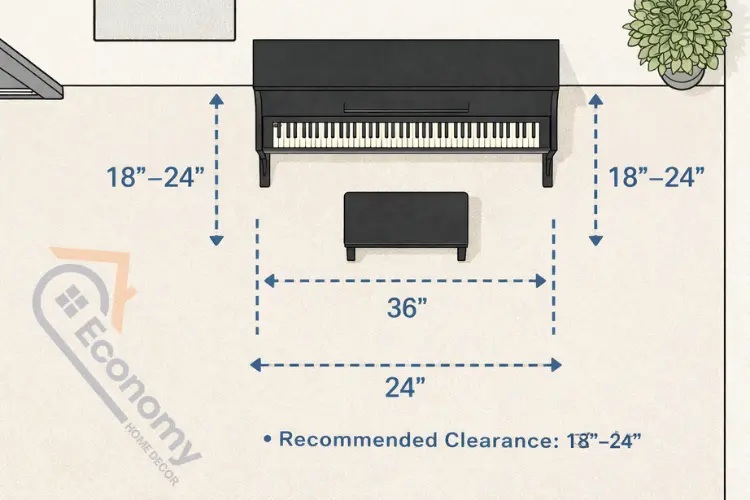
Before diving into decorative elements, evaluate your piano’s position in the room. Piano placement sets the foundation for all your decorating decisions and impacts both acoustics and visual flow.
Why placement matters: A piano positioned against an interior wall typically sounds better than one placed against an exterior wall, where temperature fluctuations can affect tuning. From a design perspective, your piano should feel intentionally placed, not shoved into a corner as an afterthought.
Practical implementation: Create clear pathways around the piano, ensuring at least 3 feet of space for the bench to slide in and out comfortably. If possible, angle a grand piano into the room rather than pushing it flat against a wall this creates dynamic visual interest and improves sound projection. For upright pianos, centering them on a wall or positioning them between two windows creates natural symmetry.
Consider the room’s traffic patterns and sightlines from doorways. Your piano should be visible and accessible without obstructing the natural flow of movement through the space.
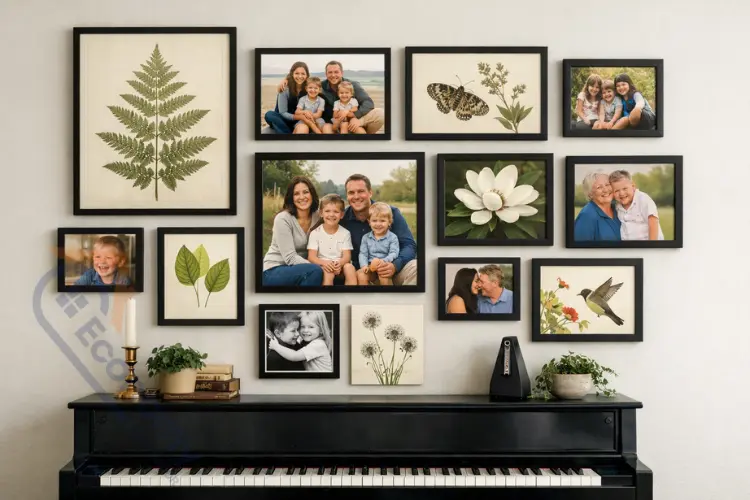
The vertical space above your piano offers prime real estate for creating visual impact. This area draws the eye upward and can dramatically enhance your piano’s presence.
Gallery wall perfection: Create a curated collection of framed artwork, photographs, or prints that complement your room’s color scheme. For a cohesive look, maintain consistent frame colors (black, gold, or natural wood work beautifully) and vary the sizes for visual interest. Hang the center of your arrangement at eye level, typically 57-60 inches from the floor.
Mirror magic: A large mirror above an upright piano reflects light and makes the space feel larger. Choose an ornate vintage mirror for traditional interiors or a sleek frameless design for modern spaces. Ensure the mirror is securely anchored to the wall never lean heavy items against the piano.
Floating shelves: Install two or three floating shelves to display small plants, books about music or art, and decorative objects. This approach works especially well above upright pianos in smaller spaces, adding storage without overwhelming the area.
Single statement piece: Sometimes less is more. A large-scale painting, tapestry, or metal wall sculpture can make a bold statement without competing with the piano’s grandeur.
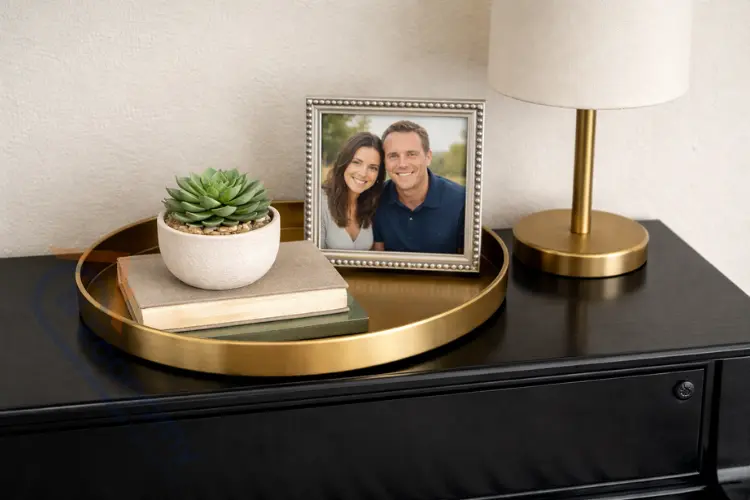
The piano’s surface is tempting to decorate, but restraint is key. Remember that this is a functional instrument first, and any decorations must be removable for playing and maintenance.
What works well:
Styling formula: For an upright piano, place one medium-sized item (8-12 inches tall) on one side and balance it with 1-2 smaller items on the other side. For a grand piano, arrange items along the curve near the music desk, keeping the playing area completely clear.
Visual example: On a polished black baby grand, place a small succulent arrangement in a matte white ceramic pot on the left side near the music stand, paired with a silver-framed 5×7 family photo on the right. The contrast of organic greenery against glossy black creates stunning visual interest while the metallic frame adds elegance.
Important reminder: Always use felt pads or protective coasters under any objects to prevent scratching the piano’s finish. Remove all items before playing to avoid vibrations causing damage or creating unwanted buzzing sounds.
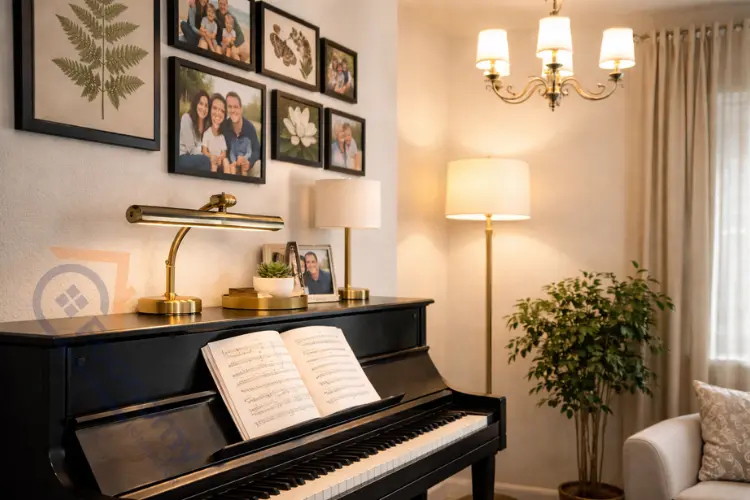
Proper lighting serves dual purposes around a piano: it must provide adequate illumination for reading sheet music while creating ambiance that highlights the instrument’s beauty.
Task lighting for musicians: Install a dedicated piano lamp with an adjustable arm to direct light onto the music desk without creating glare. LED lamps are ideal because they produce minimal heat and won’t damage the piano’s finish. Position the lamp to illuminate music from above and slightly behind the player.
Ambient lighting: Overhead fixtures, whether recessed lighting, a chandelier, or pendant lights, should provide general illumination without harsh shadows. Use dimmer switches to adjust the mood for different occasions brighter for practice sessions, softer for entertaining.
Accent lighting: Highlight your piano as an architectural feature with picture lights mounted above it, upward-facing floor lamps that wash the wall behind it, or LED strip lighting tucked behind nearby furniture. This creates depth and drama, especially in evening settings.
Natural light considerations: If your piano sits near windows, use sheer curtains or blinds to diffuse direct sunlight, which can fade the finish and cause temperature fluctuations. East or north-facing windows provide the most consistent, gentle light.
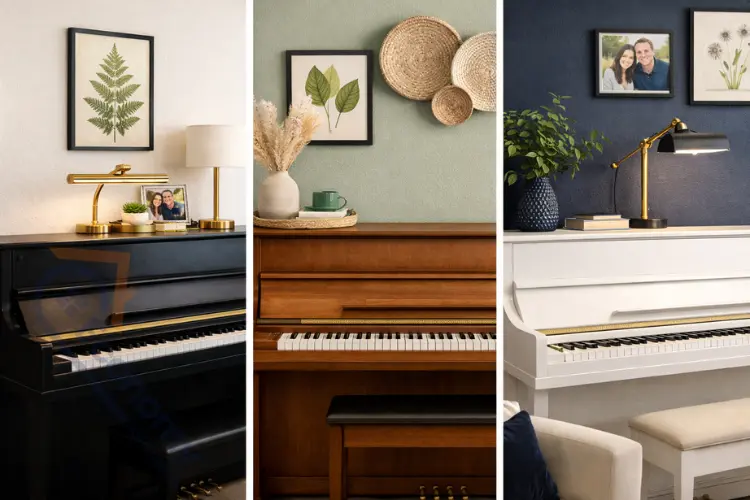
Your piano’s color and finish should inform your decorating palette, creating harmony rather than competition within the space.
For black pianos: Embrace contrast with white, cream, metallics (gold, silver, brass), or jewel tones like emerald green, sapphire blue, or burgundy. Crisp white walls make a black piano pop dramatically. Add warmth with natural wood accents in furniture and frames.
For wood-toned pianos: Echo the warm tones with complementary colors like sage green, soft gray-blue, warm taupe, or terracotta. Layer different wood tones throughout the room, but ensure they’re in the same temperature family (all warm or all cool).
For white or cream pianos: These versatile instruments work with virtually any color scheme. Create a serene monochromatic space with varying shades of white and cream, or add bold color through artwork, rugs, and accent furniture for dramatic contrast.
Texture layering: Balance the piano’s smooth, glossy finish with varied textures in surrounding decor. Incorporate linen curtains, a wool area rug, velvet throw pillows on nearby seating, and matte ceramic vases. This prevents the space from feeling one-dimensional.
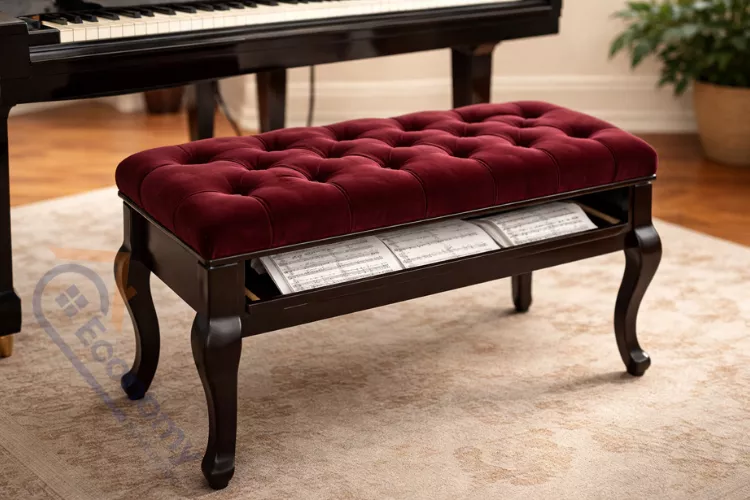
The piano bench is both functional furniture and a design opportunity that many people overlook.
Cushion comfort: Add a custom cushion in fabric that coordinates with your room’s color scheme. Velvet, linen, or leather work beautifully. Ensure the cushion is secured with ties or non-slip backing so it doesn’t shift during playing.
Storage solutions: If you have a storage bench, organize sheet music, method books, and accessories inside using dividers or small bins. Keep frequently played pieces on top for easy access.
Decorative alternatives: In spaces where the piano isn’t played regularly, you might use an upholstered ottoman, a vintage church pew, or even two matching side chairs instead of a traditional bench. Ensure whatever you choose is the correct height (typically 19-20 inches) for comfortable playing.
Visual balance: The bench should feel proportional to the piano. A grand piano needs a substantial bench, while a spinet piano looks best with a more delicate seat. Match or coordinate finishes a mahogany piano looks cohesive with a mahogany bench.
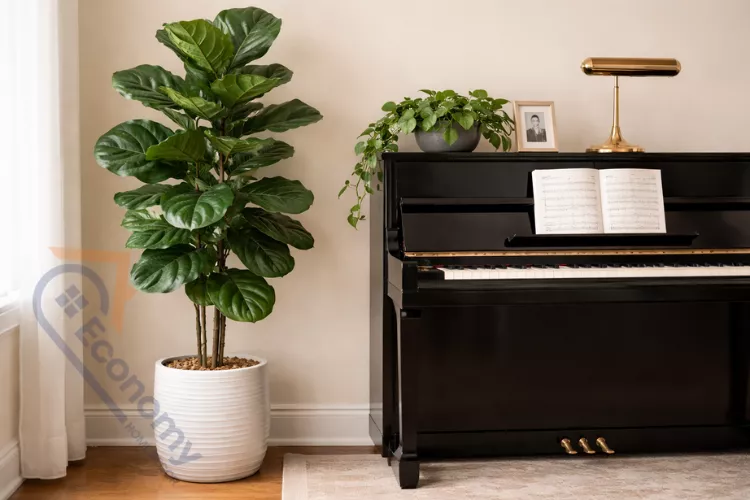
Greenery adds life, color, and air-purifying benefits to your piano area while softening the instrument’s angular lines.
Best plant choices: Select low-maintenance varieties that thrive in your room’s light conditions. Snake plants, pothos, philodendrons, and ZZ plants tolerate lower light and require minimal watering. For brighter spaces, consider fiddle leaf figs, peace lilies, or bird of paradise for dramatic impact.
Placement strategies:
Protection first: Always use waterproof saucers or cache pots to prevent moisture damage. Never water plants while they’re sitting on the piano remove them, water thoroughly, let them drain completely, then return them to their spots.
Visual inspiration: Picture a glossy black upright piano with a 16-inch snake plant in a matte charcoal cylinder pot positioned on the left corner, creating striking height variation. The plant’s vertical lines complement the piano’s rectangular shape while the gray pot echoes the piano’s black finish without matching exactly.
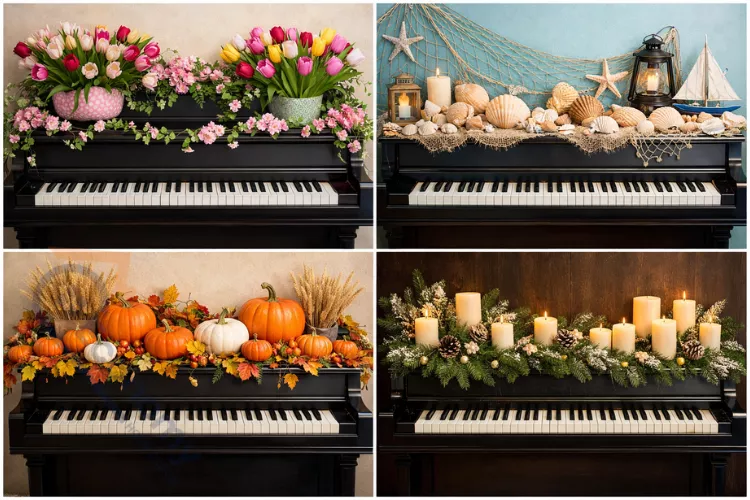
Changing your piano decor seasonally keeps your space feeling fresh and celebratory while allowing your personality to shine through.
Spring styling: Display tulips or cherry blossoms in a simple glass vase, add pastel-colored candles, and incorporate small bird figurines or nature-inspired art above the piano.
Summer vibes: Use bright sunflowers, coastal elements like coral or shells (in a bowl or frame), and fresh greenery. Swap heavy textiles for lighter fabrics in the surrounding space.
Fall warmth: Arrange faux autumn leaves, small pumpkins, or wheat stalks on a wooden tray. Add burgundy, rust, or gold accent pieces and cozy throw blankets on nearby seating.
Winter elegance: During holidays, use battery-operated LED string lights (never real candles), evergreen sprigs in a vase, pinecones, and metallic accents. For non-holiday winter, embrace whites, silvers, and cool blues for a frosty, sophisticated look.
Critical rules: Never drape fabric, garlands, or decorations over the piano’s working parts. Avoid anything that sheds (real Christmas trees, glittery decor) as debris can fall into the piano’s interior. Remove all seasonal decor before playing to prevent damage or buzzing sounds.
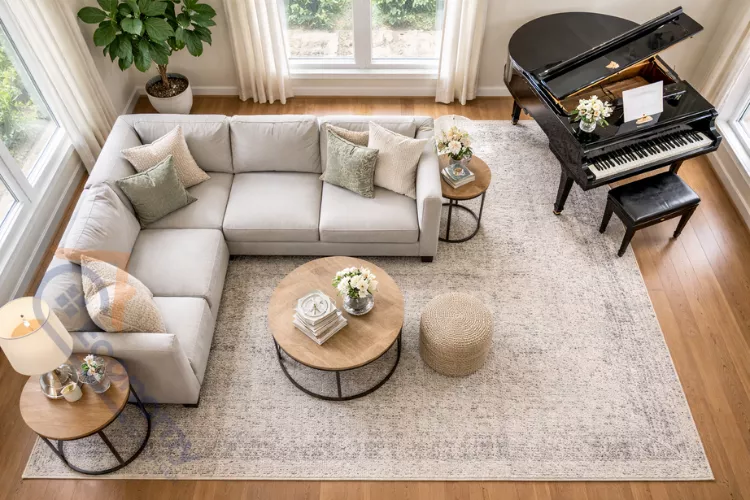
A piano is a substantial piece of furniture, and everything around it must be proportionally appropriate to create visual harmony.
Furniture sizing: Don’t crowd a piano with oversized furniture. If you have a grand piano in a small room, choose streamlined sofas and chairs with exposed legs to maintain visual lightness. Conversely, in a large room with a grand piano, substantial furniture pieces prevent the space from feeling disjointed.
Rug placement: A large area rug can anchor the piano within the room. For grand pianos, position the rug so the piano sits partially on it with the front legs on the rug and the back leg off, or place it entirely on the rug if space allows. For uprights, the piano should sit just behind the rug’s edge or entirely on it.
Symmetry versus asymmetry: Grand pianos have inherent asymmetry with their curved shape embrace this by creating balanced but not identical arrangements on either side. Upright pianos benefit from symmetrical styling with matching lamps, plants, or furniture flanking them.
Ceiling height matters: In rooms with low ceilings (under 8 feet), avoid tall vertical elements above the piano. In spaces with high ceilings (10+ feet), use tall artwork, substantial mirrors, or vertical shelving to fill the space appropriately.
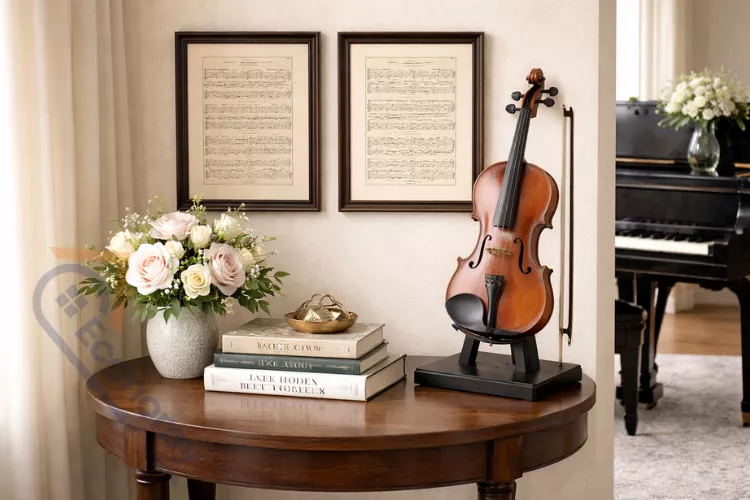
Celebrate your love of music through thoughtful decorative touches that reinforce the piano’s purpose while adding personality.
Framed sheet music: Display vintage or meaningful sheet music in simple frames above or beside the piano. First dance songs, favorite composers, or family compositions make personal statements. Use UV-protective glass to prevent yellowing.
Instrument collection: If you play multiple instruments, create a vignette with a violin on a stand, a guitar on a wall mount, or brass instruments displayed nearby. This creates a dedicated music zone within your home.
Music memorabilia: Concert ticket stubs, autographed album covers, or photographs with musicians can be professionally framed and displayed. Keep these elements cohesive with consistent framing to avoid a cluttered look.
Books and records: Stack coffee table books about composers, music history, or specific genres on a nearby side table. Vintage vinyl records in a decorative crate or mounted on the wall add nostalgic charm.
Subtle nods: Even small touches work a treble clef sculpture, music note throw pillows on nearby seating, or a rug with subtle musical motifs. These elements tie the theme together without overwhelming the space.
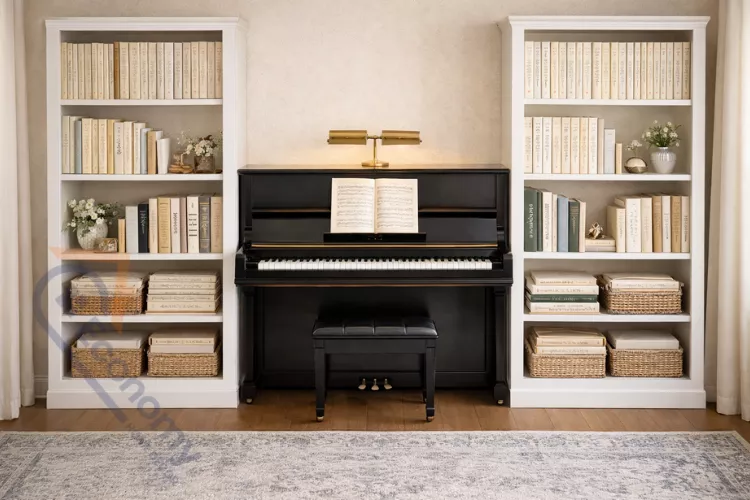
Musicians need accessible storage for sheet music, method books, and accessories, but clutter detracts from the piano’s beauty.
Built-in solutions: If renovating, consider built-in cabinets or shelving flanking the piano for dedicated music storage. Choose designs that complement your home’s architectural style traditional raised-panel cabinets for classic spaces, floating shelves for modern interiors.
Freestanding furniture: A narrow console table, bookshelf, or cabinet placed near (but not touching) the piano provides practical storage. Choose pieces in finishes that coordinate with the piano.
Decorative baskets and bins: Woven baskets tucked beside the piano bench store music books while adding texture. Label them if you have multiple users or music genres to organize.
Music stand styling: When not in use, a decorative music stand can hold a single piece of beautiful sheet music or an art print, serving as both functional item and decorative element.
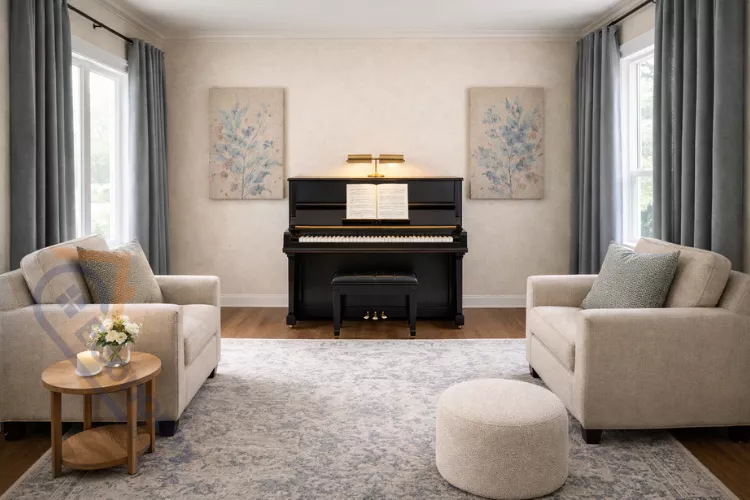
Your decorating choices affect how your piano sounds, making acoustic considerations an important styling factor.
Strategic softness: Hard surfaces (wood floors, bare walls, large windows) create bright, reverberant sound that can be harsh. Balance this with soft furnishings a plush area rug, upholstered furniture, heavy curtains, and wall tapestries absorb excess sound without deadening it completely.
Wall treatments: If your piano room sounds too echo-y, add fabric wall panels, large canvas paintings, or acoustic art panels. These improve sound quality while serving as decorative elements.
Avoid direct coverage: Never drape fabric over the piano itself or place sound-absorbing materials directly on it, as this muffles the instrument’s natural resonance. Keep the piano’s soundboard area (the entire top of a grand, the back of an upright) free from obstructions.
Room layout: Arrange seating to create intimate listening areas that allow sound to travel naturally. Avoid pushing all furniture against walls, which can create echo chambers.
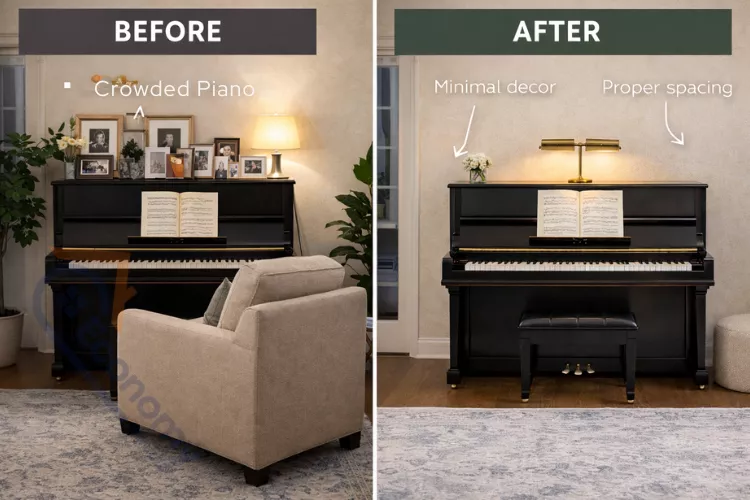
Even with the best intentions, certain decorating errors can diminish your piano’s beauty or, worse, damage the instrument. Here are the most common mistakes and how to avoid them:
1. Overcrowding the piano’s surface Less is always more when decorating a piano’s top. Cluttering it with dozens of photos, knickknacks, and decorative objects makes dusting difficult, risks scratches, and prevents the piano from being played comfortably. Limit yourself to 2-3 carefully chosen items maximum, and ensure they’re easily removable.
2. Using the piano as a storage shelf Your piano is not a bookshelf, mail station, or catch-all surface. Piling books, papers, bags, or random household items on it shows disrespect for the instrument and damages the finish over time. Invest in proper storage solutions nearby instead.
3. Ignoring climate control Pianos are sensitive to temperature and humidity fluctuations. Placing a piano near heating vents, air conditioning returns, fireplaces, or in direct sunlight causes the wood to expand and contract, leading to tuning instability and finish damage. Use window treatments, redirect vents, and maintain consistent room temperature (68-72°F) and humidity (42-48%).
4. Mismatched style and scale Pairing a formal grand piano with ultra-modern minimalist decor or an ornate Victorian upright with industrial decor creates visual discord. Your decorating style doesn’t have to match the piano’s period exactly, but there should be cohesive elements—shared colors, complementary metals, or bridging transitional pieces that tie everything together.
5. Poor lighting choices Insufficient task lighting makes reading music difficult, while harsh overhead lighting creates glare on sheet music and the piano’s glossy finish. Direct spotlights can also cause heat damage. Invest in adjustable, dimmable lighting and position lamps thoughtfully.
6. Neglecting the piano in the overall room design Some homeowners treat the piano as an afterthought, decorating the rest of the room without considering how the piano fits into the overall scheme. This makes the instrument feel awkward or out of place. Instead, make the piano a intentional focal point and build your room design around it.
7. Using harsh cleaning products on or near the piano Dusting decorative items with furniture polish or chemical cleaners near the piano can result in residue on the piano’s finish. Some products damage the piano’s finish permanently. Use only piano-approved cleaners on the instrument itself and dust decorative items away from the piano.
8. Blocking access to the piano Placing furniture too close to the piano, positioning large plants that impede the bench, or creating layouts that make reaching the piano awkward discourages playing. Maintain clear pathways and comfortable approach angles so the piano remains functional and inviting.
Make the piano your focal point by choosing complementary colors, ensuring proper lighting with task lamps and ambient fixtures, and maintaining at least 3 feet of clearance for comfortable access. Balance acoustics with soft furnishings like area rugs and curtains, use symmetrical furniture placement, and incorporate music-themed elements while keeping decorative choices functional and respectful of the instrument’s needs.
Limit decorations to 2-3 carefully chosen items maximum place one medium-sized piece (like a vase or framed photo) on one side balanced with 1-2 smaller items on the other. Always use felt pads under objects to protect the finish, ensure all items are easily removable before playing, and avoid cluttering the surface with mail, books, or random objects that prevent comfortable use of the instrument.
Use specialized piano paint, lacquer, polyurethane, or piano enamel designed to withstand vibrations and temperature changes never use standard wall paint. Professional piano refinishers handle this complex process involving careful surface preparation, multiple coats, and proper curing. DIY piano painting is not recommended as improper application can damage the wood, affect sound quality, and decrease the instrument’s value significantly.
Hang a large framed mirror to reflect light, create a gallery wall with 3-7 coordinating frames, install floating shelves for books and decorative objects, or display a single large-scale artwork. Ensure items are securely anchored to the wall (never lean against the piano), maintain visual balance by centering arrangements, and hang pieces with centers at 57-60 inches from the floor for optimal impact.
The 80/20 rule suggests 80% of practice progress comes from 20% of focused effort on difficult sections rather than mindless repetition of entire pieces. From a decorating perspective, this translates to keeping 80% of your piano area functional and clutter-free while devoting only 20% to decorative elements, ensuring the instrument remains playable and accessible while still looking beautiful and personalized.
Yes, but only lightweight, stable decorative items (2-3 maximum) that don’t interfere with playing, are protected by felt pads, and are easily removable. Never place drinks, plants being watered, heavy objects, or anything that could scratch or damage the finish. Remove all items during playing to prevent vibrations causing buzzing or damage, and remember the piano is primarily a musical instrument, not a decorative surface.
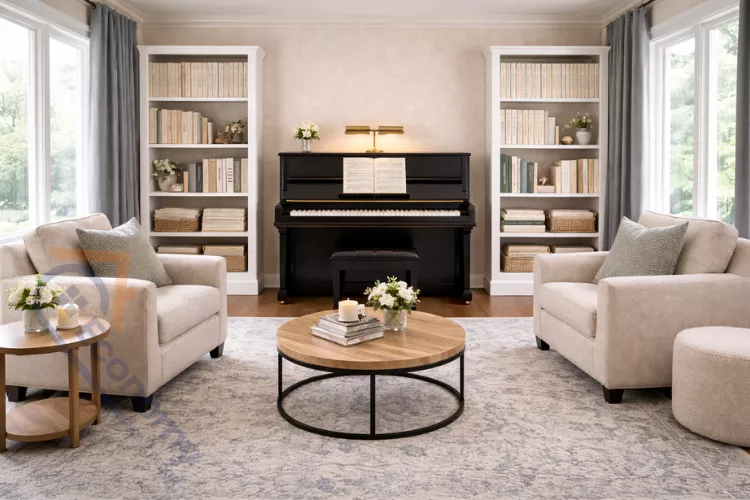
Decorating around a piano combines artistic vision with practical consideration, resulting in a living space that’s both beautiful and functional. By thoughtfully styling the area above your piano, carefully curating what rests on its surface, incorporating complementary colors and lighting, and avoiding common decorating pitfalls, you create a room where your piano truly shines as the centerpiece it deserves to be. Remember that the most successful piano styling tips balance aesthetics with the instrument’s primary purpose making music. Your piano decor should reflect your personal style while respecting the instrument’s needs for space, climate control, and accessibility. Whether you prefer minimalist elegance, maximalist drama, or cozy traditional charm, these living room piano decor principles will guide you toward a harmonious result. Start styling your piano today and make it the heart of your home a beautiful focal point that invites both admiration and musical expression!