
Bring Life to Your Living Space
Bring Life to Your Living Space


Real estate agents have long needed to adapt to shifts in the housing market, changes in buyer behavior, and evolving technology. As new challenges and opportunities emerge, successful agents recognize the importance of innovating their approach to stand out to buyers and sellers. Whether leveraging advanced digital marketing or nurturing local relationships, today’s agents use a blend of traditional expertise and modern tools to thrive. Knoxville real estate agent Jennifer Scates is an example of how industry professionals can remain proactive and adaptive in a dynamic field, ensuring continued success for both clients and their own businesses.
This article explores the latest strategies agents use to navigate a competitive landscape, highlighting tactics for building trust, refining marketing efforts, and leveraging analytics to drive client success. Informed agents continually seek education and innovate to differentiate themselves while providing top-tier service in an ever-evolving environment. These approaches are essential for consistently achieving strong outcomes, whether markets favor buyers or sellers.
The shift toward digital-first interactions has pushed real estate professionals to harness new platforms for marketing, lead generation, and client communications. Agents regularly use search engine optimization, targeted social media campaigns, and visually engaging content marketing to reach broader audiences. Virtual tours, 3D walkthroughs, and interactive video calls allow potential buyers to view homes safely and conveniently from anywhere, helping agents keep clients engaged in any market circumstances. Digital contract management and communication tools, such as DocuSign and Slack, further streamline processes, enabling offers to be expedited and deals to be closed quickly. According to the National Association of Realtors, a significant share of homebuyers find properties online first, underscoring the importance of a digital strategy.
Despite digital advances, real estate remains fundamentally relationship-driven. Agents succeed by consistently investing in their local networks, staying visible in the community, and partnering with other professionals such as lenders, inspectors, and contractors. Being present at local events, offering educational seminars, or sponsoring local initiatives fosters trust and positions agents as integral members of the neighborhood. Maintaining open communication with past clients not only leads to repeat business but also increases the likelihood of referrals, which are vital in today’s competitive landscape. Word-of-mouth recommendations and personal rapport are top factors in an agent’s success.
The real estate market is heavily influenced by economic trends, new regulations, and shifting client preferences. Effective agents prioritize ongoing education through courses, certifications, and seminars, ensuring they understand everything from the latest financing options to local zoning changes. Staying current allows agents to analyze trends and provide sound, relevant advice that helps clients make informed decisions. Comprehensive market analysis allows agents to anticipate changes, capitalize on emerging opportunities, and avoid potential pitfalls. Advanced training is increasingly seen as a differentiator in complex or fast-changing markets.
Differentiation is essential for attracting clients in a crowded market. Agents build a robust personal brand through carefully curated messaging, professional websites, consistent social media engagement, and high-quality print or video marketing. By communicating a clear value proposition and demonstrating past successes, agents create a compelling presence that resonates with their target audience. Personal branding is not just about visibility but also about trust, authenticity, and expertise. Sharing testimonials, client success stories, and case studies reinforces credibility and distinguishes agents from competitors.
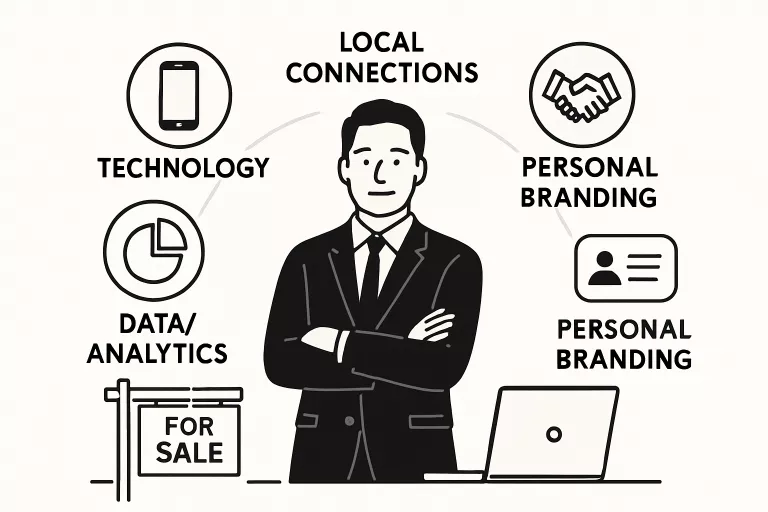
Modern real estate agents rely on data analysis to refine their approach and make informed decisions for clients. Access to market analytics helps agents pinpoint ideal list prices, track neighborhood sales trends, and optimize timing for both purchases and sales. Predictive analytics tools provide essential insights into upcoming market shifts and buyer behavior, empowering agents to guide clients more effectively. Evidence-based pricing and negotiation benefit both clients and agents by driving faster sales and better outcomes. Forbes notes that data-driven agents are more likely to exceed their sales goals.
Effective collaboration creates a smoother, more efficient transaction process for buyers and sellers. Top agents routinely work with a network of trusted professionals, including mortgage brokers, appraisers, legal experts, and home improvement specialists. These partnerships allow for comprehensive support and greater service reliability, minimizing delays and surprises along the way. Co-listing properties or joining forces on community events can further expand an agent’s reach. Collaboration fosters better client experiences, builds reputation, and increases referral opportunities, bolstering business resilience regardless of market conditions.
By embracing technology, prioritizing community engagement, staying informed, and leveraging analytical tools, real estate agents demonstrate their value and adaptability in today’s market. Effective personal branding and strong professional relationships further elevate their service, positioning them for long-term success even as industry dynamics continue to evolve.