Bring Life to Your Living Space
Bring Life to Your Living Space

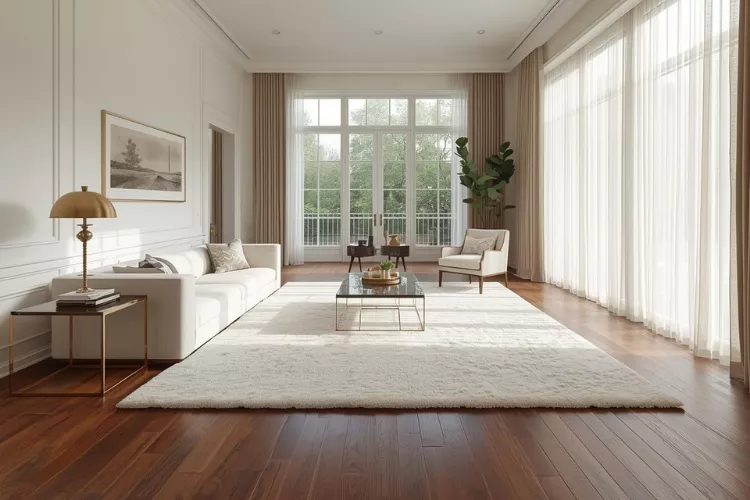
Dark hardwood floors decorating ideas are everywhere right now and for good reason. Rich espresso, deep walnut, and warm ebony planks bring an undeniable sophistication to any room. But the moment most homeowners fall in love with dark floors, a familiar fear creeps in: will this make my space feel like a cave?
The answer, with the right approach, is absolutely not.
After 12+ years designing interiors with dark flooring, I can tell you the “dark floors make rooms look smaller” myth is mostly a matter of poor contrast management. Dark floors don’t shrink spaces wrong furniture placement, insufficient lighting, and muddy color palettes do.
This guide gives you 27 specific, designer-tested ideas for decorating with dark wood floors across every room type and budget. Whether you’re dealing with a cramped apartment or a large open-plan living room, you’ll walk away knowing exactly how to make your dark floors feel like the luxury feature they truly are.
Warm whites like Benjamin Moore’s “Chantilly Lace” or Sherwin-Williams “Alabaster” create a sharp, clean contrast against dark brown flooring without feeling clinical. The warmth in the undertone prevents the pairing from looking stark. Use a matte finish to keep the focus on the floor’s natural grain. Add brass or gold hardware to tie both elements together.
Sage green walls work because they share the same organic, natural undertone as dark wood. This color pairing feels intentional rather than contrasting. Keep the green muted and dusty think “Laurel” by Farrow & Ball rather than a vibrant lime. Layer in linen and terracotta accessories to complete the organic palette.
Colors like “Hale Navy” diluted or “Dusty Miller” blue-gray create depth without competing with your floors. This wall colors for dark hardwood floors combination photographs beautifully and suits both modern and traditional spaces. Keep ceilings white to push the room’s perceived height upward. Black iron fixtures reinforce the palette without adding visual noise.

Don’t be afraid to go darker on one wall. A charcoal or graphite accent wall behind a sofa creates a tonal layering effect and when styled properly, the area behind your seating can become a design feature itself (get inspiration from these behind couch decorating ideas). Use high-gloss paint on the accent wall to reflect light back into the room. Keep the remaining three walls in a crisp white or light warm gray.
Creamy beige not cold greige brings warmth to a dark brown floor living room without competing with the floor’s richness. Look for shades with yellow or peach undertones like “Navajo White” or “Antique White.” This pairing ages beautifully and works across decorating styles from farmhouse to transitional modern. Pair with walnut furniture to keep the warmth consistent.
Designer Insight: Light walls don’t just brighten a room visually they create a luminosity contrast that makes dark floors appear intentionally placed rather than overpowering. The key is to choose wall colors with warm undertones, not cool ones. Cool whites and cool grays against dark brown floors can feel disconnected and slightly institutional.
A large ivory, cream, or light natural fiber rug is one of the most effective tools for decorating with dark wood floors. It creates a visual “island” that grounds your furniture grouping and reflects ambient light. Size matters go larger than you think necessary, ideally with all furniture legs on the rug. A jute or sisal base with a lighter woven pattern works especially well.
A cloud-gray, oatmeal, or soft ivory sofa floats visually above dark floors rather than blending into them. Low-profile designs think under 30 inches in height keep sightlines open and the room feeling airy. Slipcover-style or performance linen fabrics add casual texture that softens the floor’s formality. Avoid dark leather in small living rooms as it compounds the heaviness.
One of the smartest furniture for dark wood floors tricks is transparency. A glass or acrylic coffee table lets your beautiful floor remain visible, preventing the center of the room from becoming visually dense. Pair it with a sculptural base in brass or matte black. This works especially well in dark brown floor living room ideas where you want to showcase the flooring as a feature.
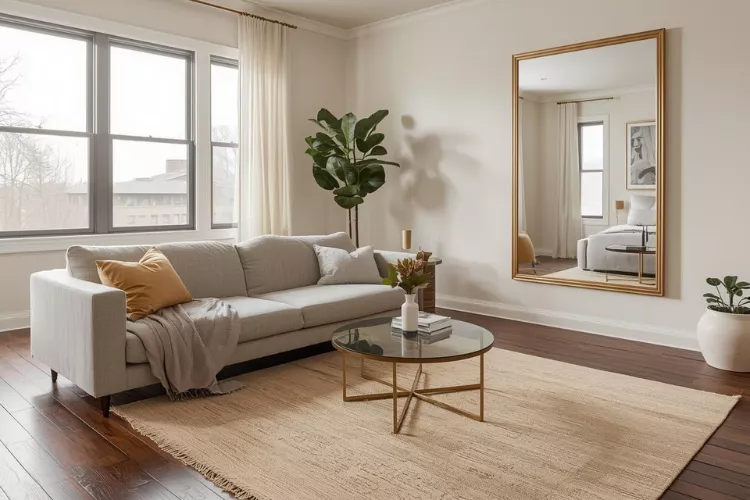
Gold, brass, and champagne metallic finishes catch and scatter light in rooms with dark flooring something matte surfaces simply can’t do. Use metallic finishes on lamp bases, picture frames, side tables, and cabinet pulls. The reflection creates micro-highlights across the floor’s surface, making the grain pop. Stick to one metal family to avoid a cluttered look.
A large, well-placed mirror is arguably the single most impactful tool in how to style dark floors without expanding square footage. Position it directly across from a window or primary light source to double the room’s natural light. Opt for a warm-toned or antique gold frame. Even a 24×36 inch mirror creates a measurable difference in perceived brightness.
Designer Insight: In living rooms with dark hardwood, the rug is doing more heavy lifting than most people realize. It’s not just decorative it’s a light-reflective surface and a visual separator between the floor and furniture zone. Always prioritize rug lightness before worrying about furniture color.
In a bedroom with dark floors, crisp white or natural linen bedding creates an immediate sense of freshness and luxury especially when paired with thoughtfully designed white walls (see our white wall bedroom decorating ideas for inspiration). The contrast between a white duvet and dark plank flooring is genuinely stunning. Layer with textured throws in camel, terracotta, or soft blush to add warmth. Keep the bed frame light or mid-toned avoid very dark headboards in smaller bedrooms.
A large, pale area rug under the bed grounds the sleeping zone and creates a soft, tactile contrast with the dark floor. Extend the rug at least 24 inches on each side of the bed. A wool flatweave in ivory or soft grey adds texture without height. This approach is especially effective in small room with dark wood floors situations particularly in attic or angled spaces where layout matters most (explore smart slanted wall decor ideas here).
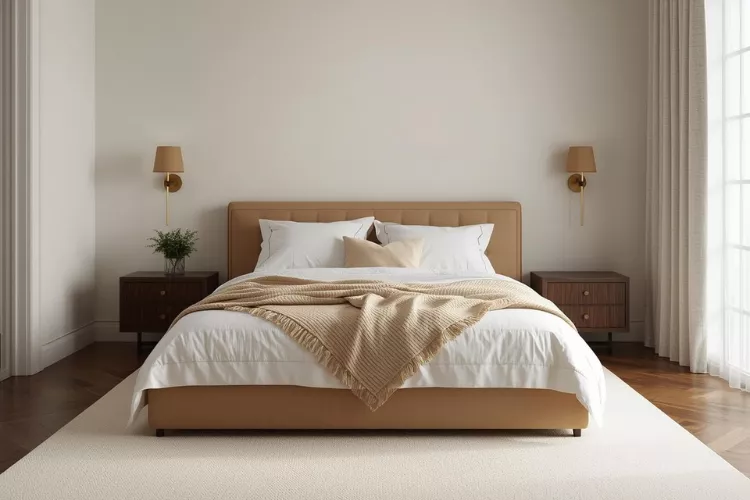
Table lamps on dark floors need bases tall enough to cast light upward but in bedrooms, wall-mounted sconces are smarter. They eliminate the visual bulk of nightstands and direct light exactly where you need it. Brass or antique gold finishes work beautifully against the pale walls and dark floor combination. This leaves nightstand surfaces free for art objects and plants.
A velvet bench at the foot of the bed in camel, terracotta, or dusty rose adds warmth and texture that dark floors desperately need at room periphery. Upholstered pieces absorb sound, which dark hardwood rooms can feel short on. Choose fabrics with some sheen velvet and brushed cotton catch light differently than matte linen. Avoid very deep jewel tones unless your walls are light and ceilings are high.
Hang curtains as close to the ceiling line as possible even if your windows don’t go that high. This dramatically draws the eye upward, counteracting any heaviness from dark flooring below. Use sheer or semi-sheer linen in ivory or warm white to maximize daylight. The vertical length creates proportion that makes modern dark hardwood interiors feel grand rather than heavy. If you’re working with taller ceilings, incorporating vertical elements like suspended lighting or decor can further enhance the height effect (see these ceiling hanging decor ideas).
Designer Insight: Bedrooms with dark floors benefit enormously from layered, upward-directed lighting. Recessed ceiling lights alone leave floors shadowed and heavy. Add table lamps, sconces, and even LED strip lighting under floating nightstands to create multiple light planes that animate the floor’s surface.
When working with a small room with dark wood floors, pick one light, neutral color and use it across walls, trim, and ceiling. This “envelope” effect makes the room feel like a continuous, cohesive space rather than a box with a dark bottom. The contrast between the pale interior and the rich floor becomes the design feature. Use varying textures linen, cotton, wool to prevent the palette from looking flat.
Sofas, chairs, and tables raised on slim legs allow the eye to travel across the floor continuously. Exposed legs reveal more of the dark hardwood beneath, which paradoxically makes rooms feel larger. Hairpin legs, tapered mid-century legs, and thin metal legs are all excellent choices. Avoid skirted furniture or pieces with solid bases in small rooms.
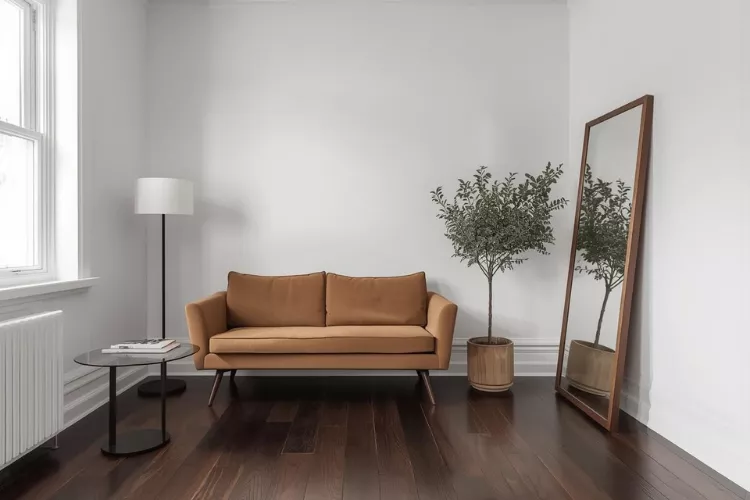
High-gloss cabinetry, lacquered furniture, and glass shelving reflect the floor back at the eye creating depth and dimension in tight spaces. A single lacquered side table in white or pale gold makes a small room feel more expansive. Mirrored furniture, used sparingly, amplifies this effect without crossing into kitsch territory. Pair one reflective statement piece per room for maximum impact.
Designer Insight: Small rooms with dark floors aren’t a design problem they’re an intimacy opportunity. The mistake most people make is trying to fight the darkness rather than curating it. A jewel-box approach one perfect sofa, one great light fixture, one beautiful rug almost always outperforms a room full of cautious, compensatory pale furniture.
Ambient (overhead), task (lamps), and accent (LED strips, picture lights) lighting creates a room that feels dimensional after dark. Dark floors absorb overhead light rather than reflecting it, so relying on a single ceiling fixture creates a flat, gloomy effect. Use warm bulbs 2700K to 3000K throughout. The floor’s grain becomes a design asset when properly illuminated from multiple angles.
Jute, sisal, and seagrass rugs in natural tan and honey tones are textural opposites to smooth, dark hardwood which is exactly why they work so well together. The raw, matte fiber absorbs light differently than the polished floor, creating a welcome contrast in both texture and tone. Use them in living rooms and entryways. Layer a smaller, softer rug on top for added comfort in seating zones.
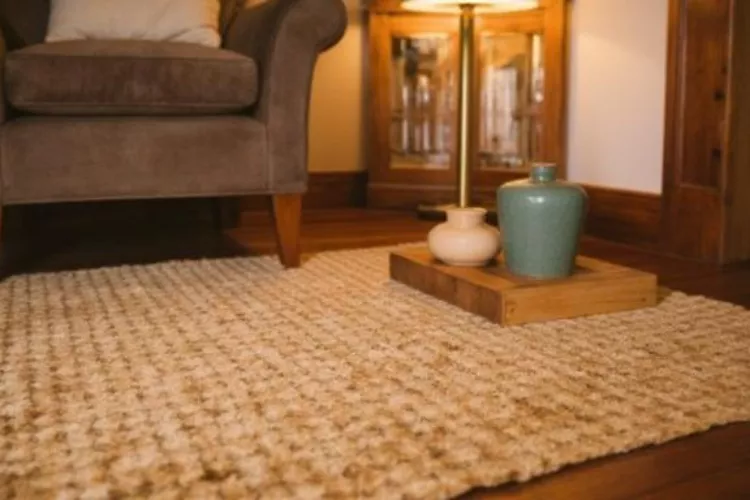
Not everything above a dark floor needs to be light. Introduce mid-toned walnut, honey oak, or warm teak furniture to create a tonal bridge between the dark floor and lighter walls. This layered wood approach reads as sophisticated rather than heavy. A walnut dining table against dark floors with white chairs and light walls hits the contrast sweet spot perfectly. To explore more balanced and budget-conscious home decor ideas beyond flooring, browse our complete decorating guide.
Modern dark hardwood interiors at their most effective often use the floor as the only dark element in an otherwise all-white space. White walls, white furniture, white ceiling punctuated by the drama of dark plank flooring. The result is architectural and striking. Add a single piece of black-framed art to acknowledge the floor’s depth without breaking the minimalism.
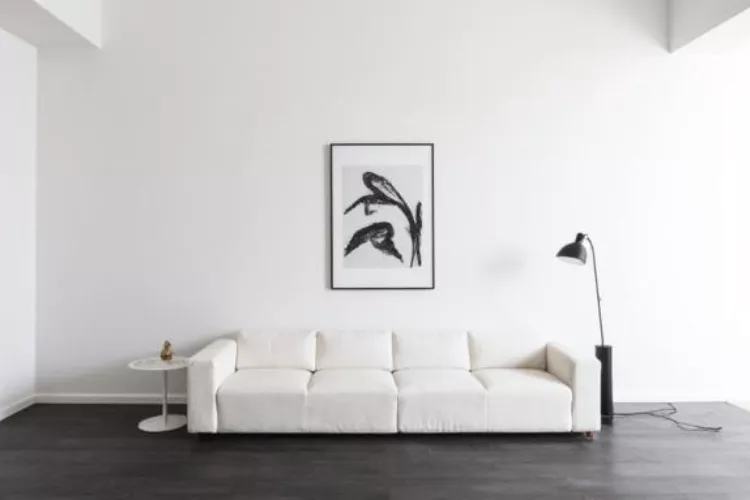
If your aesthetic leans modern and minimal, commit to the dark floor by adding deliberate black accents black frames, black fixtures, black cabinet hardware. This signals that the dark floor is a design choice, not a leftover from a previous owner. Keep walls light to balance the scheme. The discipline of using black only on thin, graphic elements (frames, legs, fixtures) prevents the palette from feeling oppressive.
In minimal spaces, resist the urge to fill every inch with furniture and rugs. Letting expanses of dark hardwood remain exposed is a design statement in itself. A beautifully maintained dark wood floor needs breathing room to look intentional. In open-plan modern spaces, strategic furniture placement creates conversation zones within the visible floor plane, not on top of it.
Designer Insight: Minimalism and dark floors are a natural pairing because both depend on quality over quantity. When there’s less visual noise above the floor, the grain pattern, the wood species, and the finish quality become the focal point. This is where material investment pays off most visibly.
One of the cheapest, highest-impact changes you can make in a room with dark floors is replacing dark or colored lampshades with white or cream ones. White shades cast more light into the room rather than absorbing it. This single swap brightens dark rooms noticeably for under $30. Pair with warm Edison bulbs for the best effect.
Tall plants fiddle leaf figs, snake plants, bird of paradise draw the eye upward and add organic life that softens dark flooring. White or terracotta pots create contrast against the floor. Plants add color, texture, and height for a fraction of the cost of furniture. Group three plants of varying heights in a corner to create a natural vignette.
Dark floors against dingy or off-white trim look heavy and unfinished. A fresh coat of bright white on baseboards, door frames, and window casings creates a crisp delineation between floor and wall that lifts the entire room. This is a weekend DIY project that dramatically changes how decorating with dark wood floors reads in person. Use satin or semi-gloss finish for durability and a clean edge.
Designer Insight: Budget-friendly dark floor styling almost always comes down to contrast and cleanliness. A meticulously maintained dark floor with bright white trim and a single large cream rug will always look more luxurious than an expensive floor surrounded by competing dark elements and poor lighting.
Choosing furniture that’s too dark. Dark sofa + dark floors + dark walls creates a room that feels heavy and claustrophobic regardless of size. You need at least one major element walls or seating to be significantly lighter than the floor.
Using rugs that are too small. An undersized rug on dark floors floats awkwardly in the center of the room and fails to create the grounding effect you need. Always size up by at least one size from what feels instinctively right.
Relying on a single overhead light source. One ceiling light cannot adequately illuminate a room with dark flooring. Without layered lighting, dark floors absorb whatever light exists and make the entire room feel dim.
Neglecting baseboard and trim freshness. Dirty or yellowed trim against dark floors amplifies a sense of darkness. Clean, bright white trim is one of the most underestimated elements in how to style dark floors successfully.
Over-accessorizing to compensate. Adding too many pale accessories, rugs, and furniture pieces in a panic response to dark floors creates visual chaos. Edit ruthlessly fewer, larger, lighter pieces work better than many small ones.
Ignoring window treatments. Heavy, dark drapes block the natural light that dark floors desperately need. Opt for sheer or semi-sheer panels in white or natural linen, and hang them as high as possible to maximize daylight.
Only when paired with dark walls, heavy furniture, and insufficient lighting. Dark floors alone don’t shrink a room the combination of multiple dark elements without contrast does. Light walls, layered lighting, and appropriately sized rugs fully counteract any perceived compression.
Warm whites, soft sage greens, and warm beiges consistently produce the most balanced results and these palettes work beautifully in bathrooms as well (browse blue and brown bathroom decorating ideas for real examples). The key is choosing colors with warm undertones rather than cool ones cool grays and blue-whites can feel disconnected from the warmth inherent in dark wood. Greens and soft blues work well in rooms with strong natural light.
Natural fiber rugs in jute and sisal, light wool flatweaves, and cream or ivory patterned rugs all photograph and live beautifully on dark floors. Avoid dark rugs or very busy patterns, which reduce the contrast benefit the rug is meant to provide. Size up for maximum impact.
Layer three light sources (ambient, task, and accent), use warm white bulbs between 2700K–3000K, maximize window light with sheer curtains, hang mirrors opposite windows, and choose light-colored walls and upholstery. Each element compounds the others you don’t need to do all of them, but more layers means more brightness.
Not at all. Dark hardwood consistently ranks among the most desirable flooring choices in luxury residential design and has been prominent in high-end interiors for decades. Current trends favor wider planks in rich walnut and ebony tones, especially in modern dark hardwood interiors that lean minimal or transitional. The key is in the styling, not the floor itself.
Dark hardwood floors are one of the most luxurious design choices you can make and every single idea on this list proves that luxury and lightness aren’t mutually exclusive. The secret is strategic contrast: light walls, reflective surfaces, layered lighting, and appropriately scaled furniture working together to let your floors be the star without overwhelming the scene.
Stop being cautious around dark floors. Start being intentional. Whether you’re tackling a small bedroom, styling a townhouse layout, a sprawling open-plan living room, or a tight entryway (see practical townhouse decorating ideas here)
Pick two or three ideas from this list that resonate with your current space, implement them, and watch the transformation. Your dark floors aren’t a liability they’re the foundation of something genuinely beautiful.