Bring Life to Your Living Space
Bring Life to Your Living Space

Most people spend a lot of time thinking about their walls, furniture arrangement, and floor coverings and almost no time at all looking up. The ceiling is one of the most underused surfaces in any home, and that’s a missed opportunity. When done with proportion and intention, ceiling hanging decor ideas can fundamentally change how a room feels: taller, airier, more layered, and considerably more interesting.
This guide isn’t about filling your ceiling with things for the sake of it. It’s about understanding when hanging decor adds genuine value, how to scale it correctly, and how to install it safely whether you own your home or rent it. We’ll walk through every major room type, common mistakes, and real-world scenarios you can adapt to your own space.
Before you buy a single pendant light or macramé hanger, you need to understand your ceiling. The right decor for an 8-foot ceiling is completely different from what works in a vaulted space and using the wrong scale is the most common mistake in this category of decorating.
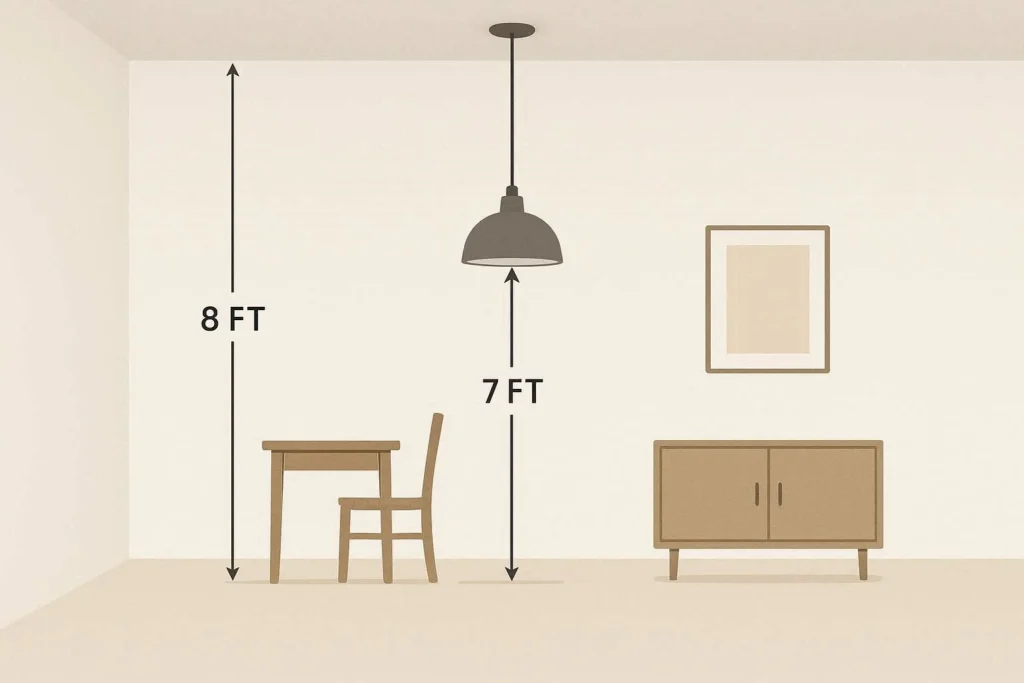
Eight-foot ceilings are the norm in most American homes built after the 1950s. They’re functional but unforgiving. There’s very little room for error when it comes to hanging height, and oversized fixtures will make the room feel compressed. The general rule is that the bottom of any hanging element light fixture, plant, fabric installation should sit at least 7 feet above finished floor level in any walking area. That leaves roughly 12 inches of clearance below the fixture before you hit head height for a 6-foot person, which is the minimum comfortable clearance.
In practice, that means a pendant light hung in an 8-foot kitchen should have its shade bottom at 30–36 inches above the countertop (not 7 feet from the floor, because you’re not walking under the island), or 7 feet from the floor if it’s in a circulation path.
This is arguably the sweet spot for ceiling decor. You have enough height to hang pendant clusters, plants, or fabric without crowding the room, but the ceiling isn’t so high that the space feels disconnected. With 9-foot ceilings, most hanging decor can drop 18–24 inches from the ceiling and still maintain easy clearance.
Vaulted ceilings are dramatic but tricky. The height varies across the room, so where you hang something matters enormously. Oversized pendants work beautifully at the peak, but they require longer drop rods and specific canopy hardware. Multi-drop chandeliers designed for high ceilings (often called “staircase chandeliers”) give you visual weight without requiring a flat ceiling.
Anything under 8 feet requires restraint. Flush-mount or semi-flush lighting is almost always the right choice for overhead fixtures. If you want to add hanging decor in a low-ceilinged room, stick to very shallow elements: a thin paper mobile, a minimal macramé hanger with no trailing fringe, or a small trailing plant with a very short drop. The goal is to add interest without reducing the perceived headroom further.
The living room is where ceiling decor tends to have the most visual impact because people spend time in this space looking around, not just passing through.
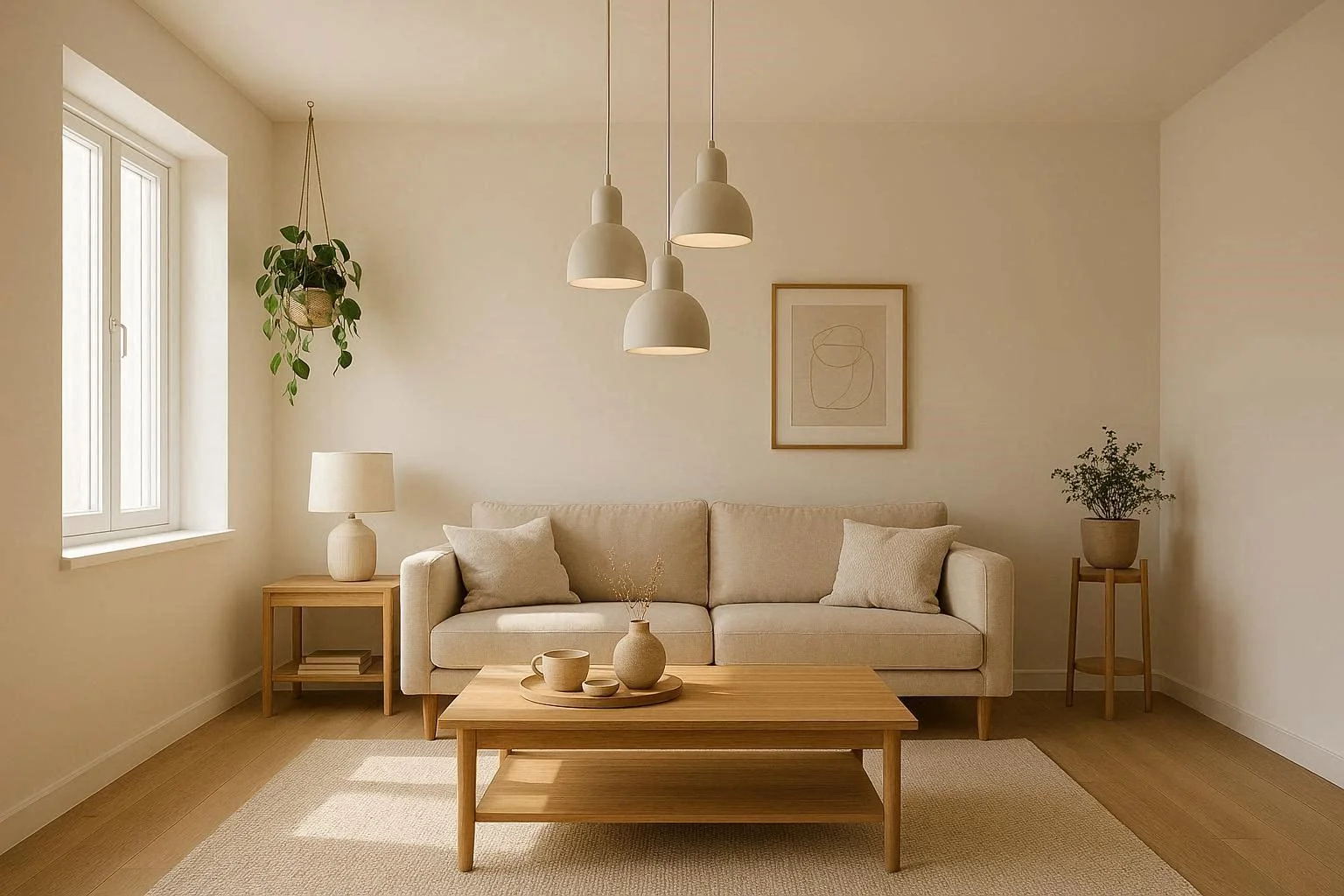
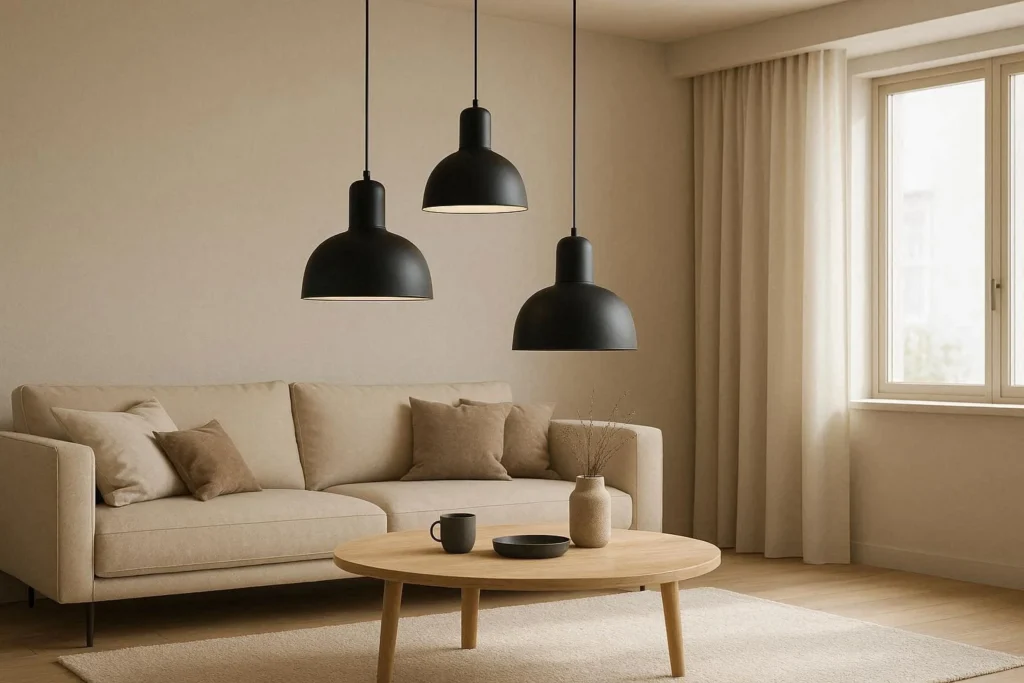
Pendant clusters work particularly well over coffee tables or seating areas. Rather than one large fixture, grouping three pendants of varying drop lengths creates depth and visual movement. Keep the pendants within the same finish family mixed metal tones work if they’re intentional (brass and black, for example), but random mixing reads as accidental.
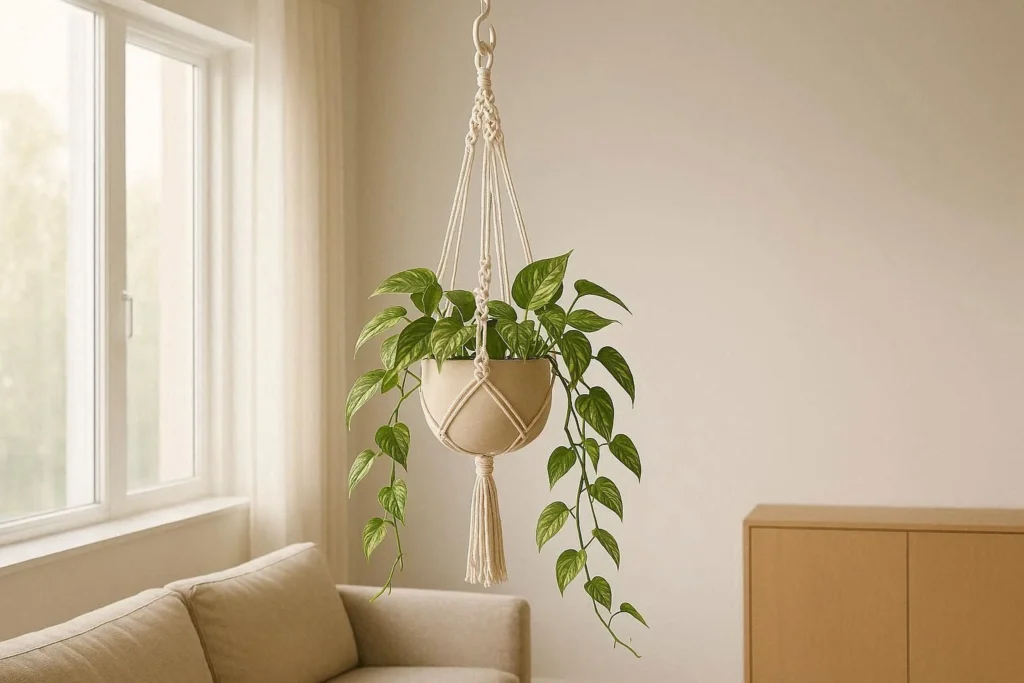
Hanging plants add organic softness to a living room. A trailing pothos or string of pearls in a hanging planter near a window brings the eye upward while also benefiting from natural light. Position these away from main circulation paths.
Fabric installations lengths of linen, sheer cotton, or raw canvas hung from ceiling hooks or dowels are more common in Scandinavian and boho-influenced spaces, but they work in almost any setting when kept monochromatic. A single panel of cream linen hung behind a sofa adds texture without requiring a large art budget.
Statement lighting in a living room should be proportional to the seating area it’s hovering over. A fixture’s diameter (in inches) should roughly equal the room’s length and width added together (in feet). So a 12×14 foot room could carry a 26-inch diameter pendant comfortably.
Sculptural mobiles abstract hanging pieces in brass, ceramic, or wood occupy ceiling space without adding visual weight. They work well in living rooms where you want something deliberate above a reading chair or in an awkward corner.
For small living rooms, ceiling decor should be minimal and vertically oriented. One pendant or one hanging plant is typically the right ceiling budget for a room under 150 square feet. You can explore additional ideas in resources focused on small living room decorating ideas for a broader layout picture.
Bedrooms ask for different things from ceiling decor than living rooms do. The mood is quieter, the pace is slower, and anything that hangs above where a person sleeps needs to meet a higher safety standard.
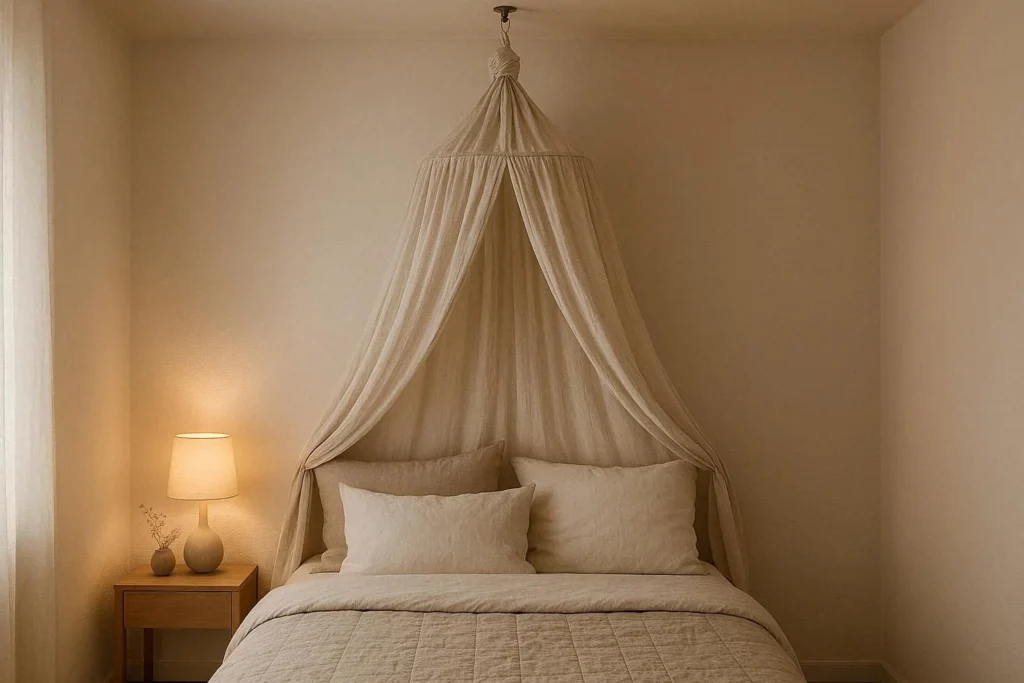
Bed canopies are one of the oldest forms of ceiling decor and they’re still one of the most effective. A simple four-poster frame isn’t necessary a single ceiling hook directly above the center of the bed, with sheer fabric draped outward to bedposts or wall hooks, creates the same cocooning effect with minimal hardware. Avoid heavy fabric over beds; stick to lightweight sheers, cotton gauze, or linen.
Pendant bedside lights are a practical alternative to table lamps in bedrooms. Hung at approximately 48–60 inches from the floor (or roughly at pillow height when seated in bed), they free up nightstand space and add a clean, considered look. They work best in rooms where the switch is accessible, or wired on a dimmer.
Hanging fairy lights remain popular for good reason. A cluster of warm-white lights gathered at one ceiling hook and allowed to cascade down creates soft ambient light without any hardwired installation. Use battery-operated or plug-in options for renter-friendly flexibility.
Lightweight mobiles above a dresser or in a corner bring quiet movement and visual interest. Ceramic or wooden geometric mobiles, in particular, fit well in minimal bedrooms without cluttering the visual field.
Safety near beds is important: never hang anything heavy directly above a sleeping area using only adhesive hooks. For anything over 2–3 pounds above a bed, use a ceiling joist anchor. If there’s any question about the security of an installation, relocate it to a corner or wall-adjacent position instead.
If your bedroom features white walls and you’re working toward a cohesive look, white wall bedroom decorating ideas can help you tie ceiling decor into the broader scheme.
The kitchen and dining room reward intentional ceiling decor more than almost any other space because the functional requirements (lighting, storage) and the decorative ones overlap naturally.
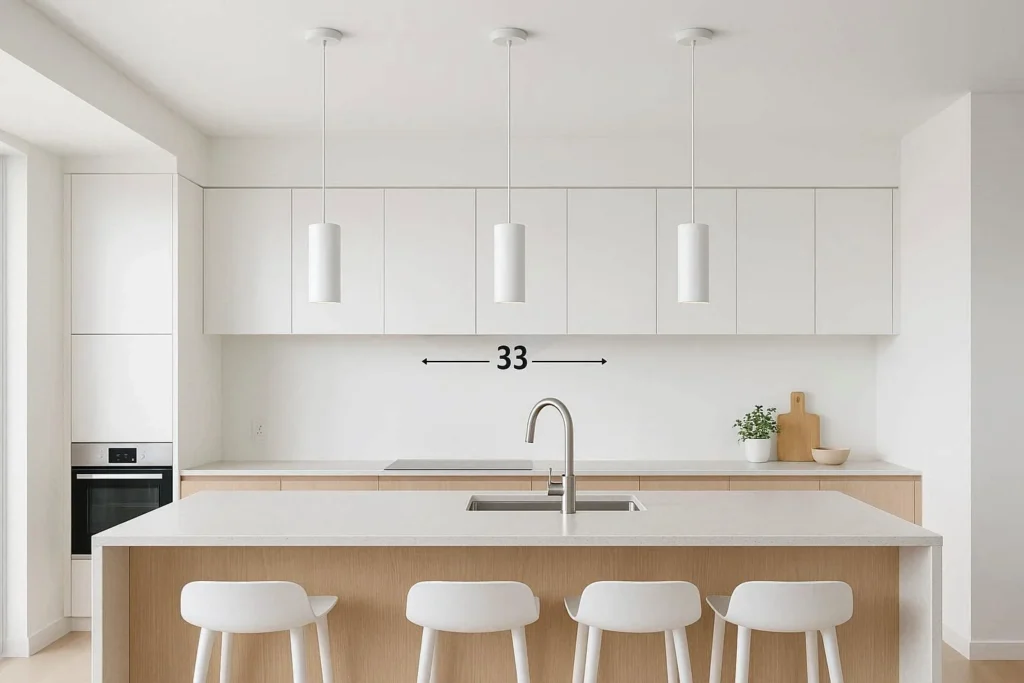
Pendant lighting above an island is now nearly standard in kitchen design, but the execution varies widely. The most common mistake is hanging pendants too high. For kitchen islands, the bottom of the pendant shade should sit 30–36 inches above the countertop surface. For a 9-foot ceiling with standard 36-inch counters, that means the pendant drops about 42–48 inches from the ceiling.
When using multiple pendants over an island, space them evenly and center the cluster over the island’s length. Three pendants spaced 24 inches apart over a 72-inch island is a reliable formula.
Linear chandeliers above dining tables should follow a similar logic. The bottom of the fixture should hang 30–34 inches above the tabletop. The fixture’s length should be roughly half to two-thirds the length of the table beneath it.
Hanging herb planters in kitchens near windows are both practical and visually appealing. Small terracotta pots in a hanging rack, or individual cork-based planters hung from a ceiling-mounted dowel, bring life into a utilitarian space. Keep them above counter height and away from the stove where heat and steam can damage plants.
Suspended pot racks are a functional version of ceiling hanging decor. They require solid ceiling joist anchoring (see the installation section), but they free up cabinet space and add a professional kitchen aesthetic. Look for racks with adjustable-length chains so you can set the hanging height correctly for your space.
Hanging plants from the ceiling is one of the most popular and rewarding forms of decorative ceiling installation, but it comes with practical requirements that most decorating guides underplay.
Macramé planters are the most common vehicle, and they work beautifully for trailing plants like pothos, heartleaf philodendron, string of pearls, and ivy. The macramé adds texture while keeping the visual weight light. Choose natural cotton or jute in neutral tones to keep things from feeling busy.
Weight and anchoring are the practical priorities. A medium-sized hanging planter with soil and a watered plant can easily reach 5–8 pounds. This exceeds the capacity of standard adhesive ceiling hooks (most are rated for 2–5 lbs) and requires a ceiling joist anchor or a toggle bolt rated for the appropriate load. Always look up your ceiling type before purchasing hardware.
Ceiling hook types worth knowing: swag hooks (for lightweight decor), ceiling plant hooks with joist anchors (for plants), and heavy-duty expansion bolts (for pot racks and anything over 10 lbs). Never rely on drywall alone for anything with significant weight.
Watering practicality is something most people overlook. Hanging plants need to come down for watering, or you need a watering solution that doesn’t drip. Consider self-watering planters with reservoirs, or a simple pulley system that allows the plant to lower for maintenance. A drip tray is essential to protect floors.
Renters have fewer options for ceiling decor than homeowners, but the options that exist are more versatile than most people assume.
Adhesive ceiling hooks from brands like Command are rated for 2–5 pounds depending on the product. This is enough for paper lanterns, lightweight fabric panels, small dried flower bunches, or battery-operated fairy light clusters. They work best on smooth ceilings; textured popcorn ceilings reduce adhesion significantly.
Tension rods between two walls are an underused renter solution. In smaller rooms or nooks, a tension rod near ceiling height can support lightweight curtain panels, fabric dividers, or even small hanging planters (very light ones in minimalist hangers).
Paper lanterns and lightweight mobiles are the workhorses of renter-friendly ceiling decor. A cluster of paper lanterns in varying sizes creates visual impact for very little weight. Choose the same color family to keep the ceiling looking curated rather than festive.
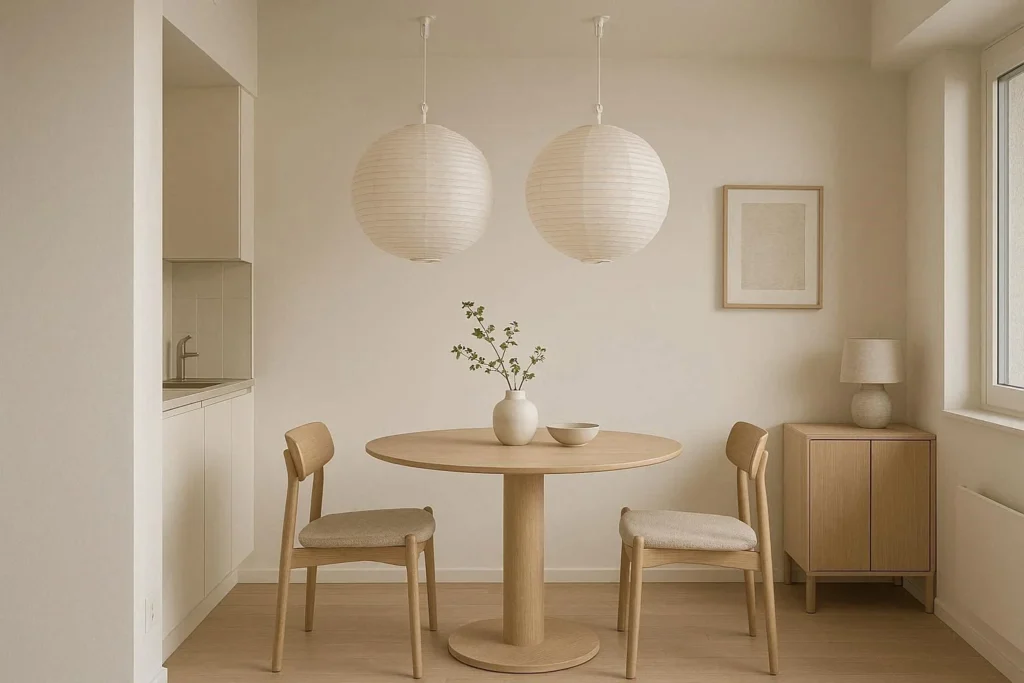
Command ceiling hooks can also support small string light arrangements. Run lights along the ceiling perimeter or in a loose grid pattern, using multiple hooks to distribute the minimal weight.
The key principle for renter ceiling decor is reversibility. Every installation choice should be removable without patching, repainting, or leaving residue. Read weight ratings carefully they are not suggestions.
Small rooms are often where ceiling decor does the most useful work, but they’re also where mistakes are most visible.
The primary goal in a small room is to draw the eye upward without adding clutter. A single hanging pendant, a minimal plant hanger, or a delicate mobile above a corner reads as intentional. A collection of three different hanging items in a small room reads as chaotic.
Vertical lines are your friend. Ceiling decor that elongates the visual line a pendant with a long thin cord, a tall narrow macramé piece, a slender hanging plant makes a ceiling feel higher. Wide, flat, or heavily draped ceiling decor has the opposite effect.
Avoid oversized fixtures in small rooms. A pendant that’s appropriately sized for a large kitchen will dominate a small dining nook. Scale down, and when in doubt, go smaller than your instinct suggests.
Keep finishes cohesive. In a small room, every element is visible from nearly every vantage point. Mixing brass and chrome and matte black in ceiling decor will feel fragmented even if each piece is attractive on its own.
High ceilings are aspirational but come with their own design challenge: they can make a room feel cold and disconnected if the ceiling decor doesn’t fill vertical space with intention.
Oversized pendant lighting is appropriate here in ways it wouldn’t be in a standard room. A 36–48 inch diameter pendant at the peak of a vaulted ceiling adds drama and anchors the space visually. Use pendants with long adjustable drop rods to ensure the fixture hangs at the right functional height, not just at mid-ceiling where it serves neither purpose well.
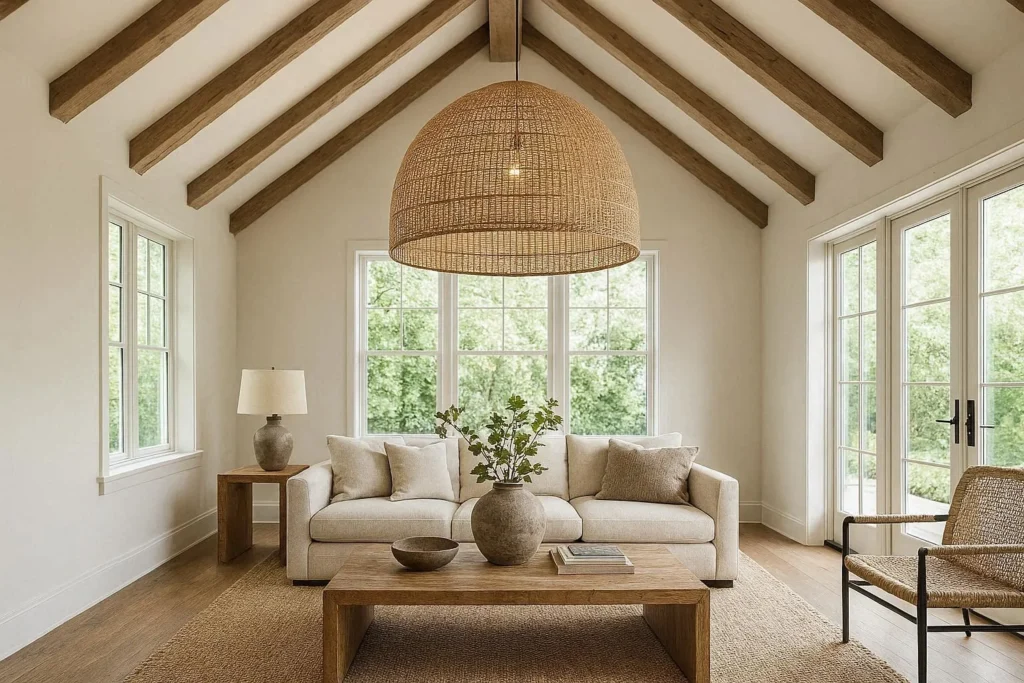
Multi-drop chandeliers designed for high ceilings feature elongated canopies or cascading drops at varying lengths. They fill vertical space beautifully and work in both modern and traditional settings depending on the materials.
Hanging art installations large-scale textile wall hangings mounted near ceiling height, or suspended sculptural panels work in high-ceilinged spaces where standard wall art would look undersized. If your room has slanted walls alongside a vaulted ceiling, slanted wall decor ideas can help you coordinate ceiling and wall decor for spaces with unconventional geometry.
The principle of balance matters in high-ceilinged rooms: if the ceiling decor draws the eye strongly upward, ground the room with heavier furniture or large-scale rugs below. Visual weight needs to be distributed throughout the full volume of the space.
This section matters more than any styling advice in this guide. Poorly installed ceiling decor is a genuine safety hazard, and it’s also the source of most decorating disasters in this category.
Finding ceiling joists is the first step for any installation that will carry significant weight. Use a stud finder that detects both studs and live electrical wires this matters especially in ceilings where wiring may be present. Joists in residential construction are typically spaced 16 or 24 inches apart.
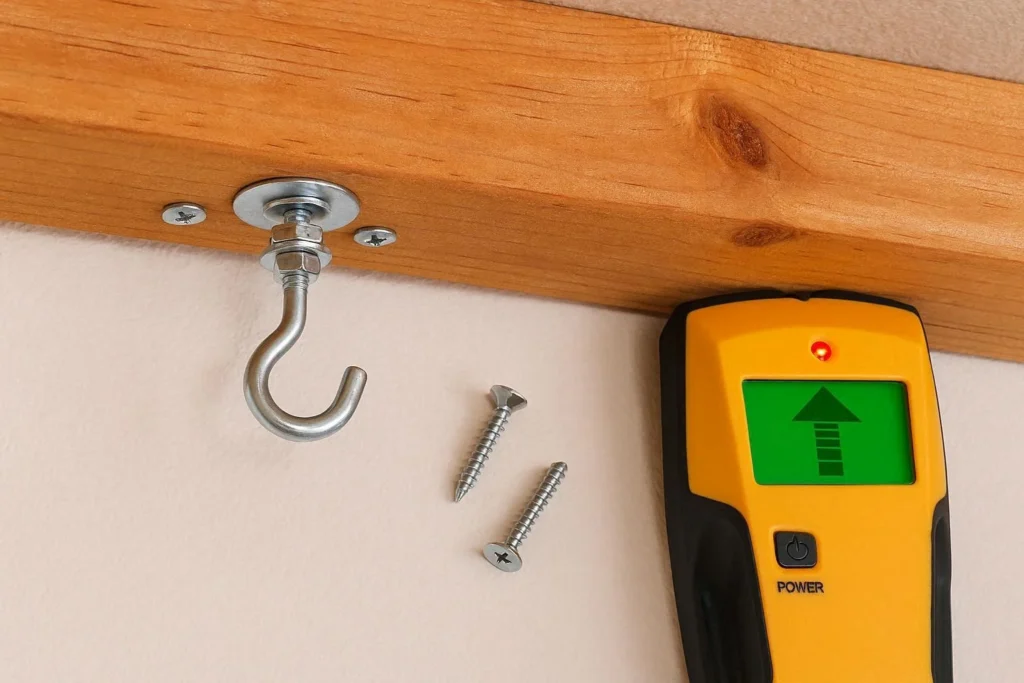
Drywall alone cannot support weight. This is the most important technical rule in ceiling decor. Standard 1/2-inch drywall will eventually fail under sustained load if anchored only to the drywall itself, not to a structural member. For anything over 5 pounds, anchor to a joist or use a properly rated toggle bolt designed for ceiling loads.
Toggle bolts for ceilings (sometimes called “butterfly anchors”) are rated for specific loads. Read the packaging carefully and stay well below the maximum rating the ratings assume perfect installation conditions that aren’t always achievable in practice.
Clearance above walking areas should be a minimum of 7 feet from the finished floor to the bottom of any hanging element in a circulation path. Over fixed furniture like dining tables or kitchen islands, 30–36 inches above the surface is standard.
Electrical considerations: If your hanging decor involves any hardwired lighting (pendant lights connected to ceiling wiring rather than plug-in), this work should be done by a licensed electrician unless you have genuine experience with residential electrical work. Wiring done incorrectly is a fire risk.
Swag hooks vs. joist anchors: Swag hooks are appropriate for lightweight decor only paper lanterns, lightweight fabric, small ornaments. For plants, pot racks, heavy pendants, or fabric panels with any significant weight, you need a joist anchor.
Hanging too low is the most frequent error. Anything in a walking path below 7 feet feels intrusive and creates a safety hazard. Measure before you commit.
Ignoring proportion produces results that feel either underwhelming or overwhelming. A single 6-inch pendant in a 14-foot vaulted space looks lost. A 30-inch chandelier in an 8-foot room looks oppressive. Neither is wrong in isolation they’re wrong for the context.
Too many small items creates visual noise without delivering the impact that each individual piece might suggest. Three small paper cranes don’t add up to one meaningful ceiling moment they just add clutter. Consolidate small elements into a single intentional grouping.
Clashing finishes are especially problematic in ceiling decor because they’re visible from everywhere in the room. Maintain a consistent metal finish or material palette for all ceiling elements in a given space.
Blocking airflow is a practical concern in rooms with ceiling fans. Decor that sits within the fan’s rotation radius is dangerous. Keep any hanging decor well outside the blade perimeter ceiling fans need approximately 18 inches of clearance from any obstruction.
Minimal Scandinavian Living Room A 12×14 foot room with 9-foot ceilings and white walls. One matte black pendant cluster of three staggered bulb pendants above the coffee table. A single hanging pothos in a simple cotton rope hanger near the window. Nothing else on the ceiling. Result: clean, considered, visually complete.
Cozy Boho Bedroom A 10×12 foot room with 8-foot ceilings. A cream cotton gauze canopy gathered at a single joist-anchored hook above the bed center and draped loosely to two wall hooks at either side. Battery-operated warm fairy lights coiled around the canopy hook. One small macramé mobile above the dresser. The ceiling does a lot of atmospheric work with very little physical weight.
Small Studio Apartment A 400-square-foot open-plan space with 8-foot ceilings. Renter constraints apply. Two paper lanterns in the same off-white color, different sizes, hung with Command ceiling hooks above the dining table. A tension rod near one window with a sheer cotton panel creating a subtle zone divider. Nothing else overhead the ceiling stays mostly clear to preserve the sense of openness.
Modern Kitchen Island A 36-inch wide kitchen island in a kitchen with 9-foot ceilings. Three matte white cylinder pendants spaced 24 inches apart, hanging so the shade bottoms are 33 inches above the countertop. Simple, proportional, functional. The pendants are on a dimmer. No other ceiling decor in the kitchen the pendants do enough.
Kids’ Playroom A 10×10 room with 8-foot ceilings. A DIY hanging mobile made from wooden dowels and lightweight felt shapes, anchored to a single joist hook at the corner (away from the play area center). Paper star lanterns clustered in one corner. All elements are high enough that a child cannot reach them, and nothing hangs above the main activity floor area. If you’re looking to elevate more rooms without overspending, our affordable home styling inspiration hub offers practical ideas for every space.
Start by locating ceiling joists with a stud finder, including wire detection. For anything heavier than 5 pounds, anchor directly into a joist or use a toggle bolt rated for ceiling loads. Stay well under the rated weight limit and re-inspect hardware annually. For lightweight decor in rental situations, use adhesive hooks rated specifically for ceilings and check them regularly for any signs of loosening.
Quite a lot: trailing plants in macramé or rope hangers, fabric panels or canopies, paper lanterns, wooden or ceramic mobiles, dried flower bunches, decorative baskets, sculptural art pieces, and in kitchens, pot racks and herb planters. The limit is usually structural (what the ceiling can support) and spatial (what keeps clearance safe).
No, but certain executions of it date quickly. Stuffed fabric ceilings from the 1980s look dated. Generic dreamcatcher collections look dated. But a well-chosen pendant cluster, a single dramatic plant hanger, or a textile art installation does not age the same way. Like all design, intention and restraint matter more than trend.
Yes, with limitations. Adhesive ceiling hooks from brands like Command support up to 4–5 pounds, which covers a small plant in a lightweight planter with relatively dry soil. Larger or heavier plants require a drilled anchor. You can also use tension rods in doorways or small rooms to hang lightweight plant arrangements without ceiling penetration.
In any walking area, no lower than 7 feet from the finished floor. Above fixed surfaces like dining tables or kitchen islands, 30–36 inches above the surface is the standard range for pendant lighting. Decorative non-functional elements (mobiles, fabric, dried botanicals) should follow the same 7-foot floor clearance rule in active spaces, and can be positioned lower in stationary display areas where people won’t pass underneath.
Ceilings reward the same thoughtful attention you’d give to any other surface in your home. The principles are straightforward: proportion before decoration, structure before style, and restraint as a default position. One well-chosen hanging element in the right location will do more for a room than five mismatched pieces scattered across the ceiling.
Ceiling hanging decor ideas work best when they respond to the actual dimensions and use of the space rather than to a mood board. Know your ceiling height, locate your joists before you buy your hardware, and respect weight limits these aren’t optional safety considerations, they’re the foundation that makes everything else work. From there, the choices are genuinely wide open: plants, pendants, fabric, sculpture, or light. The ceiling is ready when you are.